Sea Star Feet Inspire Robots That Work Upside Down
Scientists discovered how sea stars walk without a brain, and it could revolutionize how we build robots for extreme environments. Each of the creature's hundreds of tiny feet makes its own decisions based on what it feels.
Imagine designing a robot that keeps working even when it's flipped upside down, loses contact with mission control, or gets weighed down unexpectedly. Scientists at USC just found the perfect blueprint, and it has hundreds of tiny feet.
Sea stars don't have brains, yet they coordinate hundreds of tube feet to climb, flip, and navigate complex underwater terrain. Researchers wanted to know how creatures without central nervous systems pull off such impressive feats.
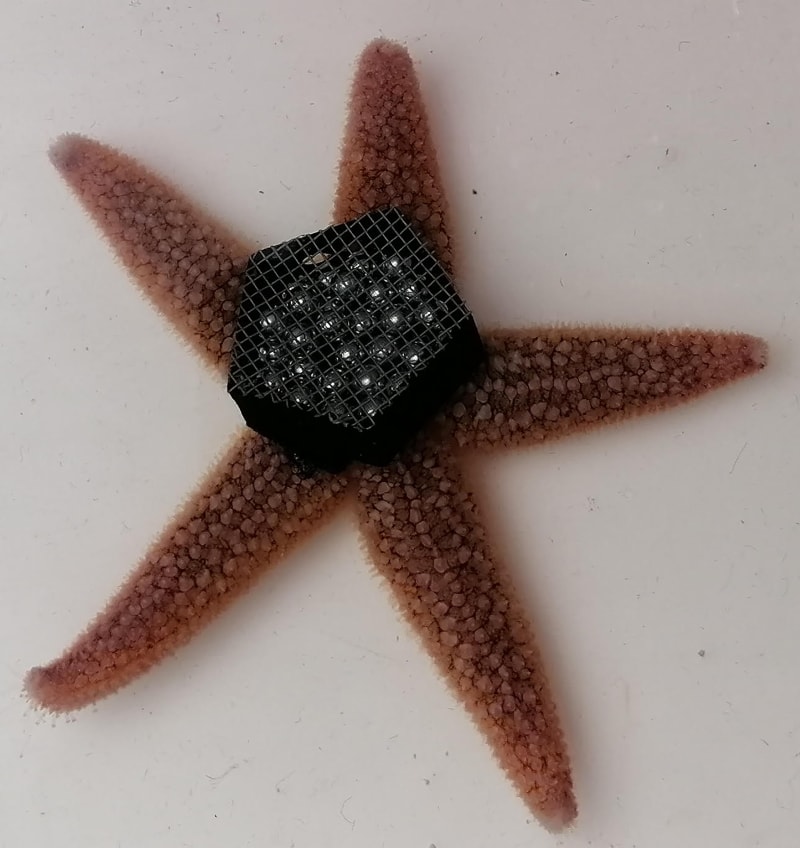
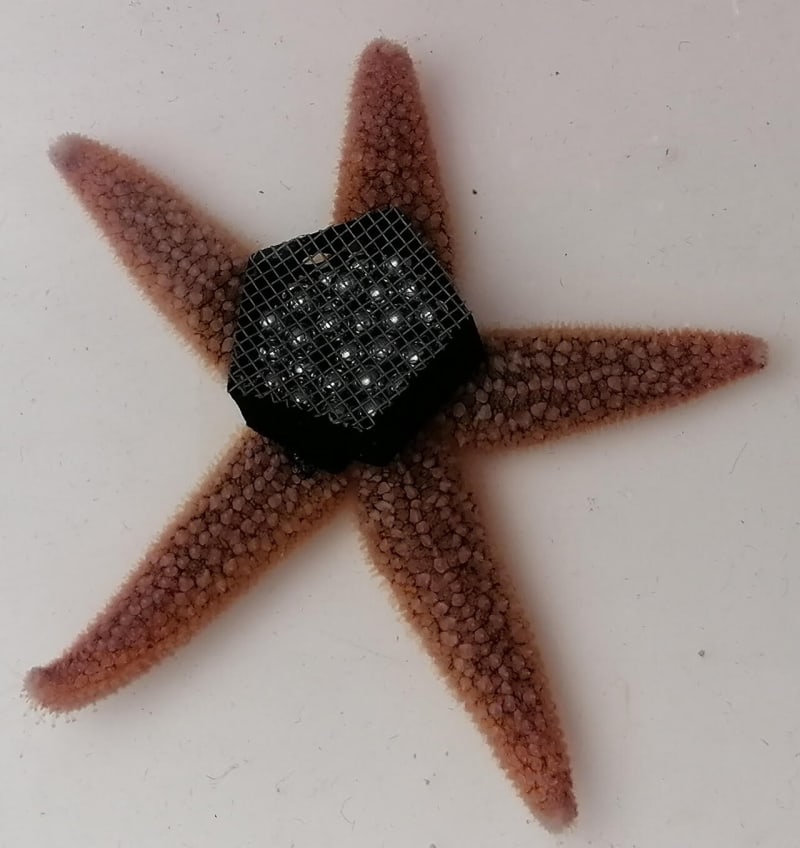
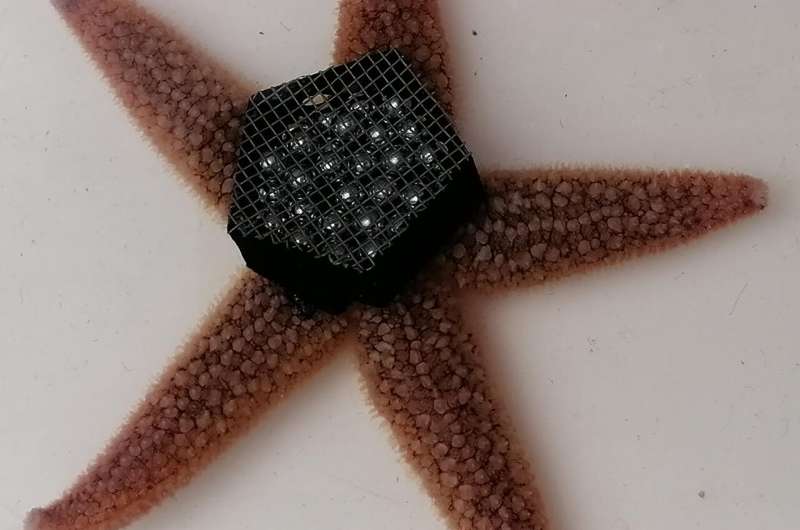
The team designed a tiny 3D-printed backpack for sea stars and watched what happened when they added or removed weight. What they discovered changed how they think about robot design.
Each tube foot operates independently, making split-second decisions about when to stick or release based purely on the mechanical forces it feels. There's no brain sending commands, no central controller coordinating the movement.
"We hypothesized that sea stars rely on a distributed control strategy, in which each tube foot makes local decisions based on local mechanical cues," said Eva Kanso, who directs the Kanso Bioinspired Motion Lab at USC. The experiments proved her team right.
The researchers even flipped sea stars upside down. Unlike humans doing handstands, whose nervous systems immediately register being inverted, sea stars just kept moving. Each foot sensed gravity differently and adjusted on its own.
The secret lies in mechanical coupling. When one foot pushes, it affects neighboring feet through the body's structure. This creates coordinated movement without any foot needing to know what the others are doing.
The Ripple Effect
This discovery could transform robotics in environments where central control fails. Think Mars rovers navigating rocky terrain, underwater robots exploring ocean trenches, or search-and-rescue machines climbing through collapsed buildings.
Traditional robots rely on central processors that tell every component what to do. If that central system fails or loses communication, the whole robot stops. But robots designed with sea star-inspired local feedback could keep adapting and moving even when cut off from headquarters.
The robustness comes from redundancy. If some feet fail, others compensate automatically because they're all responding to the same physical forces. The system doesn't have a single point of failure.
Kanso's team developed mathematical models showing how simple local rules, when mechanically linked through a body, create surprisingly sophisticated whole-body movement. Slow-moving creatures like sea stars adapt dynamically to changing environments, while faster animals need specialized neural circuits.
The research, published in the Proceedings of the National Academy of Sciences, represents a collaboration between USC engineers and biologists at UC Irvine and the University of Mons in Belgium. Together, they're proving that sometimes the best innovations come from creatures that never evolved brains in the first place.
Future robots might navigate alien planets or disaster zones with the same effortless adaptability as a sea star crossing a tide pool.
More Images
Based on reporting by Phys.org - Technology
This story was written by BrightWire based on verified news reports.
Spread the positivity!
Share this good news with someone who needs it