Seoul Tech Expo Draws 60K to See Humanoid Robots, AI Factories
South Korea's largest tech exhibition is showing how AI has moved far beyond chatbots into factories, warehouses, and everyday business. Over 60,000 visitors are exploring humanoid robots and fully automated manufacturing systems that work without human workers.
The future of work just showed up in Seoul, and it's walking, talking, and running entire factories on its own.
Smart Tech Korea 2026 kicked off Wednesday at COEX in Seoul, spreading across four halls for the first time in the event's 15-year history. The three-day exhibition expects to draw more than 60,000 visitors, breaking last year's record of 52,000.
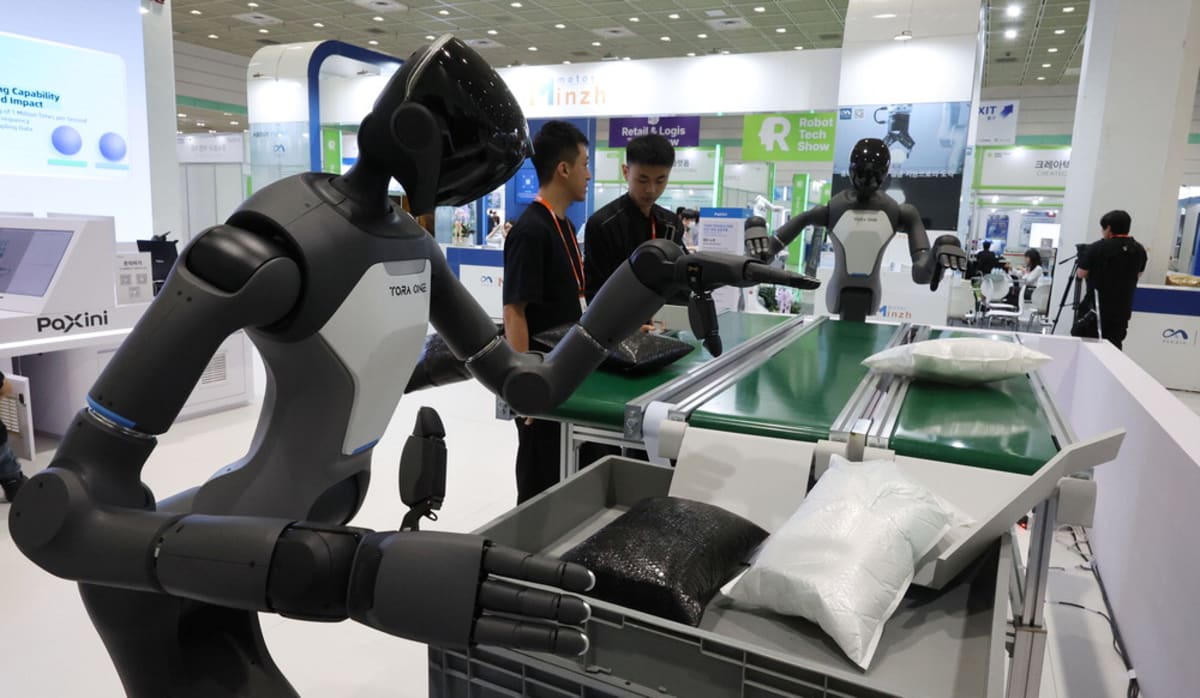
This year's star attractions aren't science fiction anymore. Humanoid robots from companies like AgiBot and Galbot demonstrated eerily human-like movements, while PaXini showed off robotic hands that can replicate human touch. EngineAI's highly agile robots drew crowds as they moved with surprising grace and speed.
But the real story isn't just robots that look human. It's AI that's actually running businesses.
The exhibition floor featured AI agents from companies like Clevi that don't just answer questions but complete entire business tasks autonomously. Samsung SDS showcased AI solutions custom-built for manufacturing, retail, and service industries. Dell Technologies presented its "AI Factory with Nvidia," a complete infrastructure platform that handles everything from testing AI models to deploying them in actual operations.
A brand-new addition this year tackled what organizers call "dark factories." These fully automated manufacturing facilities run without any human workers at all. Naver Cloud organized business-matching sessions between AI suppliers and manufacturers eager to adopt the technology, and consultation slots filled up almost immediately.
The logistics and warehouse halls demonstrated Vision-Language Models monitoring safety in hospitals and industrial sites in real time. These systems can spot hazards and respond faster than human supervisors.
The Ripple Effect
South Korea is positioning itself at the center of AI's next chapter, where the technology moves from impressive demos to essential infrastructure. The exhibition brought together seven specialized shows covering everything from robotics and smart factories to cybersecurity and virtual reality.
Even quantum computing got its moment. Amazon Web Services, Quantum Intelligence Corp., and ID Quantique showed developments in quantum hardware, drug discovery applications, and cybersecurity that could reshape computing within a decade.
The event isn't just about showing off shiny gadgets. Throughout the three days, conferences and seminars are teaching businesses how to actually implement these technologies. The 6th Korea AI Industry Awards will recognize companies making real progress, not just promises.
What makes this exhibition different from typical tech shows is its focus on industrialization over innovation theater. These aren't concept products. They're tools companies are buying and using today to transform how work gets done.
South Korea is betting that the next wave of economic growth won't come from inventing AI, but from deploying it better and faster than anyone else.
Based on reporting by Regional: south korea technology (KR)
This story was written by BrightWire based on verified news reports.
Spread the positivity!
Share this good news with someone who needs it