SF Startup Raises $7.1M to Solve Construction Labor Crisis
A San Francisco company just secured $7.1 million to turn construction rollers into self-driving machines, tackling an industry that can't find half a million workers. The simple retrofit takes an hour to install and already has $26 million in waitlist demand.
📺 Watch the full story above
Construction companies are canceling nearly two-thirds of their projects because they simply can't find workers. Now a small San Francisco startup called Crewline has a solution that's already turning heads across the industry.
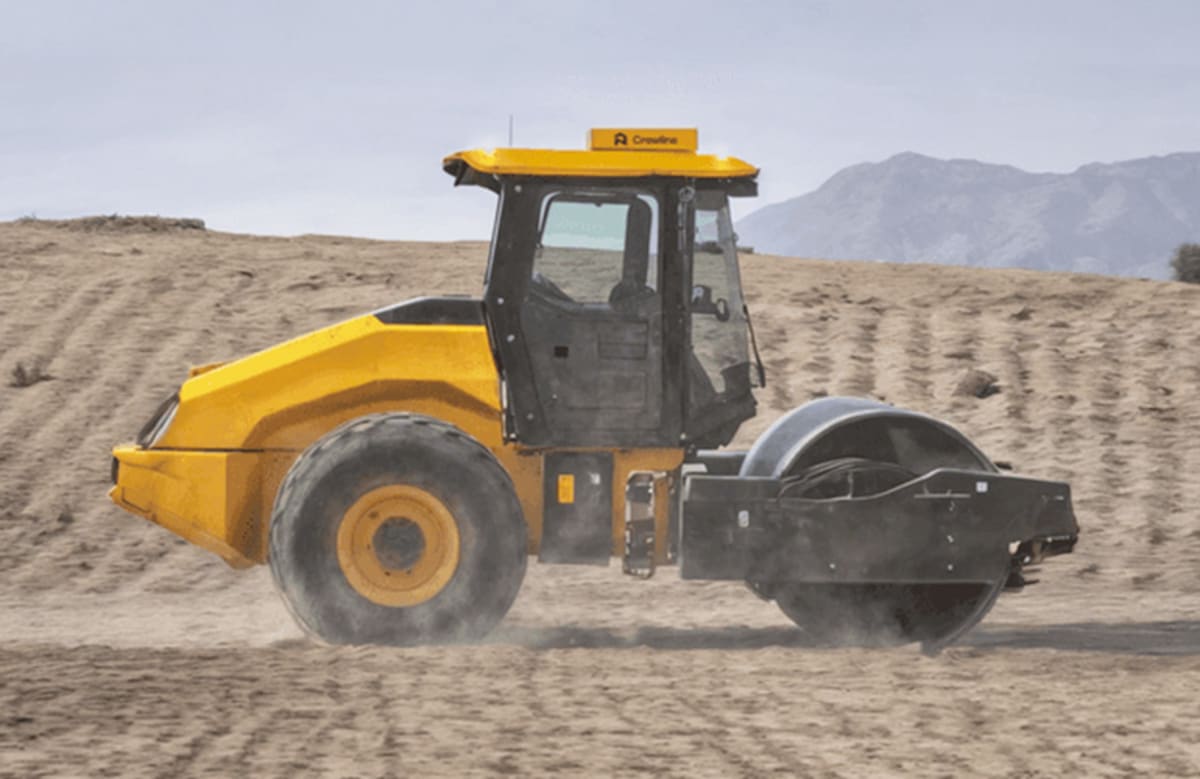
The four-person team just raised $7.1 million to deploy retrofit kits that make soil compaction rollers drive themselves. These machines handle the most repetitive, least popular job on construction sites, rolling back and forth to compress soil before building can begin.
CEO Frederik Filz-Reiterdank and his co-founder Mohamed Sadek designed their system to install in under an hour with zero permanent modifications. An operator draws a zone on an iPad, hits go, and the roller works autonomously for hours while detecting obstacles and crew members. That means one person who used to operate a single machine can now supervise multiple pieces of equipment.
The timing couldn't be better. The construction industry needs nearly 500,000 new workers in 2026 alone, and 1.9 million over the next decade. Ninety-two percent of contractors say they can't fill open positions, and unemployment in the field sits at just 3.5 percent, meaning almost everyone who wants a construction job already has one.
Crewline already has a $26 million waitlist from contractors desperate to scale productivity without hiring. Partner company Watts Services liked the system so much they're scaling from one roller to three.
The technology relies on cameras for 360-degree vision, GPS for positioning, Starlink for remote connectivity, and safety features including wireless emergency stops. The team ships a new version roughly every three weeks, already on their sixth iteration.
The Ripple Effect
This isn't just about one task on one job site. By proving autonomous systems can work on construction's simplest workflow, Crewline is opening doors to automate excavation and grading next. The company chose to retrofit existing machines rather than build new ones from scratch, a strategy that gets them on real job sites immediately while keeping costs down.
Forty-five percent of contractors now expect robotics and AI to positively impact construction jobs, up from 41 percent last year. That shift in mindset, combined with the structural labor shortage, means the industry is finally ready to embrace automation not as a job killer, but as a job multiplier.
The construction sites of tomorrow are rolling out today, one autonomous compactor at a time.
More Images


Based on reporting by The Robot Report
This story was written by BrightWire based on verified news reports.
Spread the positivity!
Share this good news with someone who needs it