Shade-Grown Coffee Saves Birds, Bees & Wildlife in India
Coffee farms with diverse tree canopies in India's Western Ghats are becoming lifelines for threatened birds, giant squirrels, and insects while producing better crops. Research shows these shaded plantations can protect wildlife and boost yields at the same time.
Your morning coffee might be saving a Malabar barbet's life, and you never even knew it.
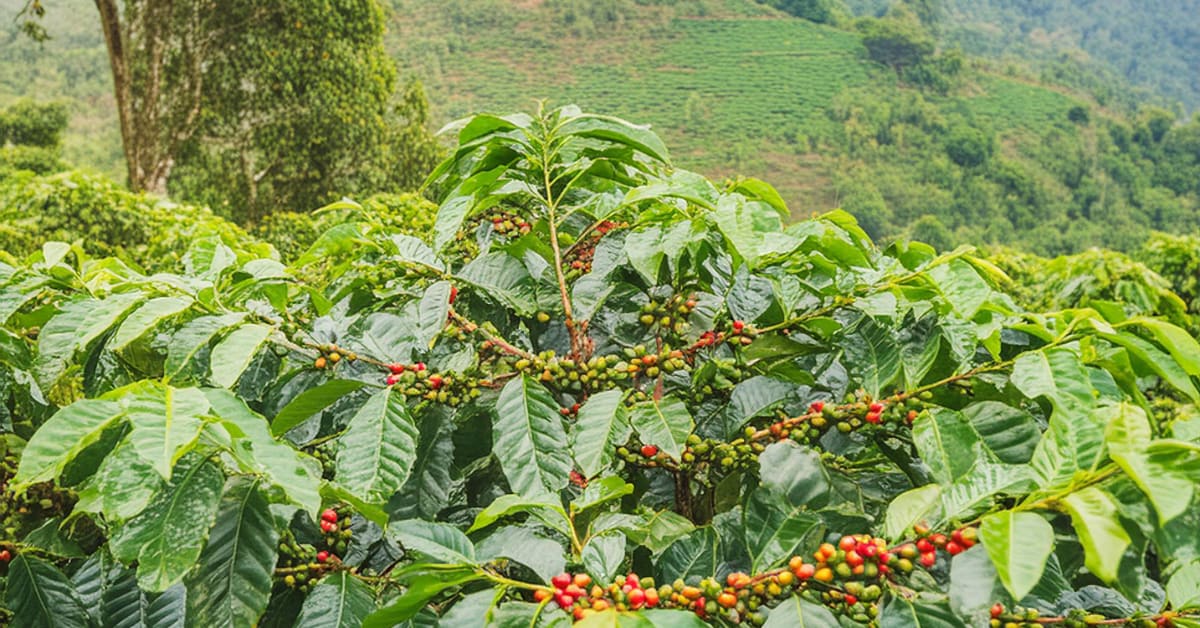
In India's Western Ghats, coffee farmers are discovering that the trees above their crops matter just as much as the beans below. Research from the Smithsonian Migratory Bird Center and studies in Kodagu district reveal that shade-grown coffee estates can become thriving habitats for birds, mammals, and insects while remaining productive farms.
Coffee originally evolved as an understory plant, growing naturally beneath taller trees. For generations, farmers cultivated it in shaded landscapes with fruit trees and native species overhead.
But as production intensified worldwide, many farms removed shade trees to flood crops with direct sunlight. That decision changed far more than light levels.
The canopy above a coffee plant can transform a simple plantation into a functioning agroforest. Smithsonian researchers studying these landscapes for decades found that tree-covered farms provide habitat for wildlife, protect soil, support pollination and natural pest control, store carbon, and regulate local microclimates.
This matters especially in the Western Ghats, one of India's most important biodiversity hotspots. Coffee estates in districts like Kodagu sit between forest fragments and protected areas, creating bridges through which wildlife can move.
These tree-covered plantations support Malabar barbets, hornbills, drongos, sunbirds, and threatened species like Nilgiri wood pigeons. Giant squirrels navigate the canopy while civets, porcupines, and wild cats travel through estates near forests.
A shade-grown coffee farm cannot replace natural forest. But in landscapes where forests are separated by roads and settlements, a connected canopy creates vital corridors for wildlife movement.
The Bright Side
A 2017 study examined 25 robusta coffee farms in Kodagu, ranging from diverse multi-species systems to plantations dominated by single tree species. The results surprised researchers who expected simplified canopies to boost productivity.
Farms with greater tree diversity actually produced better coffee with larger beans and fewer pest attacks. Plantations dominated by just one shade tree species saw reduced yields, smaller beans, and increased damage from coffee berry borers.
The findings held across different rainfall levels and farming methods, suggesting that diversity in the canopy supports both wildlife and farmer livelihoods. The Smithsonian's Bird Friendly certification now requires coffee to be organic and shade-grown, with specific standards for tree height, shade cover, and species diversity.
In Kodagu's estates, that morning silence punctuated by bird calls represents something larger than aesthetic beauty. It signals a landscape where agriculture and conservation can overlap, where your coffee choice connects to a drongo moving through branches halfway around the world.
Next time you reach for your morning cup, remember the giant squirrel making its way across a canopy above those beans.
More Images
%2Fenglish-betterindia%2Fmedia%2Fmedia_files%2F2026%2F08%2F19%2Fcoffee-2026-08-19-17-59-51.png)

%2Ffilters%3Aformat(webp)%2Fenglish-betterindia%2Fmedia%2Fmedia_files%2F2026%2F08%2F19%2Fcoffee-1-2026-08-19-18-01-20.png)
%2Ffilters%3Aformat(webp)%2Fenglish-betterindia%2Fmedia%2Fmedia_files%2F2026%2F08%2F19%2Fcoffee-2-2026-08-19-18-03-46.png)
Based on reporting by The Better India
This story was written by BrightWire based on verified news reports.
Spread the positivity!
Share this good news with someone who needs it