Sierra Leone Farm Teaches 100 Amputees New Skills
A former refugee turned a passion for sustainable farming into a life-changing program for amputees in Sierra Leone. Over 100 people with limb loss have learned to farm, start businesses, and reclaim their independence.
Mambud Samai watched thousands of amputees struggle to survive after Sierra Leone's brutal civil war left nearly 30,000 people with lost limbs and shattered livelihoods. He decided to do something about it.
After fleeing to a refugee camp in Guinea during the 11-year conflict, Samai returned home determined to help. He started with football, creating the Single-Leg Amputee Sports Association in 2001 that brought joy and community to hundreds of players across five provinces.
But Samai knew his community needed more than hope. They needed independence.
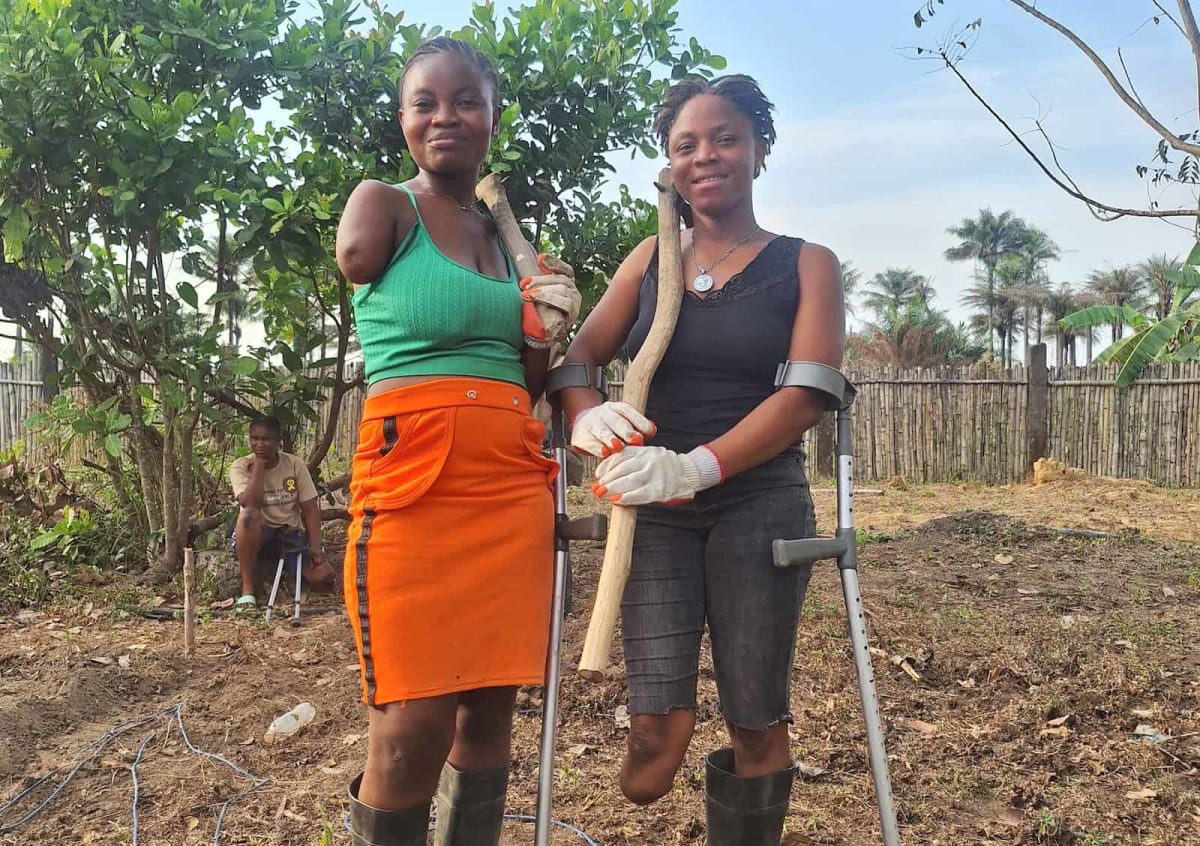
In 2018, he traveled to Japan's Asian Rural Institute to study organic farming and community development. Within months of returning, he launched Farming on Crutches, a program that teaches amputees sustainable agriculture from a small training farm.
Participants live and work on the farm together, learning skills they take back to their villages. Many have launched their own commercial plots, growing enough food to eat and sell.
Mustapha Bockarie joined the very first training group after losing his arm to a stray bullet. His friends called him a burden. Today, he runs a thriving community farm with neighbors, raises goats, keeps bees, and teaches sustainable farming for steady income.
One group even designed their own solution. Using bicycle wheels, timber, and bamboo from the farm, participants built a more accessible wheelbarrow perfectly suited for farming on crutches.
"The bamboo wheelbarrow is very important for us who are physically challenged," said Zainab Makieu, part of the design team. "Disability is not inability."
The Ripple Effect
The program's impact reaches far beyond individual farmers. Each graduate returns home as a teacher, spreading sustainable farming practices throughout their villages. Entire communities now grow more food, earn steadier incomes, and see amputees as leaders instead of beggars.
The success has created a waitlist of eager participants. The program just welcomed its 100th graduate and plans to expand across West Africa, adding beekeeping and food processing skills.
"They complete our course and return to their local communities as change makers," Samai said.
One hundred lives transformed, one hundred teachers trained, and countless communities fed.
Based on reporting by Positive News
This story was written by BrightWire based on verified news reports.
Spread the positivity!
Share this good news with someone who needs it