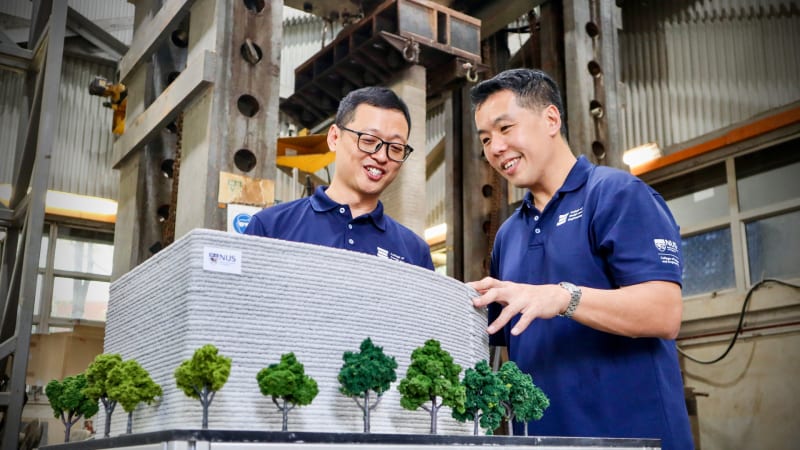
Singapore 3D Prints Structural Buildings, Cuts Labor 50%
Singapore researchers just proved that 3D-printed concrete can build actual structural components for buildings while using 30% less material and half the workers. The breakthrough could reshape construction in crowded cities facing labor shortages.
Researchers in Singapore just solved one of construction's biggest puzzles: how to build stronger buildings faster with fewer workers and less waste.
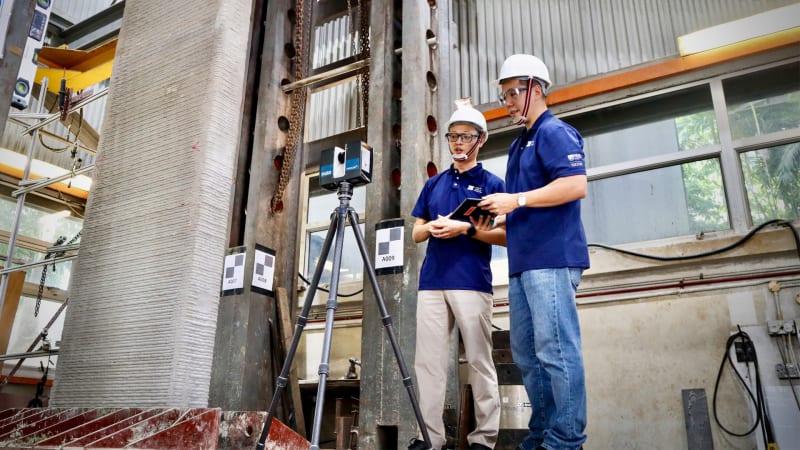
A team from the National University of Singapore has successfully demonstrated that 3D concrete printing can create structural building components that meet all safety requirements while slashing labor needs by more than 40%. In their first real-world test last August, they cut construction time in half.
The breakthrough tackles a critical challenge for dense cities like Singapore. As urban populations grow and construction workers become harder to find, the industry desperately needs smarter ways to build. Until now, 3D concrete printing was limited to decorative elements and low-rise structures, but this team proved it can handle the heavy lifting.
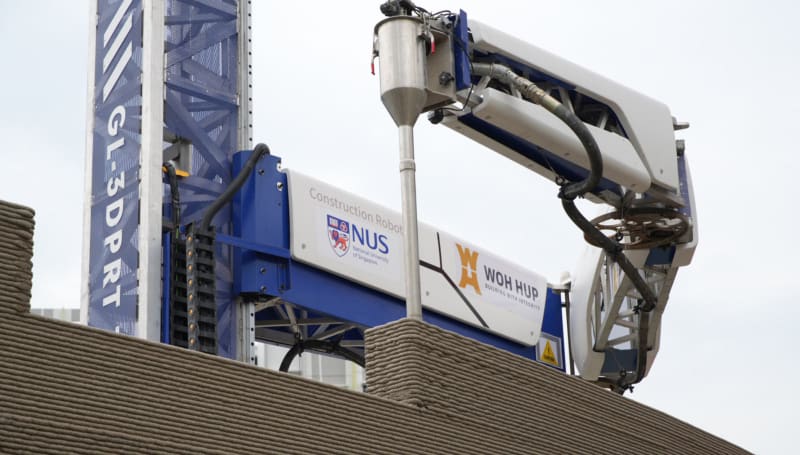
Led by Senior Lecturer Dr. Du Hongjian and Associate Professor Pang Sze Dai, the researchers developed special concrete mixes that can be squeezed through a printer nozzle while maintaining the strength needed for structural support. They worked closely with construction firm Woh Hup to ensure their lab innovations would actually work on busy construction sites.
The technology eliminates traditional molds entirely. Each conventional concrete component requires its own expensive mold that can only be used a handful of times. By printing formwork-free, builders gain design flexibility and speed up production dramatically.
The numbers tell a compelling story. The process uses 30% less material than conventional construction and delivers efficiency gains of over 60% for complex components. For structural elements, the team achieved a 50% reduction in required manhours during their verified on-site demonstration.
The Ripple Effect
This innovation arrives at exactly the right moment. Construction industries worldwide face acute labor shortages and mounting pressure to reduce carbon emissions. Singapore's approach offers a template that other land-scarce, high-density cities can adapt.
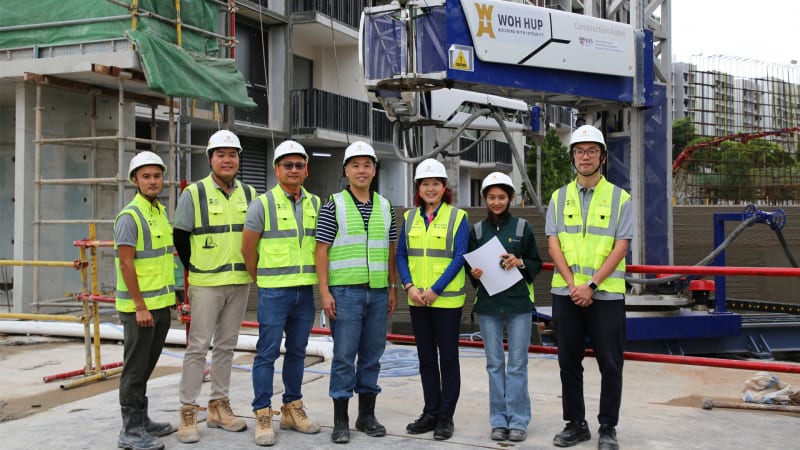
The Building and Construction Authority verified Singapore's first on-site 3D printing of structural elements in August 2025. A second demonstration launched in January 2026, proving the technology works under real operational conditions, not just in controlled labs.
Executive Director Yong Derong of Woh Hup emphasized that testing novel technology beyond the lab helps identify practical constraints and opportunities. The partnership between researchers, construction firms, and government agencies created the trust needed for wider adoption.
The team focused on making their process compatible with existing prefabrication and construction workflows. This means builders don't need to overhaul their entire operation to benefit from the technology. Printed components integrate smoothly with conventional building methods.
Associate Professor Pang captured the project's philosophy perfectly: construction innovation only matters if it can be applied on site. By grounding their research in real-world constraints, the team built confidence that 3D concrete printing belongs on construction sites, not just in research papers.
Singapore now leads the way in proving that faster, greener building isn't just possible but practical.
More Images
Based on reporting by Regional: singapore breakthrough (SG)
This story was written by BrightWire based on verified news reports.
Spread the positivity!
Share this good news with someone who needs it

