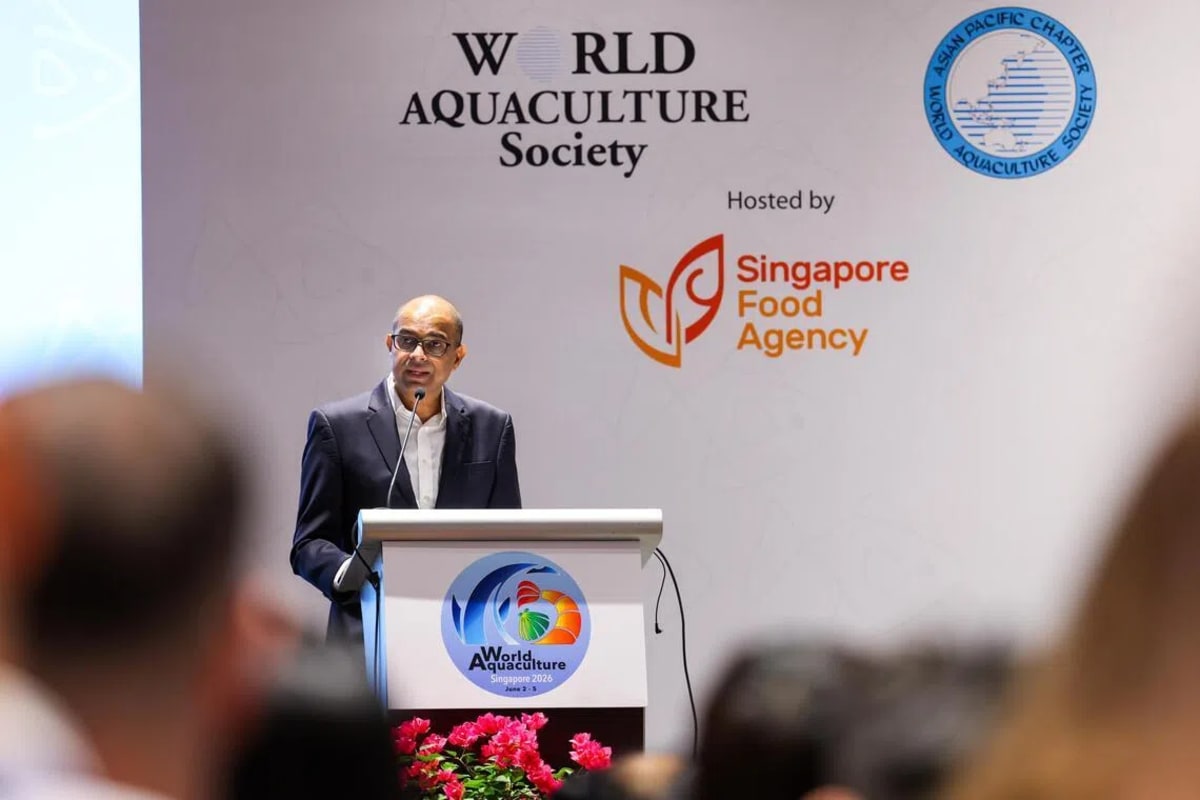
Singapore Opens Fish Feed Research Hub to Boost Local Farms
Singapore is launching a groundbreaking research center in 2027 dedicated to creating better fish feed that will help local aquaculture farms grow more food with fewer resources. The initiative marks a major step forward in the nation's journey toward food security and sustainable farming.
Fish farmers across Singapore are about to get a powerful new ally in their mission to feed the nation.
The Feed and Feed Ingredient Technology Centre, opening in 2027 at the Singapore Institute of Technology in Punggol, will develop next-generation nutrition for barramundi, red snapper, shrimp, and other tropical species. The goal is simple but ambitious: help local farms grow more fish while using less space and fewer resources.
The center addresses a real challenge facing aquaculture. Feed quality directly impacts how much fish farmers can produce, how healthy those fish are, and whether farms can turn a profit. Currently, feed accounts for 60 percent or more of a farm's total costs.
Assistant Professor Howard Tang, who leads the initiative, explains that higher-performance feed means farmers need less of it to achieve the same results. That translates to lower operational costs and more sustainable production.
The research will explore innovative ingredients like single-cell proteins from waste streams, insect-based proteins, and probiotics that boost fish health and survival rates. By replacing traditional fishmeal with these alternatives, farms can reduce their environmental footprint while improving their output.
The center won't just stop at laboratory experiments. It's designed as a complete pipeline from research to real-world application, helping farms actually implement these innovations at scale.
The announcement came with bonus good news: an additional $6.3 million in funding for the AquaPolis Programme, bringing total investment to nearly $25 million. This money will improve marine tilapia production through selective breeding for faster growth, better disease resistance, and improved tolerance to saltwater conditions.
Why This Inspires
Singapore's commitment to food innovation shows what's possible when science meets practical farming needs. With Asia producing 90 percent of the world's farmed seafood, this center could influence fish farming practices far beyond Singapore's borders.
The research tackles multiple challenges at once: climate change adaptation, disease prevention, and sustainable protein production. By helping farms produce more with less, Singapore is building a model for resilient food systems that other nations facing similar land and resource constraints can follow.
Local farmers are already enthusiastic. Ken Cheong, chief executive of the Singapore Agro-Food Enterprises Federation, notes that on-site trials will let farms test new formulas and immediately improve their productivity.
This center represents more than just better fish feed; it's about ensuring communities have access to affordable, sustainable protein for generations to come.
More Images




Based on reporting by Google News - Singapore Technology
This story was written by BrightWire based on verified news reports.
Spread the positivity!
Share this good news with someone who needs it