Smart Sensors Help South Korea Battle Wildfires at Night
New thermal imaging technology helped South Korean firefighters contain a major wildfire from 66% to 90% in a single night. The sensors give pilots and ground crews real-time maps even through darkness and smoke.
When darkness falls over South Korea's mountainous terrain, fighting wildfires becomes exponentially harder, but new technology is changing that dangerous equation.
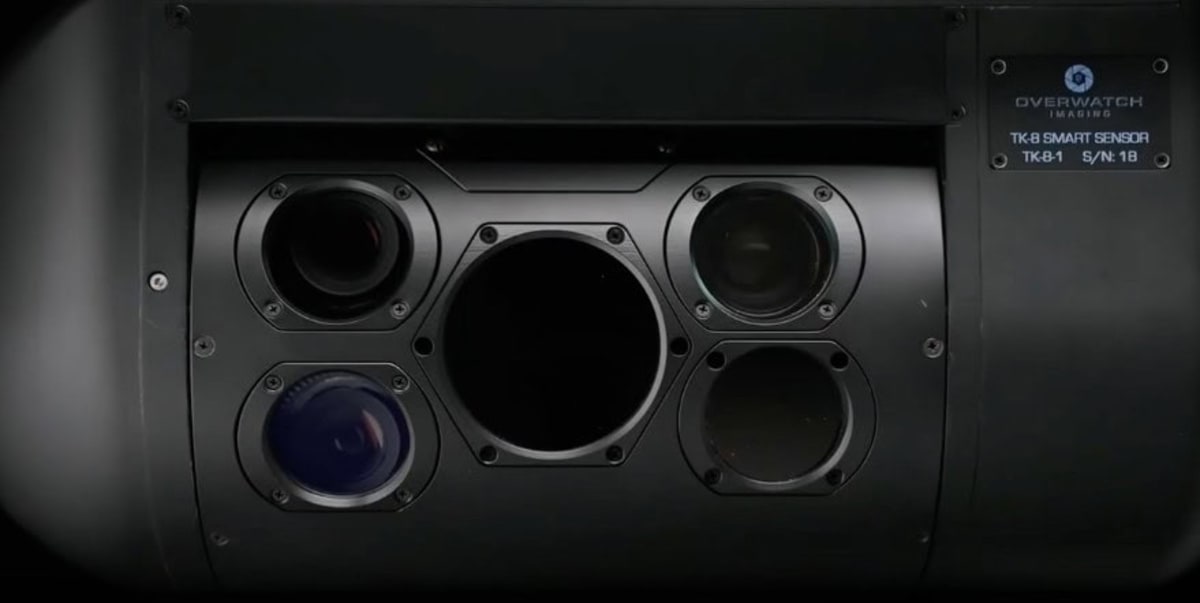
Korea Forest Aviation has equipped three of its helicopters with TK-8 Smart Sensors that can map wildfires in real time, even at night. The sensors combine thermal imaging with instant onboard processing to show firefighters exactly where flames are burning hottest and where embers still smolder.
The technology proved its worth on January 21, 2026, during a major wildfire in Gwangyang, South Jeolla Province. A helicopter equipped with the TK-8 flew the first nighttime operational mission, scanning the fire through thick smoke and darkness to identify active hotspots invisible to the naked eye.
The difference was dramatic. Using the thermal maps to direct their efforts, ground crews increased fire suppression from 66% to 90% before sunrise. The wildfire was fully extinguished that morning.
What makes these sensors special is their QuickMosaic capability, which processes images right on the aircraft instead of waiting hours for post-flight analysis. Incident commanders receive georeferenced maps while the helicopter is still flying, allowing them to redirect crews to the most critical areas immediately.
The wide area sensing proves particularly valuable in South Korea's challenging landscape. Mountains create blind spots, smoke obscures visibility, and darkness amplifies every risk for pilots. The sensors give flight crews and firefighters the ability to "see" through all these obstacles.
The Ripple Effect
This deployment represents more than just gadgets on helicopters. It's part of a broader partnership between Overwatch Imaging and South Korean company OQ Solution to expand sensor autonomy technology across the Asia Pacific region.
The success in Gwangyang demonstrates how real-time airborne intelligence can save forests, homes, and lives in conditions where traditional firefighting methods struggle. Other countries facing similar wildfire challenges in mountainous terrain could benefit from the same approach.
For South Korean firefighters who've long battled blazes in some of the world's most difficult conditions, having eyes that can pierce smoke and darkness means safer operations and faster containment.
Technology that turns night into day for wildfire response isn't just innovative; it's giving firefighters the advantage they need when every minute counts.
Based on reporting by Regional: south korea technology (KR)
This story was written by BrightWire based on verified news reports.
Spread the positivity!
Share this good news with someone who needs it