Solar Cells Can Self-Repair After UV Damage, Study Shows
Australian researchers discovered that silicon solar cells naturally repair themselves after UV damage when exposed to regular sunlight. The breakthrough could help manufacturers build longer-lasting solar panels and predict their true lifespan.
Scientists just watched solar cells fix themselves at the atomic level, and it could change how we build more reliable renewable energy systems.
Researchers at the University of New South Wales developed a new way to observe what happens inside silicon solar cells when they get damaged by UV light and then recover under normal sunlight. Think of it like having a microscopic camera that watches the material heal itself in real time.
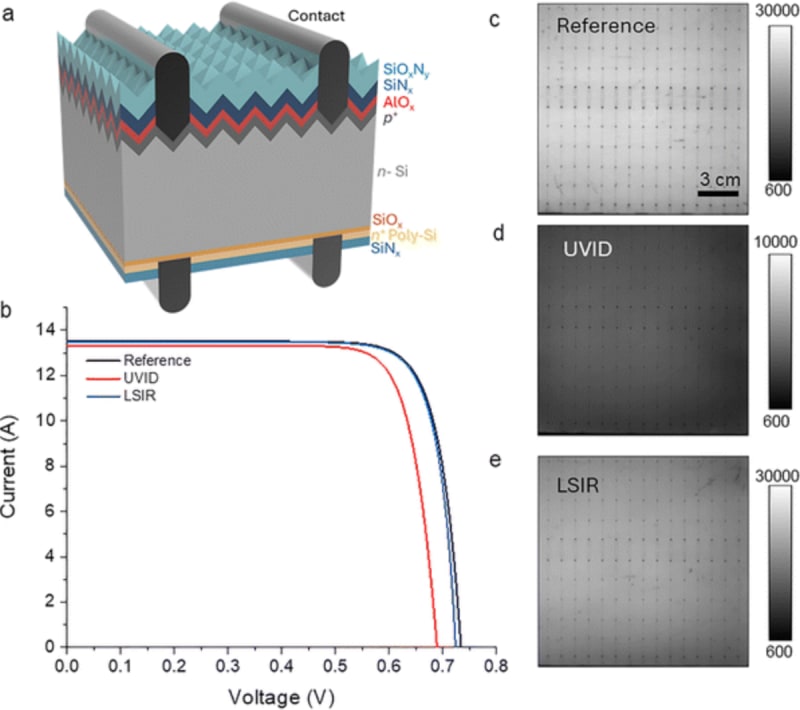
The team used ultraviolet Raman spectroscopy, a technique that uses lasers to reveal molecular movements, to track chemical bond changes as the cells operated. This matters because UV damage has caused efficiency losses of up to 10% in many types of silicon solar cells, but studying the problem previously meant cutting cells apart or relying on indirect measurements.
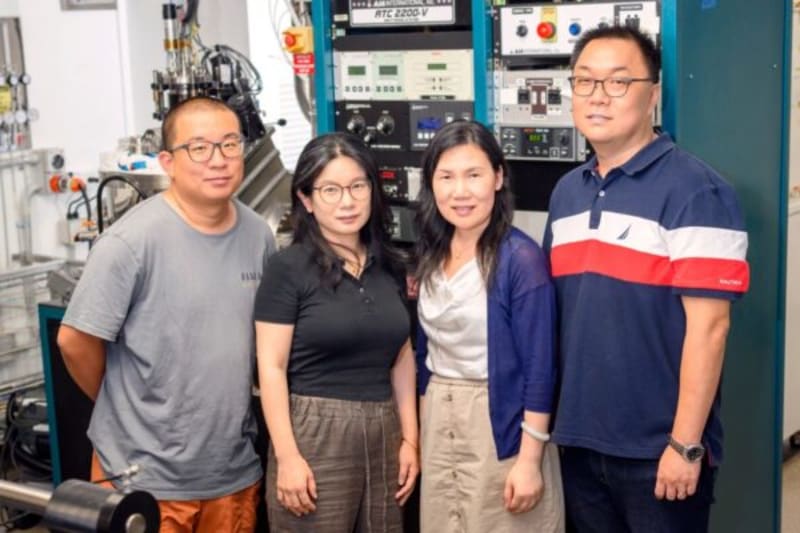
"Instead of just measuring how much power the cell produces, we can directly see how the material itself is changing in real time," said Ziheng Liu, who led the study published in Energy & Environmental Science. The researchers discovered that UV light initially breaks chemical bonds involving hydrogen, silicon, and boron near the cell surface, weakening the protective layers that keep the cell working efficiently.
Here's the exciting part: when the damaged cells were exposed to regular visible sunlight, the team watched hydrogen atoms migrate back toward the surface and broken bonds reform. The material was literally repairing itself at the atomic level, not just bouncing back electrically.
Why This Inspires
This discovery means we can finally tell the difference between permanent degradation and temporary changes in solar panels. That's huge for predicting how long panels will actually last and designing better ones from the start.
The method works directly on production lines, allowing manufacturers to quickly test how well cells resist UV damage before they're built into full panels. It also explains why some solar cells hold up better than others, with factors like passivation layer thickness affecting how hydrogen moves during damage and recovery.
Professor Xiaojing Hao, who supervised the research, said the technique helps manufacturers make smarter choices about efficiency, durability, and cost. They can now screen new materials and designs before committing to mass production.
The implications extend beyond just making better panels. With more accurate lifetime predictions, we can build more reliable solar energy systems and speed up the transition to renewable energy. The research team believes this clearer picture of how solar cells behave in the real world will lead to better tests, better panels, and ultimately more dependable clean energy for everyone.
This breakthrough arrives as solar energy becomes increasingly critical for fighting climate change and providing affordable electricity worldwide.
More Images
Based on reporting by PV Magazine
This story was written by BrightWire based on verified news reports.
Spread the positivity!
Share this good news with someone who needs it