Solar Operators Cut Downtime With Smart Maintenance Tech
Renewable energy companies are losing power and money because they're slow to fix problems they've already detected. New automation tools are closing that gap, turning sensor alerts into instant repairs.
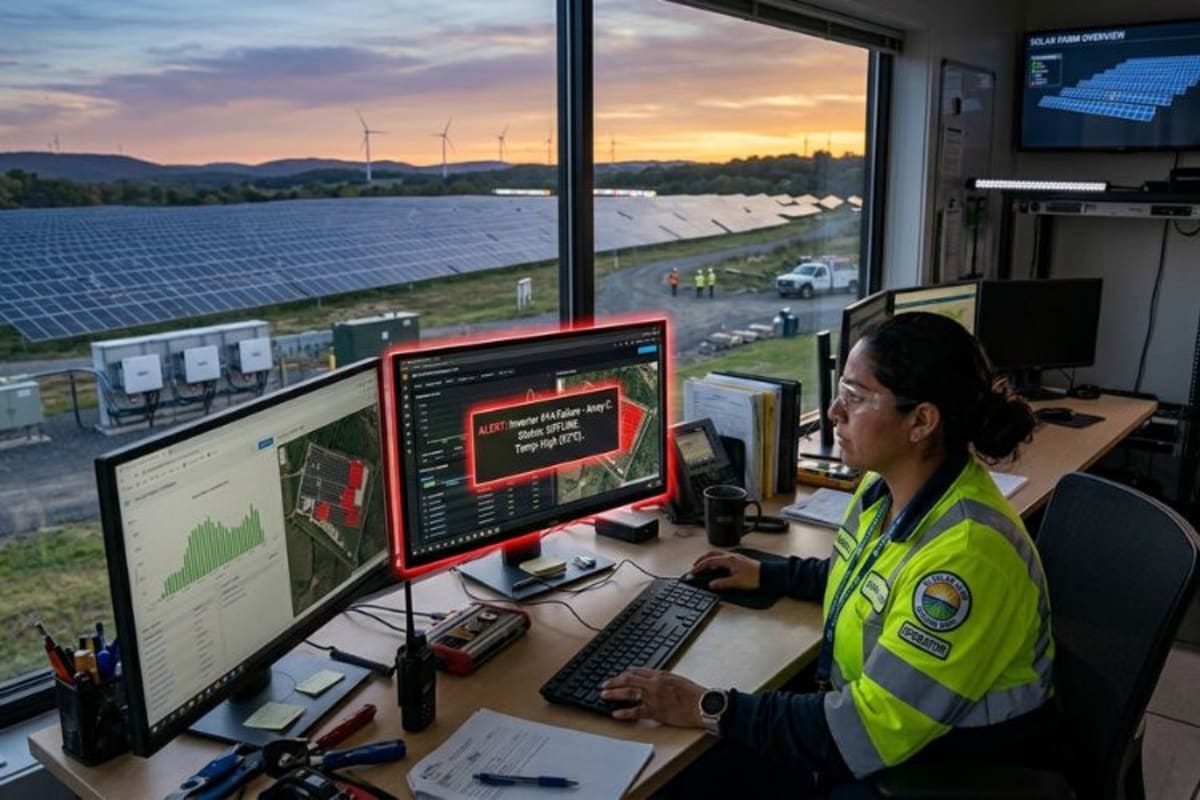
When a solar inverter fails on a Friday night, it can stay broken all weekend because a technician assumed the alert was just another false alarm. By Monday morning, that's 60 hours of lost power and revenue slipping away.
This costly delay between detecting a problem and actually fixing it has plagued renewable energy operators for years. Now, a growing number of solar and battery storage companies are solving it with automated maintenance systems that turn sensor alerts into immediate action.
The problem isn't the technology that monitors equipment. Most renewable energy sites already have plenty of sensors watching for issues. The breakdown happens when overwhelmed human operators have to decide which of hundreds of daily alerts actually matter.
Benjamin Brousseau, a business solutions consultant at Verosoft, explains the weak point. "It depends on who's on shift, who saw the alert, what other alerts did they get in that hour, and whether they trust the alert enough to call somebody," he says.
The new approach connects monitoring systems directly to maintenance workflows. When a critical sensor detects a real problem, the system automatically creates a work order and dispatches technicians without waiting for someone to notice and respond. It filters out false alarms while fast-tracking genuine issues.
Battery storage operator Voltwise is already using this connected system. Instead of technicians sorting through alert noise, the software prioritizes actual faults and gets repair crews moving immediately. The result is less downtime and more clean energy reaching the grid.
The technology works with existing equipment too. Operators don't need to replace their current monitoring systems or install new sensors. The automation layer sits on top of what's already there, adding the missing link between detection and action.
The Ripple Effect
When renewable energy sites run at full capacity instead of sitting partially broken, the benefits spread far beyond one company's bottom line. More solar panels and batteries operating properly means more clean energy displacing fossil fuels on the grid.
Faster repairs also strengthen the entire renewable energy industry's reputation. When operators can guarantee consistent output to power companies and investors, it builds confidence in clean energy as a reliable replacement for traditional power plants.
Early fixes prevent small problems from becoming expensive disasters too. Catching a failing component before it damages an entire solar array saves money that can fund more renewable projects instead.
The shift from manual monitoring to automated action represents renewable energy growing up. These systems are learning to maintain themselves with the same reliability that traditional power plants have offered for decades, but without the pollution.
Based on reporting by Renewable Energy World
This story was written by BrightWire based on verified news reports.
Spread the positivity!
Share this good news with someone who needs it