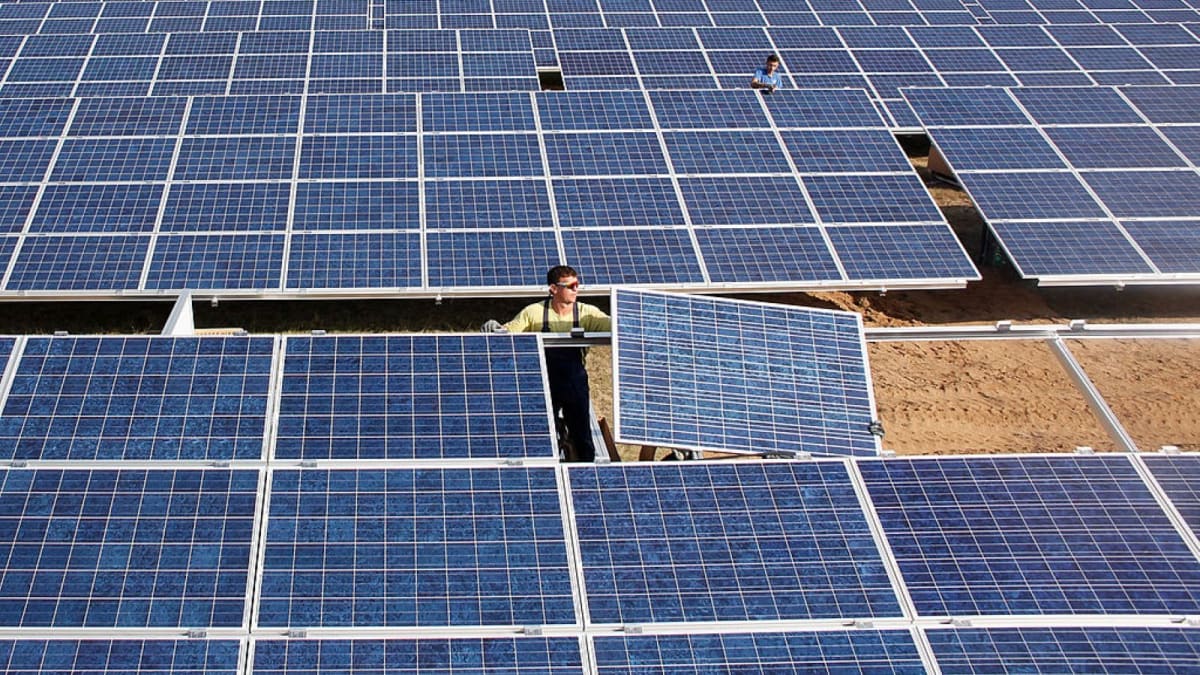
Solar Panel Efficiency Hits Record 24% in Lab Breakthrough
Scientists just achieved a world record 24% efficiency rating for next-generation solar panels that could transform how we capture energy from the sun. The breakthrough solves stability problems that have plagued the technology for years.
A research team has cracked one of solar energy's toughest puzzles, creating panels that convert sunlight to electricity better than ever before.
The new solar modules use a material called perovskite and achieved a certified 24% power conversion efficiency across an area roughly the size of a large tablet. That's a world record for this promising technology, independently confirmed by testing agency TÜV SÜD.
For years, perovskite solar cells have tantalized scientists with their potential. They're cheaper to make than traditional silicon panels and can be printed onto flexible surfaces. But they've had a critical weakness: they degraded quickly when exposed to moisture, heat, and sunlight.
The breakthrough came from swapping out unstable chemical compounds for something called lead carboxylate passivators. Think of it as giving the solar cells a waterproof, heat-resistant coating that also helps them capture more energy. The new treatment increased how long electrical charges survive in the material from 264 nanoseconds to 706 nanoseconds, meaning more captured sunlight actually becomes usable electricity.
The team didn't just make one successful panel. They built 150 modules measuring about eight square feet each, with the best ones reaching 22% efficiency and producing 144 watts of power. That's enough to charge a laptop and phone simultaneously.
Even more impressive, these panels proved they can last. After running continuously for 2,200 hours in harsh testing conditions, they still operated at 96% of their original efficiency. They also passed the rigorous IEC 61215 reliability standards that commercial solar panels must meet.
The Ripple Effect goes beyond just better solar panels. As countries race to meet climate goals, squeezing more energy from every square foot of solar installation matters enormously. These new modules could mean fewer panels needed to power a home, making solar energy accessible to more people. For utility-scale solar farms, higher efficiency translates to more clean energy from the same amount of land.
The technology could also reduce the overall cost of solar installations. While the panels still need to transition from laboratory benches to factory production lines, the proven durability and performance suggest they could offer better returns on investment than current options.
Right now, the research team is working on scaling up production to commercial levels. If they succeed, these next-generation panels could help solar energy reach places where space is limited or where maximizing output from every panel makes the difference between a project being financially viable or not.
The sun delivers enough energy to Earth in one hour to power human civilization for a year, and we just got significantly better at capturing it.
Based on reporting by Google: solar power breakthrough
This story was written by BrightWire based on verified news reports.
Spread the positivity!
Share this good news with someone who needs it