India Startup Builds Batteries That Store Power for Days
A Bangalore company has created iron-air batteries that can hold renewable energy for up to four days, solving one of the biggest challenges facing solar and wind power. Using just iron, air, and water, the technology could make clean energy grids work even during windless, cloudy weeks.
Renewable energy has a timing problem. Solar and wind power work beautifully until the sun sets or the wind stops, and current batteries can only bridge the gap for a few hours.
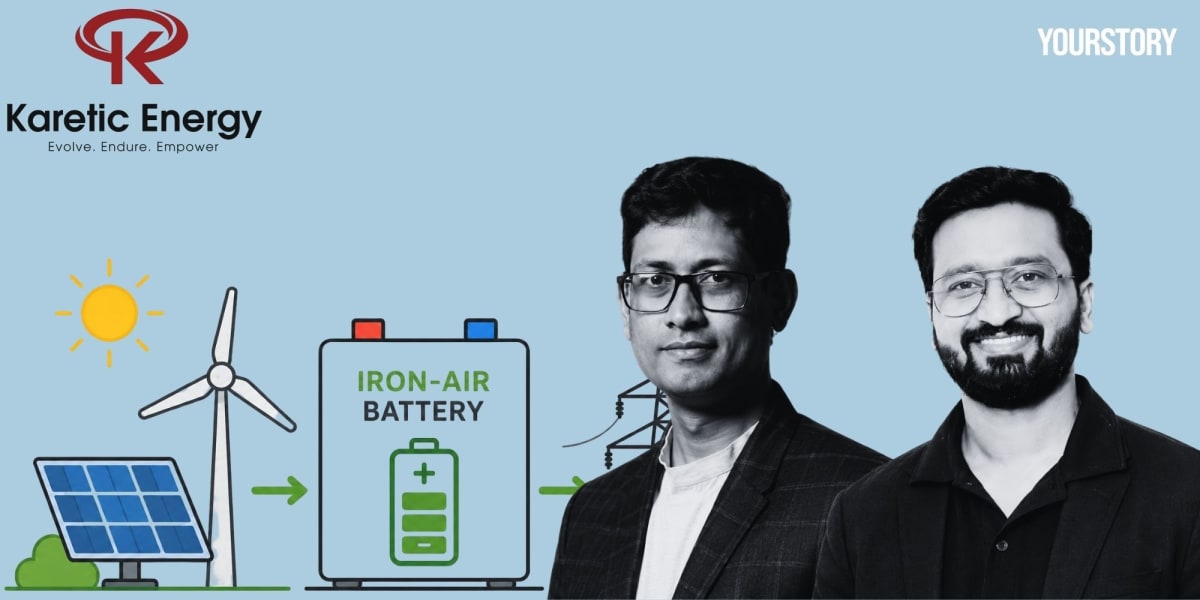
Karetic Energy, a startup in Bangalore, may have cracked the code. The company has developed iron-air batteries that can store power for 100 to 145 hours, turning what used to be a four-hour backup into a four-day safety net.
The technology works by doing something surprisingly simple: rusting iron and then reversing the process. When the battery charges, it reverses rust. When it discharges, it rusts again. The materials needed are iron, air, and water, all abundant and cheap.
Dr. Suryanarayana Vikrant Karra and Prabhakar Kumar founded the company in 2022 with a clear goal. They wanted to create long-duration storage that could keep renewable energy grids running through still, overcast weeks when solar panels and wind turbines sit idle.
The biggest breakthrough isn't just how long the batteries last. The chemistry uses no rare-earth materials, which means countries don't have to rely on a handful of suppliers who control those resources. The batteries are also non-flammable, making them safer to install near homes and businesses than lithium alternatives.
The engineering challenge was tricky. When you push electricity through iron in water, the energy often splits the water into hydrogen instead of charging the battery. The iron surface also tends to form a blocking layer that stops the reaction altogether.
Karetic's solution uses an iron-particulate bed design that prevents both problems. In lab tests, this approach delivered those multi-day discharge cycles at significantly lower costs than lithium-ion batteries.
The Ripple Effect
If this technology scales, it changes the math for renewable energy everywhere. Utilities could build solar and wind farms knowing they have backup power for extended periods of cloudy or calm weather. Industrial facilities could run their own microgrids without worrying about multi-day gaps in generation.
The company has raised about $700,000 in funding plus $300,000 in grants. India's government selected them for Bharat Innovates 2026, where they presented to potential utility partners in Nice, France.
The technology is still early. No pilots, customer installations, or independent test results have been announced yet. What exists now are promising lab results and a compelling technical approach.
But for a company just eighteen months old, proving that iron can rust its way to solving renewable energy's storage problem is a bright start.
More Images


Based on reporting by YourStory India
This story was written by BrightWire based on verified news reports.
Spread the positivity!
Share this good news with someone who needs it