Solar Panels Hit 34% Efficiency Record for Space Tech
German researchers just shattered solar panel efficiency records, achieving 34.2% conversion rate with new technology that could power everything from satellites to airplanes. The breakthrough bridges the gap between everyday rooftop panels and ultra-expensive space equipment.
Scientists in Germany just made solar power significantly more efficient, setting two world records that could transform how we power vehicles, aircraft, and spacecraft.
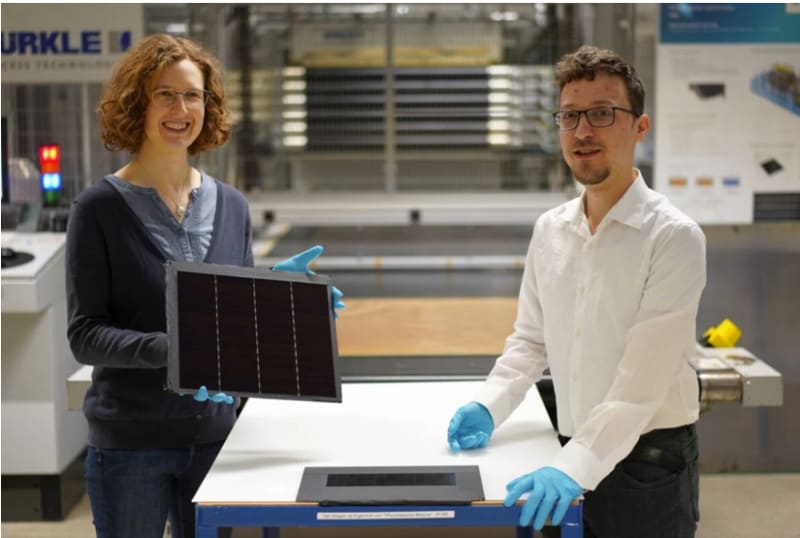
Researchers at the Fraunhofer Institute for Solar Energy Systems announced their team achieved 34.2% efficiency with a new solar module. That's the highest conversion rate ever recorded for a complete solar panel.
The breakthrough uses special semiconductor materials called III-V compounds, which capture sunlight far more effectively than traditional silicon. The record-breaking panel measures about the size of a computer monitor and was built through a partnership between Fraunhofer, Azur Space Solar Power, and temicon.
What makes this even more impressive is how they squeezed out extra performance. Engineers used a nanoimprint process on the glass surface that reduces reflection, letting more sunlight actually reach the solar cells instead of bouncing away.
The team also set a second record with a different design. Their III-V silicon hybrid module reached 31.3% efficiency, proving there are multiple paths to dramatically better solar performance.
The Ripple Effect
Regular silicon solar panels top out around 24% efficiency in real-world products, with a theoretical maximum of 29.4%. These new records blow past those limits, opening up possibilities for solar power in places where every inch of space counts.
Director Andreas Bett explained these innovations fill a crucial gap. They're more affordable than current space-grade solar cells but far more powerful than typical rooftop panels. That sweet spot makes them perfect for electric vehicles, drones, boats, and building surfaces where you can't install huge arrays.
The technology is already being scaled up through projects aimed at making high-efficiency solar cells more cost-effective. As production methods improve, these ultra-efficient panels could become practical for everyday applications where space is tight but energy demands are high.
For satellites and spacecraft, the higher efficiency means less weight and smaller panels to generate the same power. For electric aircraft and vehicles, it means extended range and faster charging from smaller surface areas.
The achievement proves we haven't hit solar power's ceiling yet, and smarter materials keep pushing what's possible.
Based on reporting by Google News - Solar Power Record
This story was written by BrightWire based on verified news reports.
Spread the positivity!
Share this good news with someone who needs it