South Africa Embeds Radioactive Isotopes in Rhino Horns
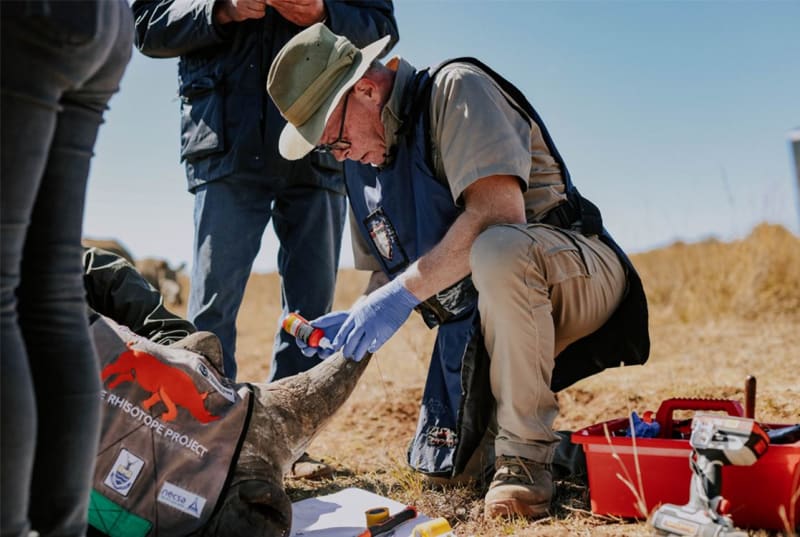
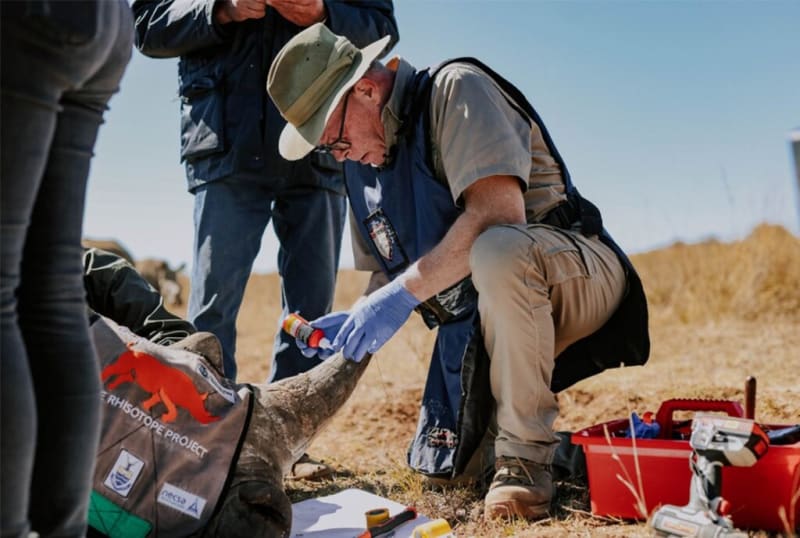
Scientists in South Africa are inserting safe radioactive isotopes into rhino horns, making them detectable at borders and worthless to poachers. After six years of development and successful testing on 20 rhinos, the groundbreaking Rhisotope Project is now being deployed across game reserves.
📺 Watch the full story above
Imagine protecting an endangered species by making its most valuable part impossible to smuggle across any border in the world.
That's exactly what scientists at South Africa's Witwatersrand University have achieved with the Rhisotope Project. They're embedding tiny radioactive isotopes into rhino horns that set off existing radiation detectors at airports and seaports worldwide.
The approach is brilliantly simple. More than 11,000 radiation detection machines already guard international borders to prevent nuclear terrorism. Now those same sensors can catch rhino horn smugglers without any new infrastructure or training.
Professor James Larkin developed the technique after an earlier attempt failed in 2016. His innovation uses safe radioactive seeds that don't harm the animals but make their horns essentially worthless on the black market, where a single kilogram can fetch $65,000.
The project launched testing in 2024 at a rhino nursery in Limpopo province. Twenty rhinos were monitored around the clock for six months while researchers examined their blood cells for any signs of damage.
The results were clear. Blood tests showed no cellular damage whatsoever, and the isotopes proved detectable even when a single horn was hidden inside a 40-foot steel shipping container.
South Africa desperately needs solutions like this. The country is home to Earth's largest rhino population, but poaching threatens both white rhinos (near threatened) and black rhinos (critically endangered).
Why This Inspires
What makes this project remarkable is how it transforms existing technology into a conservation tool. Instead of spending millions on armed patrols or specialized detection equipment, scientists found a way to use systems already protecting every major border crossing.
The approach also tackles a uniquely stubborn problem. Rhino horn has zero medicinal value since it's made of keratin, the same protein in human fingernails. Yet demand persists, making creative deterrents essential.
Jessica Babich, CEO of the Rhisotope Project, is now working to scale the technology across South Africa's rhino population. That includes thousands of privately owned rhinos, which actually outnumber those in national parks like Kruger.
Other conservationists who initially questioned whether radioactive material might harm the animals have changed their tune. They're now calling it "a magical idea" that could finally tip the scales against poachers.
The best part? Even if smugglers somehow locate and remove the isotope, residue remains on the horn and anything it touches. Detection is virtually guaranteed.
After a decade of development, one of Africa's most iconic species finally has a fighting chance against the poaching crisis.
More Images
Based on reporting by Good News Network
This story was written by BrightWire based on verified news reports.
Spread the positivity!
Share this good news with someone who needs it
%2Ffile%2Fattachments%2F2997%2FZAPIRO7_782203.jpg)
%2Ffile%2Fattachments%2Forphans%2FKrugerfloods-3_785220.jpg)