%2Ffile%2Fattachments%2Forphans%2F1IMG_9740copy_270004.jpg)
South African Community Protects Coastline, Wins UNESCO Status
The amaMpondo people of South Africa's Wild Coast just saw their ancestral lands declared a UNESCO Ramsar wetland after generations of grassroots conservation. Their fight against titanium mining and unwanted development preserved a biodiversity haven now recognized globally.
A fishing community on South Africa's Wild Coast just proved that the best conservationists might be the people who've lived on the land the longest.
The amaMpondo people watched officials celebrate last week as their coastal home, the Mkhambathi Nature Reserve, became South Africa's 31st UNESCO-recognized wetland of international importance. It's the first such designation for the Eastern Cape, a recognition decades in the making.
But while government speakers talked about tourism potential and private investment, they left out a crucial detail. The amaMpondo themselves are the reason this coastline remains pristine enough to earn global recognition.
For generations, these communities have blocked titanium mining companies, resisted oil prospecting by Shell, and pushed back against highway developments they say would destroy their way of life. The red dunes of Xolobeni, just four kilometers from the reserve, would already be industrial wasteland without their resistance.
100-year-old Nozilayi Gwalagwala still remembers the helicopters in 1960 when police arrested her husband during the Pondoland Revolt. She clutched her newborn son as authorities rounded up community members who resisted government control. She named him Gunyazile, meaning "forced by authorities."
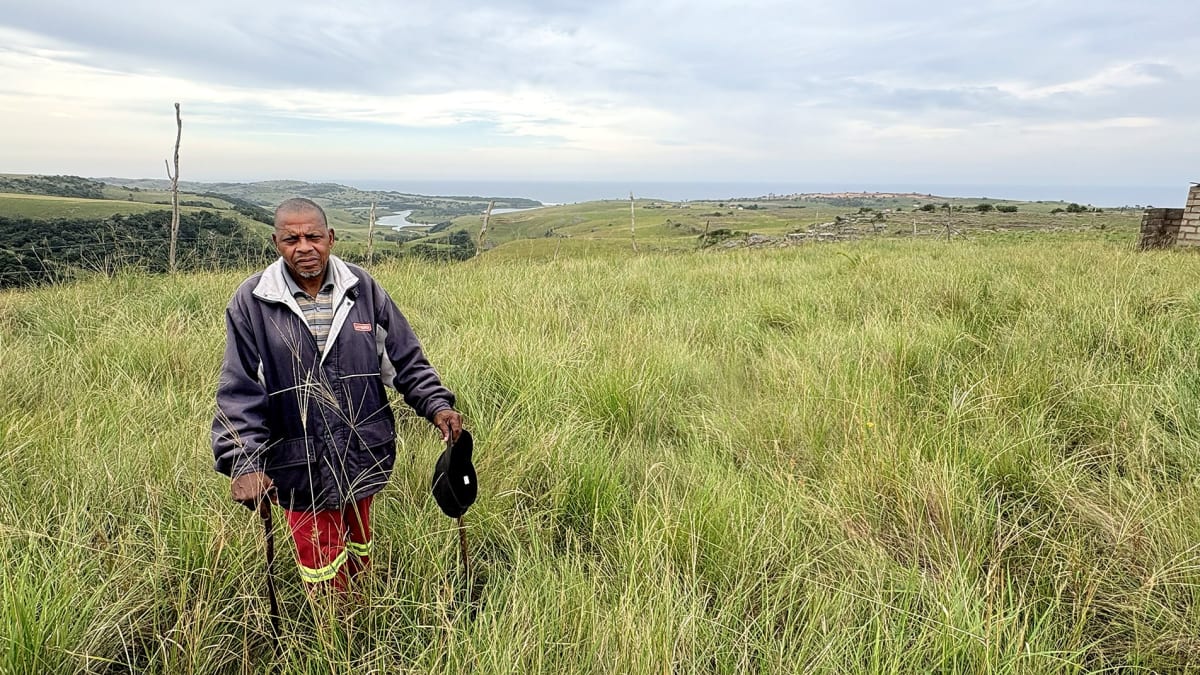
Today, her descendants bring that same protective spirit to their land. They've tended the sour veld grasslands, coastal forests, and fish-rich estuaries since before South Africa was even a country.
The tension came to a head last November when local fisherman Nalo Danca found himself in a chokehold by a ranger while fishing at the Strandloper River mouth. Danca says he was fishing in his backyard as the amaMpondo have done for generations, in a designated fishing spot where customary rights apply. The ranger called it poaching.
The Ripple Effect
The amaMpondo's vision of development looks different from what officials proposed at the celebration. They want preservation of their heritage and their role as land custodians, not just infrastructure and outside investment.
Their approach works. The entire Pondoland coastline remains a biodiversity haven because communities chose light-touch tourism over extractive industries. The marine protected area declared in 2004 and the nature reserve established in 1977 built on conservation work the amaMpondo were already doing.
Heritage authorities now recognize Gwalagwala's generation for holding the line against apartheid. Her grandchildren say they're doing the same for future generations by keeping their relationship with the land intact.
The UNESCO designation proves their strategy succeeded, even if the celebration didn't fully acknowledge their role in making it possible.
More Images

%2Ffile%2Fattachments%2Forphans%2F2IMG_8970copy2_196314.jpg)
%2Ffile%2Fattachments%2Forphans%2F32024-07-21122510_273586.jpg)
Based on reporting by Daily Maverick
This story was written by BrightWire based on verified news reports.
Spread the positivity!
Share this good news with someone who needs it