South Korea Bridges Gap Between AI Innovation and Hospitals
South Korea has approved 16 AI radiology tools for hospitals, but getting doctors to actually use them daily is proving harder than building the technology. The government is now investing in training and support systems to close the gap between innovation and real-world care.
South Korea has cracked the code on developing cutting-edge AI healthcare technology, but the hardest part turned out to be getting hospitals to use it every day.
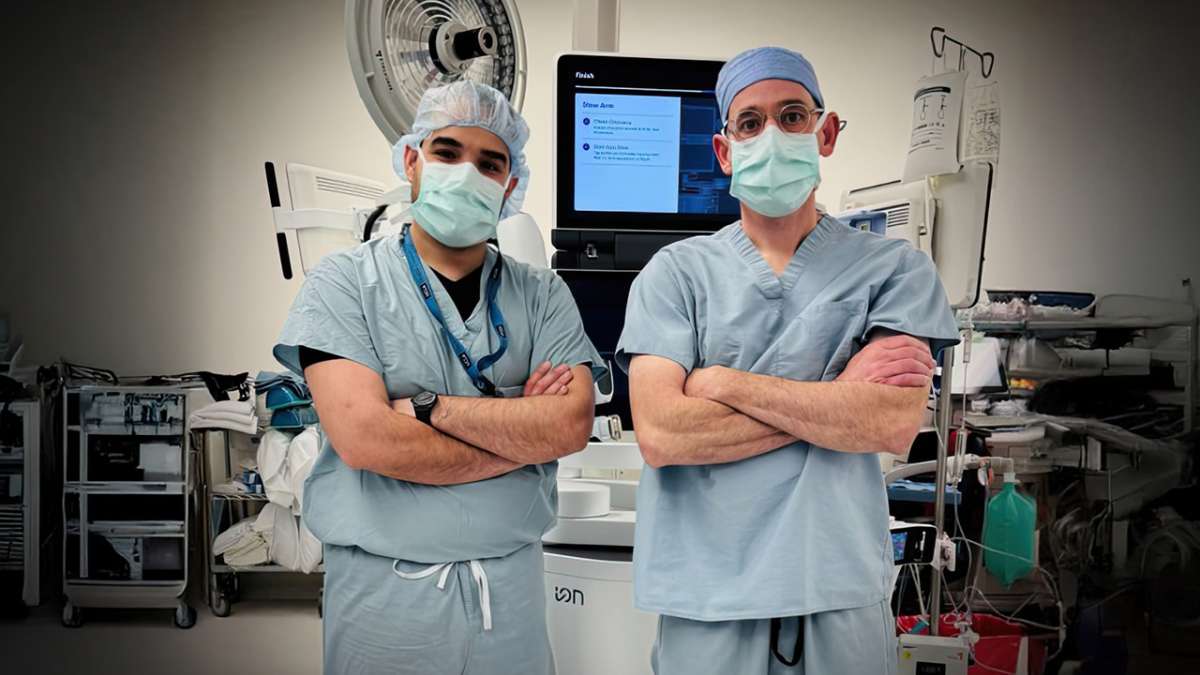
The country now has 16 AI-based radiology technologies already working in clinical settings as of October 2025, with 45 innovative medical devices approved last year. These aren't experimental tools anymore. They're real solutions that work.
But inside hospital walls, adoption tells a different story. Many AI systems that perform brilliantly in testing sit unused because they don't fit into the daily rhythm of patient care.
Dr. Wonju Hwangbo, who leads AI healthcare company AORAEL, pinpoints where the system breaks. "The breakdown typically occurs not at the development stage, but at the point of integration into real clinical environments," she told KoreaTechDesk.
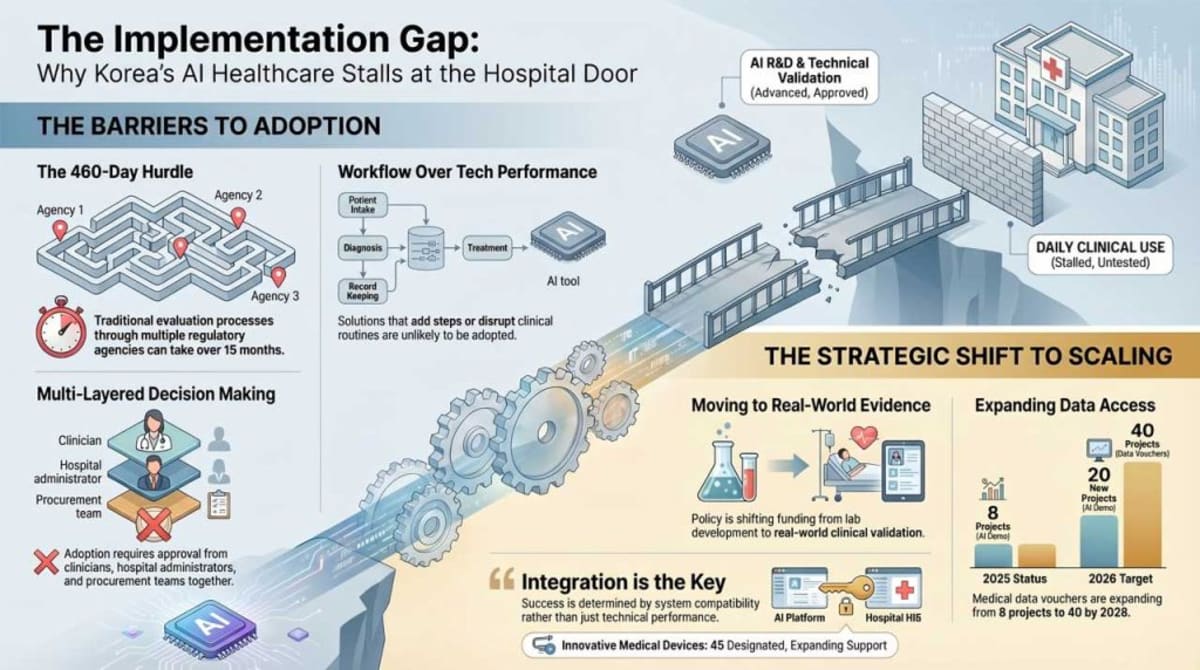
The problem isn't about whether the AI is accurate. It's about whether a busy emergency room doctor can actually use it without adding 10 minutes to their workflow or whether hospital budgets can justify the cost.
Korea's Ministry of Health and Welfare saw this gap and responded. In December 2025, they launched programs specifically targeting the "AI adoption gap in clinical settings," including training for medical staff and better data access for startups developing solutions.
The government is putting money where it matters most. They're expanding medical data support from 8 projects in 2025 to 40 in 2026 and planning 20 new AI demonstration projects to show hospitals how these tools work in practice.
The Ripple Effect
Korea's shift from innovation to integration could transform healthcare far beyond its borders. By 2026, the temporary reimbursement framework introduced in 2023 had already expanded AI tool access to approximately 200,000 patients.
The country is now building hospital-company partnerships focused on real-world evidence, economic evaluation, and post-approval support. These aren't just bureaucratic programs. They're bridges connecting Silicon Valley-style innovation with the messy reality of emergency rooms and surgical wards.
Dr. Hwangbo identifies the core challenge: "Without reimbursement, hospitals lack incentives to adopt new solutions." When AI tools increase workload or clash with existing systems, even supportive doctors can't make them stick.
Korea's approach recognizes a truth many tech hubs miss. In healthcare, integration isn't a technical problem. It's a human one involving clinicians, administrators, procurement teams, and budget holders who all need to say yes.
The country that mastered semiconductor manufacturing is now applying that same systematic thinking to healthcare. They're building the infrastructure, training, and financial pathways that turn promising AI prototypes into tools that actually help patients.
South Korea is proving that the next frontier in AI healthcare isn't building smarter algorithms—it's building smarter systems that let doctors use them.
More Images



Based on reporting by Regional: south korea technology (KR)
This story was written by BrightWire based on verified news reports.
Spread the positivity!
Share this good news with someone who needs it