South Korea Gives 50 SMEs $17M to Go Global With Big Brands
South Korea is turning corporate giants into launchpads for small businesses. The government just allocated $12 million to help 50 small companies piggyback on the global networks of major corporations to reach international markets.
Small businesses with great products often hit the same wall: they lack the overseas connections to sell globally. South Korea just found a creative solution by transforming its corporate giants into export highways for scrappy startups.
The Ministry of SMEs and Startups announced a $12 million program that pairs small companies with corporate partners who already have global reach. Instead of spending years building international networks from scratch, qualifying businesses can now tap into the overseas infrastructure of companies like CJ Olive Young and MegazoneCloud.
Here's how it works: corporations with established global presence team up with smaller firms that have competitive technology but no international footprint. The government covers up to 60 percent of project costs, with individual companies receiving up to $145,000 in support.
Twenty-five partnerships have already been selected in the first round, with another recruitment wave coming in May. About 50 projects total will receive funding this year.
The program got a major upgrade for 2026. Multiple corporations can now form consortiums with small businesses, combining different strengths like content production and distribution in one collaboration. Companies expanding into third countries can receive up to $1.5 million over three years.
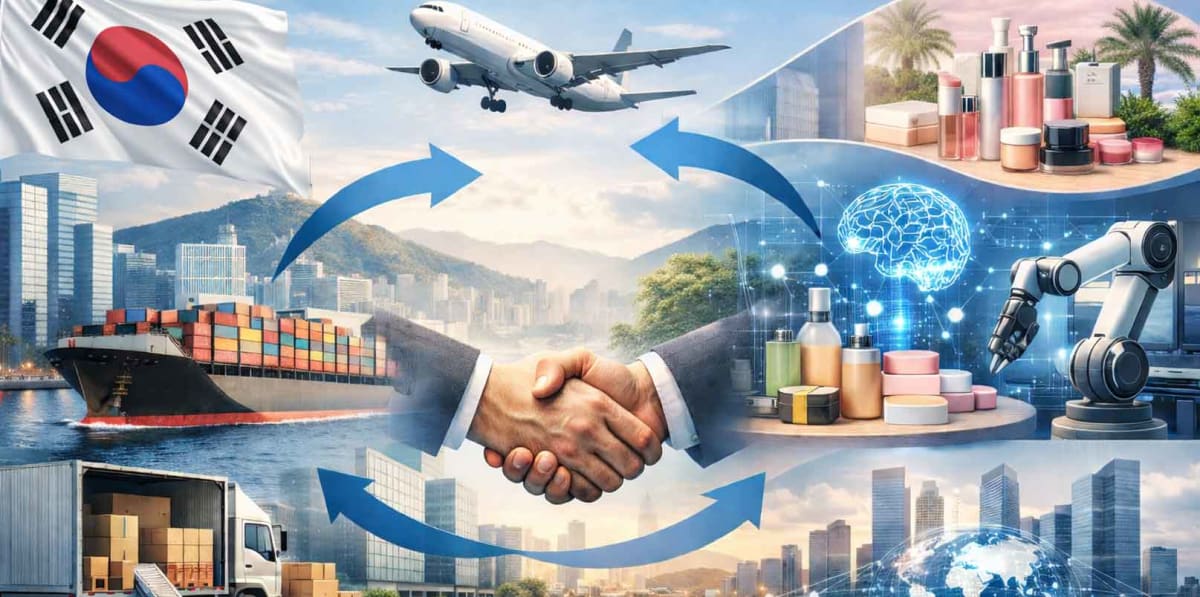
The government is specifically focusing on sectors where Korea already shines internationally. K-beauty brands and artificial intelligence solutions top the priority list, reflecting the country's export strengths.
The Ripple Effect
This approach solves a puzzle that stalls many startups worldwide. Large corporations spend decades building global supply chains, local subsidiaries, and buyer relationships. Opening those hard-won networks to smaller partners creates instant international access that would otherwise take years and millions to replicate.
The model works because both sides win. Big companies get innovative partners with fresh products and technologies. Small businesses gain market access they couldn't afford alone. The government amplifies both by subsidizing the collaboration.
For founders in Korea's startup ecosystem, corporate partnerships are becoming legitimate pathways to global markets, not just funding sources. Distribution giants, digital platforms, and broadcasting companies now function as export channels, backed by public money that reduces risk for everyone involved.
Small businesses can browse partnership opportunities through the government's Sangsaeng Nuri platform starting March 9. The approach shows how creative policy can turn existing infrastructure into new opportunity without building everything from zero.
South Korea is proving that sometimes the fastest way forward is helping small innovators stand on the shoulders of giants.
More Images



Based on reporting by Regional: south korea technology (KR)
This story was written by BrightWire based on verified news reports.
Spread the positivity!
Share this good news with someone who needs it