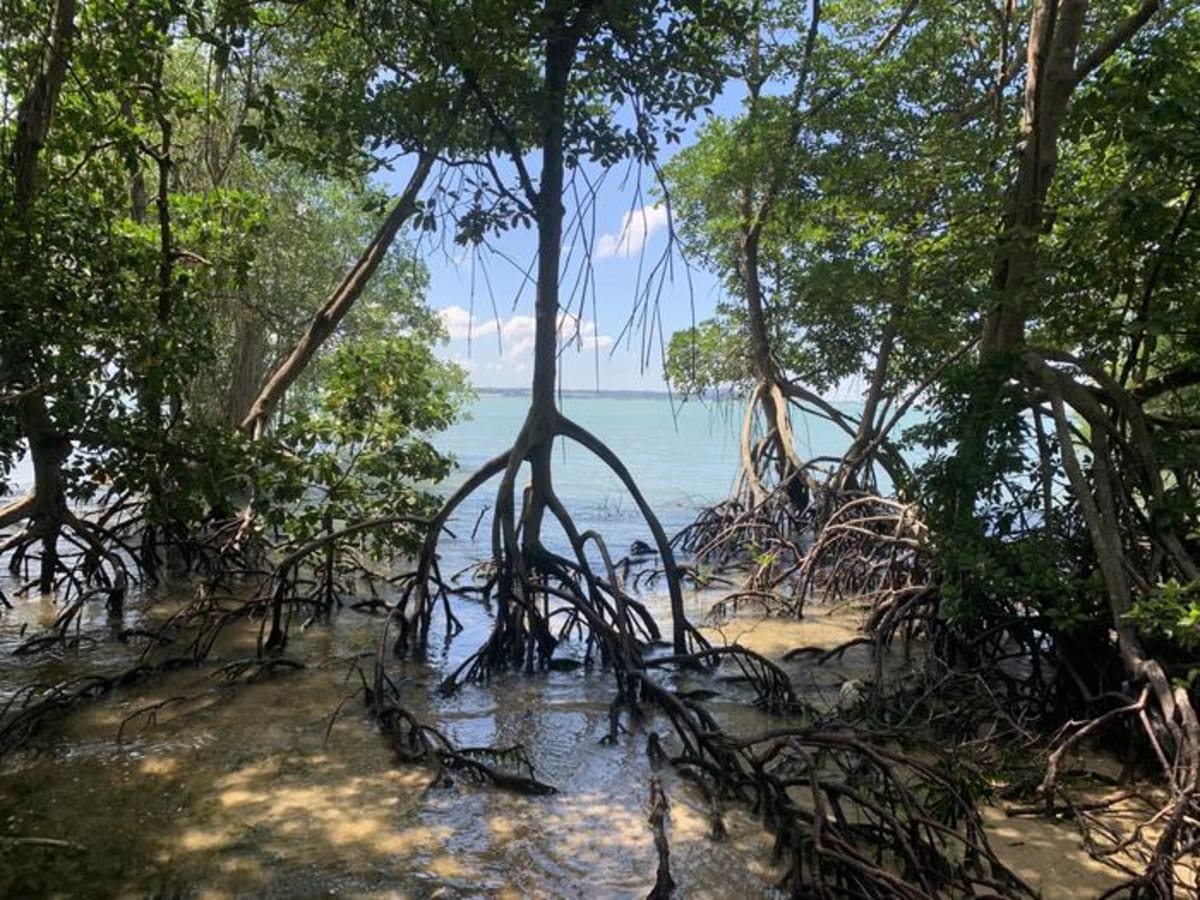
Southeast Asia Now Restoring Mangroves After Decades of Loss
After 30 years of devastating deforestation, Southeast Asia has completely reversed course and is now leading the world in mangrove forest recovery. The region that once caused 60% of global mangrove losses is now responsible for 43% of all new growth.
A rare conservation victory is unfolding across Southeast Asia's coastlines, where mangrove forests are growing back after decades of destruction.
For 30 years, Southeast Asia was ground zero for mangrove loss. Between the 1980s and 2010, the region accounted for nearly 60% of all mangrove deforestation worldwide as forests were cleared for shrimp farms and agriculture.
But a stunning new study analyzing 40 years of satellite data reveals something remarkable. Since 2010, Southeast Asia has shifted from losing mangroves to gaining them, leading a global comeback for these vital coastal forests.
"Southeast Asia was a hotspot for deforestation and degradation in the late 1990s and 2000s," said study co-author Zhen Zhang. "But after 2010, we see some very hopeful signals. It's a good story."
The turnaround centers on Indonesia and Myanmar. Indonesia, home to more mangroves than any other country, stopped its steep losses after 2005. Myanmar, once the most severely deforested mangrove nation, has seen its mangrove area grow by 10% since 2010.
Between 2010 and 2023, Southeast Asia contributed roughly 43% of all new mangrove growth worldwide. That's a complete reversal from being the world's biggest destroyer to its biggest restorer in just one generation.
The Ripple Effect
This recovery matters far beyond the coastline. Mangroves are powerhouse ecosystems that store massive amounts of carbon and shield communities from storms and tsunamis.
The 2004 Indian Ocean tsunami appears to have been a turning point. After witnessing how mangroves protected some areas while others suffered catastrophic damage, governments strengthened legal protections and public awareness soared.
Nature itself deserves credit too. Mangrove trees are surprisingly resilient and naturally recolonize available spaces. In Indonesia's Mahakam Delta, abandoned shrimp ponds are sprouting new forests as the trees reclaim their old territory.
"These abandoned ponds actually provide a very suitable place for mangroves to recover," Zhang explained.
The new forests aren't perfect replacements yet. Young trees have weaker root systems and need decades to match the carbon storage of ancient stands. That makes protecting remaining old-growth forests just as crucial as celebrating new growth.
"While some mangroves are still being lost, this could make them a rare conservation success story and an important source of optimism for climate action," said study co-author Daniel Friess from Tulane University.
After three decades of watching forests disappear, Southeast Asia is proving that environmental destruction doesn't have to be permanent.
More Images




Based on reporting by Mongabay
This story was written by BrightWire based on verified news reports.
Spread the positivity!
Share this good news with someone who needs it