Space Station Research Delivers 6 Big Wins for 2025
Scientists aboard the International Space Station completed over 750 experiments in 2025, producing breakthrough results that could transform surgery in space, grow bone on demand, and power future Mars missions. These advances aren't just for astronauts—they're opening doors to medical and technological progress right here on Earth.
Researchers working aboard the International Space Station wrapped 2025 with major victories in space medicine, materials science, and human performance that could reshape both space exploration and life on Earth.
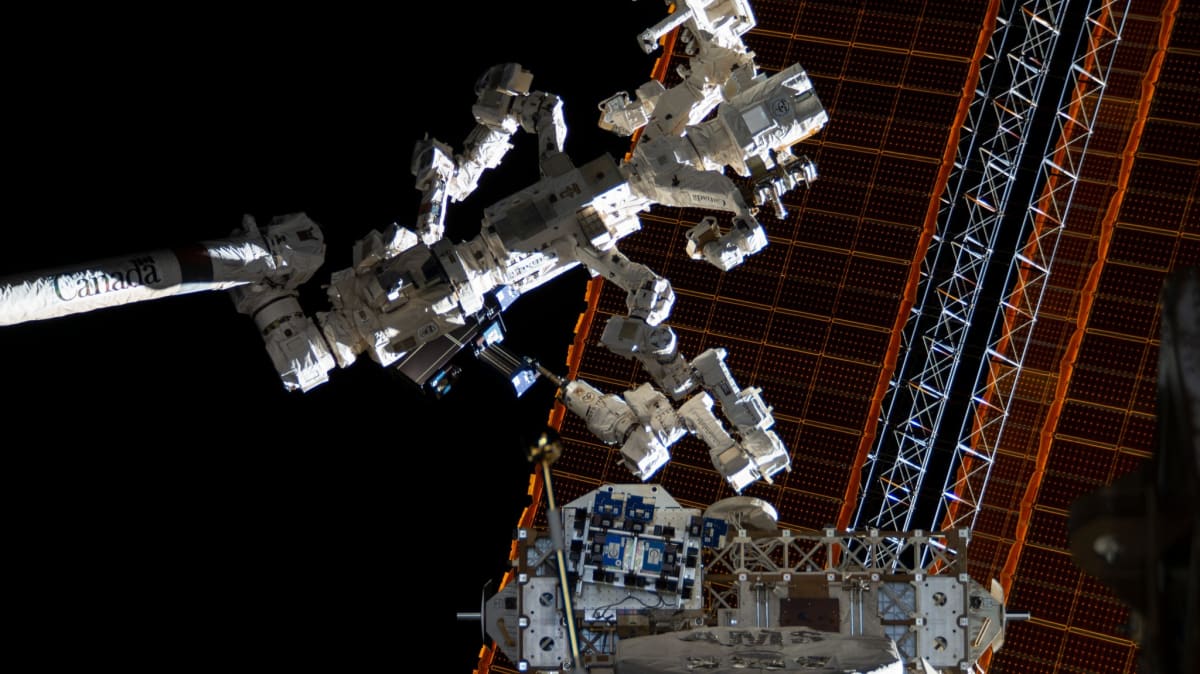
Among the year's standout achievements, scientists successfully tested a miniature robotic surgery system in microgravity. The device performed simulated surgical procedures remotely from Earth, showing that while communication delays slowed things down, robotic precision remained nearly perfect. This breakthrough means future astronauts on the Moon or Mars could receive precise surgical care, and remote communities on Earth could access life-saving procedures without a surgeon physically present.
Russian scientists achieved something that sounds like science fiction: they grew synthetic bone in space using magnetic levitation. The Magnetic 3D Bioprinter positioned calcium crystals into structures that promote new bone growth, and the samples formed in microgravity showed superior quality compared to Earth-grown versions. Astronauts lose bone density during long space missions, making this discovery crucial for future deep space travel and a potential game-changer for treating bone injuries and osteoporosis on Earth.
NASA's materials research revealed an unexpected ally in the fight against space radiation. After exposing various materials to the harsh space environment for six months, researchers found that polymers infused with fungal melanin showed the greatest resistance to radiation damage. These lightweight, naturally derived materials could protect astronauts on future missions while offering new options for medical radiation protection and UV-resistant structures back home.
Japanese researchers proved that all solid-state lithium ion batteries can handle the extreme conditions of space. After 434 days exposed to temperature swings and vacuum, the batteries showed stable performance with only a 2% capacity loss. These safer, more reliable power systems could energize lunar bases and Mars habitats while providing better battery options for extreme environments on Earth.
The Ripple Effect
The space station research isn't just preparing humanity for distant worlds. Every investigation solves problems that exist right now on Earth. Remote surgery technology brings specialized medical care to isolated communities. Synthetic bone grafts offer hope to millions with skeletal injuries. Radiation-resistant biomaterials protect workers and patients. Advanced batteries power everything from electric vehicles to emergency equipment in harsh climates.
NASA also discovered that astronauts experience temporary impairment in complex piloting skills after returning from space, with higher landing speeds and navigation errors during simulated flights. Most pilots recovered to baseline performance on their second attempt the same day, providing critical data for developing countermeasures that keep astronauts sharp.
The 750 investigations completed in 2025 represent more than scientific curiosity—they're investments in solving real problems that affect millions of people today while building the foundation for humanity's next giant leap.
More Images

Based on reporting by NASA
This story was written by BrightWire based on verified news reports.
Spread the positivity!
Share this good news with someone who needs it