Space Station's Quantum Lab Gets Historic Upgrade
NASA just flipped the switch on a newly upgraded quantum laboratory aboard the International Space Station that makes atoms behave in ways impossible anywhere on Earth. The minifridge-sized lab chills matter to nearly absolute zero, unlocking discoveries that could revolutionize everything from medical imaging to space navigation.
Scientists aboard the International Space Station just powered up a remarkable lab that studies matter at temperatures so cold, atoms start acting like waves instead of particles.
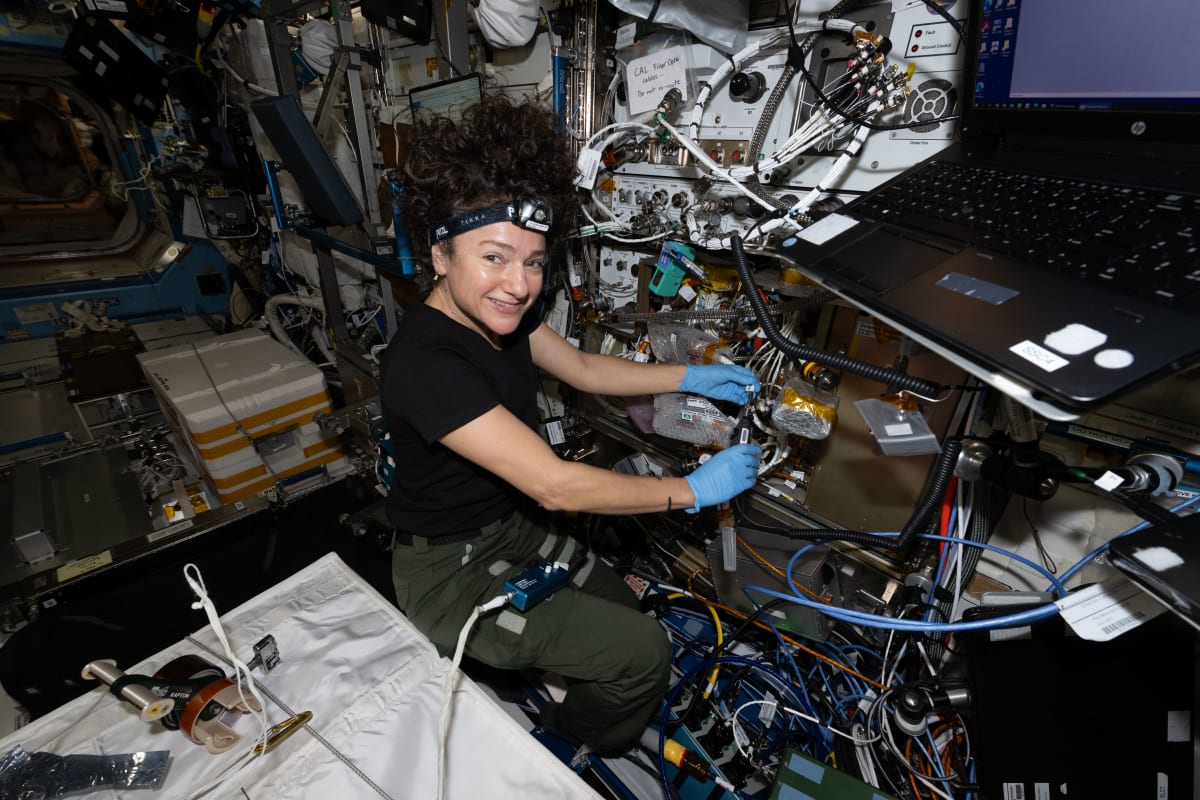
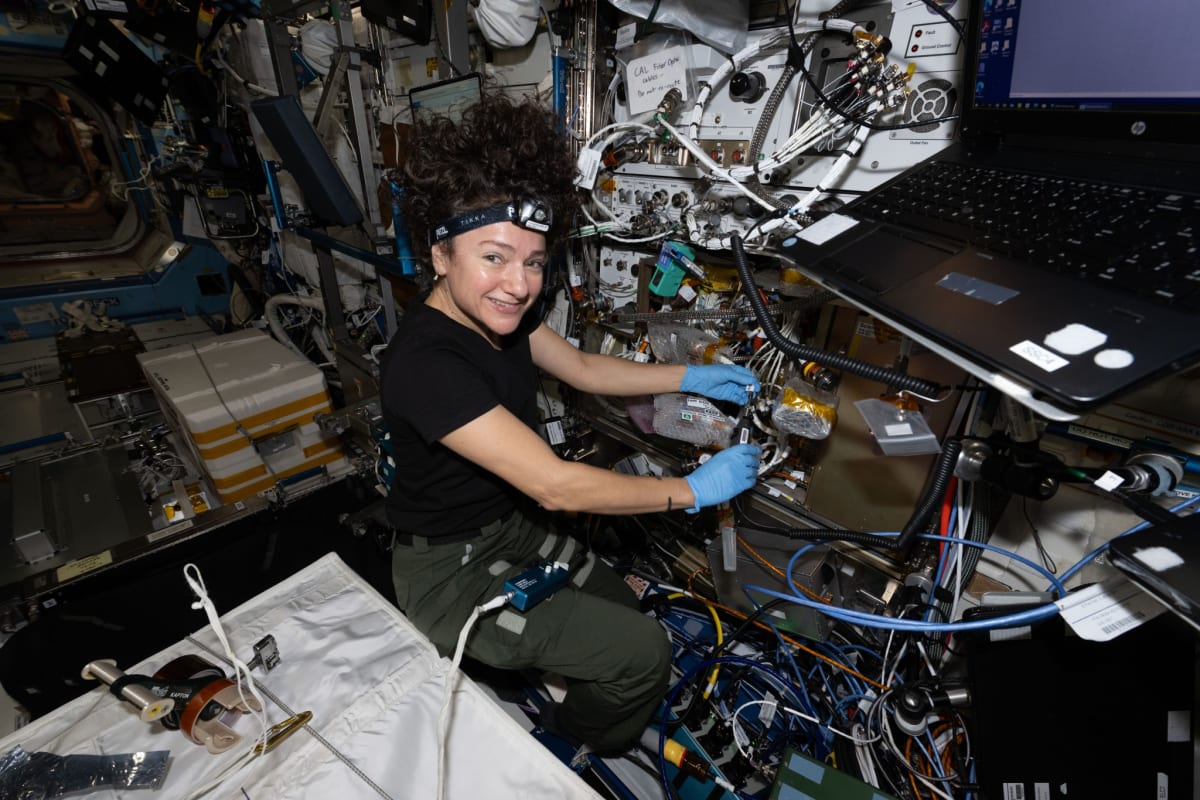
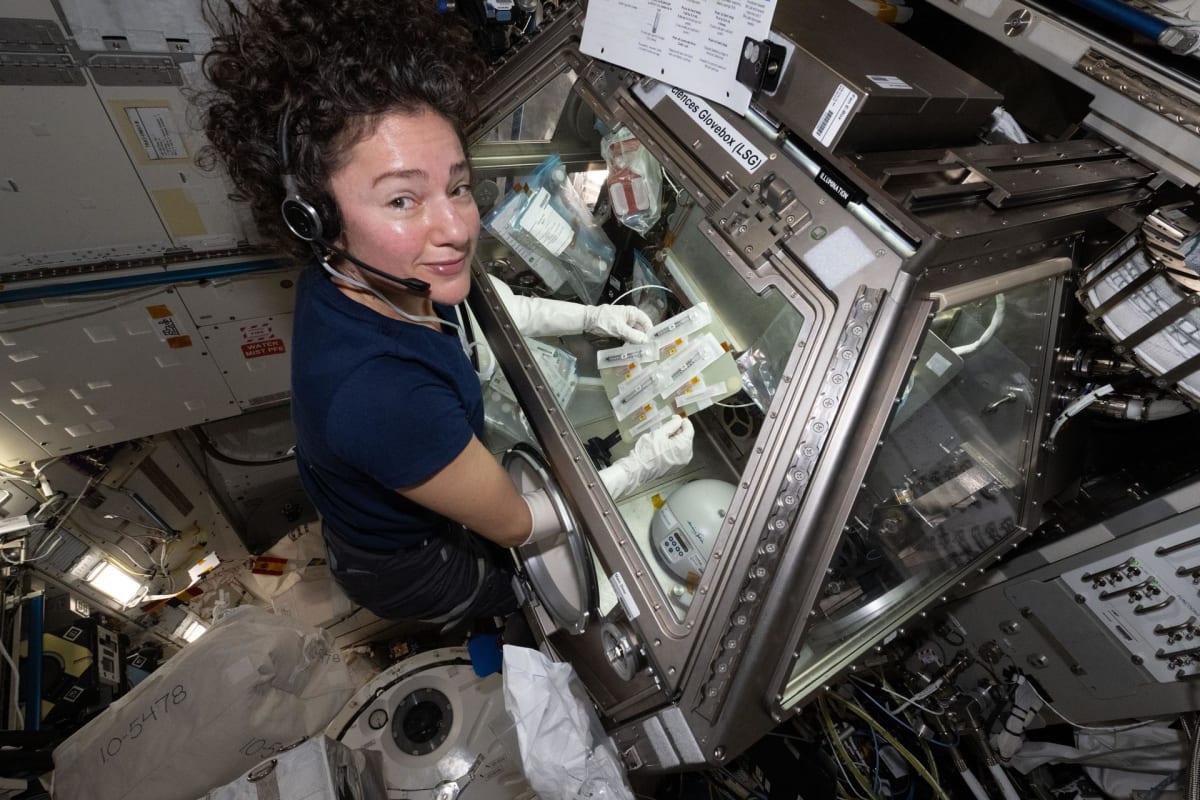
NASA's Cold Atom Lab, about the size of a minifridge, received its fourth upgrade since launching in 2018. The new equipment lets researchers explore quantum physics in ways that gravity on Earth simply won't allow.
Here's what makes it special: the lab cools rubidium and potassium atoms to below minus 459 degrees Fahrenheit, just a hair above absolute zero. At these extreme temperatures, atoms form something called a Bose-Einstein condensate, a fifth state of matter beyond solids, liquids, gases, and plasma.
"At the coldest temperatures, matter behaves drastically different from anything we have experienced," said Jason Williams, project scientist at NASA's Jet Propulsion Laboratory. The wavelike nature of matter takes over, letting scientists make incredibly precise measurements of time, gravity, and motion.
The magic happens through a careful dance of lasers and magnets. First, metal strips heat up to create an atomic gas inside a vacuum chamber. Then lasers tuned to specific frequencies drain energy from the atoms, cooling them by slowing them down. Finally, magnetic traps hold the ultracold gas in place while it reaches nearly a standstill.
What takes an entire room full of equipment on Earth fits into a single experiment rack in space. And microgravity lets these quantum waves grow larger and interact for longer periods than any earthbound lab could manage.
The Ripple Effect
Five international research teams are already using the upgraded lab to study fundamental physics. But the real payoff could extend far beyond pure science.
The quantum revolution of the last century gave us lasers, cellphones, and MRI machines. This "quantum 2.0" research directly manipulates large quantum states in ways that could transform future technologies.
"We're demonstrating that we can make quantum technology work reliably in space," said Ethan Elliott, deputy project scientist for Cold Atom Lab. The tools being tested could one day support Earth science missions, help spacecraft navigate to distant worlds, or measure gravity on the Moon with unprecedented accuracy.
The latest upgrade includes a redesigned magnetic trap that changes the shape of quantum gas clouds, letting scientists test different atomic properties. New metal strips improve how those gas clouds form in the first place.
Project manager Kamal Oudrhiri calls it "the closest thing we have to controlling the boundary of the quantum world." Each upgrade pushes that boundary further, keeping the United States at the forefront of space-based quantum technologies.
The Cold Atom Lab proves that some of the universe's strangest behaviors only reveal themselves when we venture beyond Earth, opening doors to discoveries we're only beginning to imagine.
More Images
Based on reporting by NASA
This story was written by BrightWire based on verified news reports.
Spread the positivity!
Share this good news with someone who needs it