SpaceX's Starship 3 Breaks Height and Power Records
The world's tallest and most powerful rocket is launching next week, breaking records set by NASA's legendary Saturn V and paving the way for humans to return to the moon. SpaceX's upgraded Starship represents a giant leap forward in making space exploration more accessible than ever.
The tallest rocket in history is standing ready in Texas, about to make its debut flight into the record books.
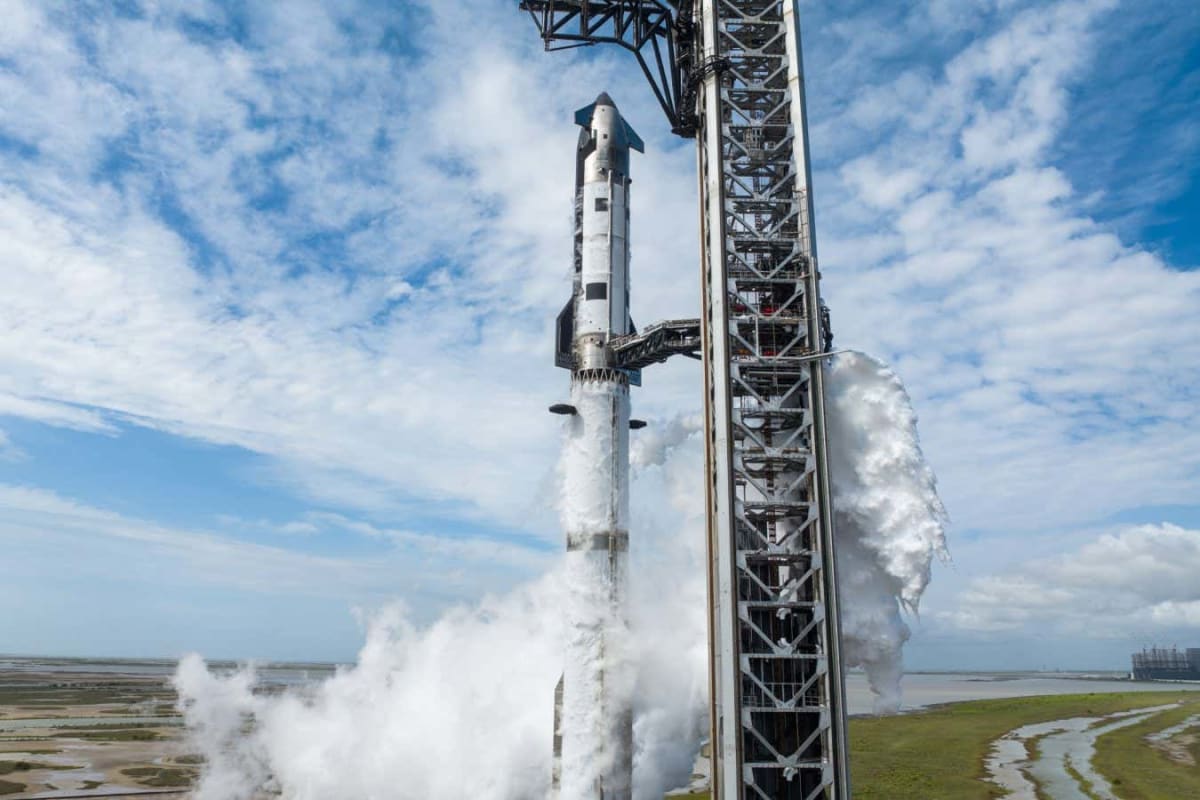
SpaceX's Starship 3 towers at 124 meters tall, surpassing even the legendary Saturn V that carried astronauts to the moon in the 1960s. The rocket is scheduled to launch as soon as May 19 from the company's Starbase facility, carrying 75,000 kilonewtons of thrust, nearly twice the power of NASA's current Space Launch System.
To put that power in perspective, all of Starship's engines running at peak output would generate more electricity than the entire country of Germany produces. "It's massive," says Alistair John at the University of Sheffield.
This isn't just about breaking records. Starship 3 is the production model that NASA is counting on to land astronauts on the moon as early as 2028 through the Artemis program.
The upgraded rocket features redesigned grid fins for steering, a larger fuel tank, and equipment for refueling in orbit. It's also equipped with improved heat-resistant tiles to protect it during the fiery journey back through Earth's atmosphere.
The Ripple Effect
SpaceX's approach to rocket development is changing how we reach space. Instead of decades of cautious planning, the company embraces rapid testing and learning from failures.
Out of 11 previous test flights, six have succeeded and five have failed. But each failure taught engineers valuable lessons that improved the next version.
Peter Shaw at Kingston University London believes this strategy is working perfectly. "Rocket science is difficult. It's challenging. It's complex," says Shaw. "Can they do it? Yes. Even if you have another failure or two, or five, they'll learn from it, they'll iterate it and they'll put a new system together."
NASA is watching closely because Starship will serve as one of two commercial lunar landers for the Artemis program. After the recent Artemis II mission took four astronauts around the moon, farther from Earth than any human has traveled before, the next step is actually landing on the lunar surface.
The upcoming test will verify the design that SpaceX plans to adapt into the Human Lander System. That version will need different engines suited for the moon's lower gravity and won't need a heat shield since it will never return to Earth's atmosphere.
Beyond the moon, SpaceX envisions Starship carrying satellites into orbit and eventually running missions to Mars. The rocket represents a future where space isn't just for elite astronauts but could become accessible for scientific research, exploration, and maybe one day, regular people.
Next week's launch marks the transition from prototype to production model, the rocket that could carry humanity back to the moon and beyond.
More Images



Based on reporting by New Scientist
This story was written by BrightWire based on verified news reports.
Spread the positivity!
Share this good news with someone who needs it