Stanford Senior Engineers Her Own Rare Disease Cure
A college student diagnosed with a muscle-wasting disease at 13 is now leading research to cure it, winning $50,000 to develop her breakthrough therapy. Her work could help one million people worldwide living with the same condition.
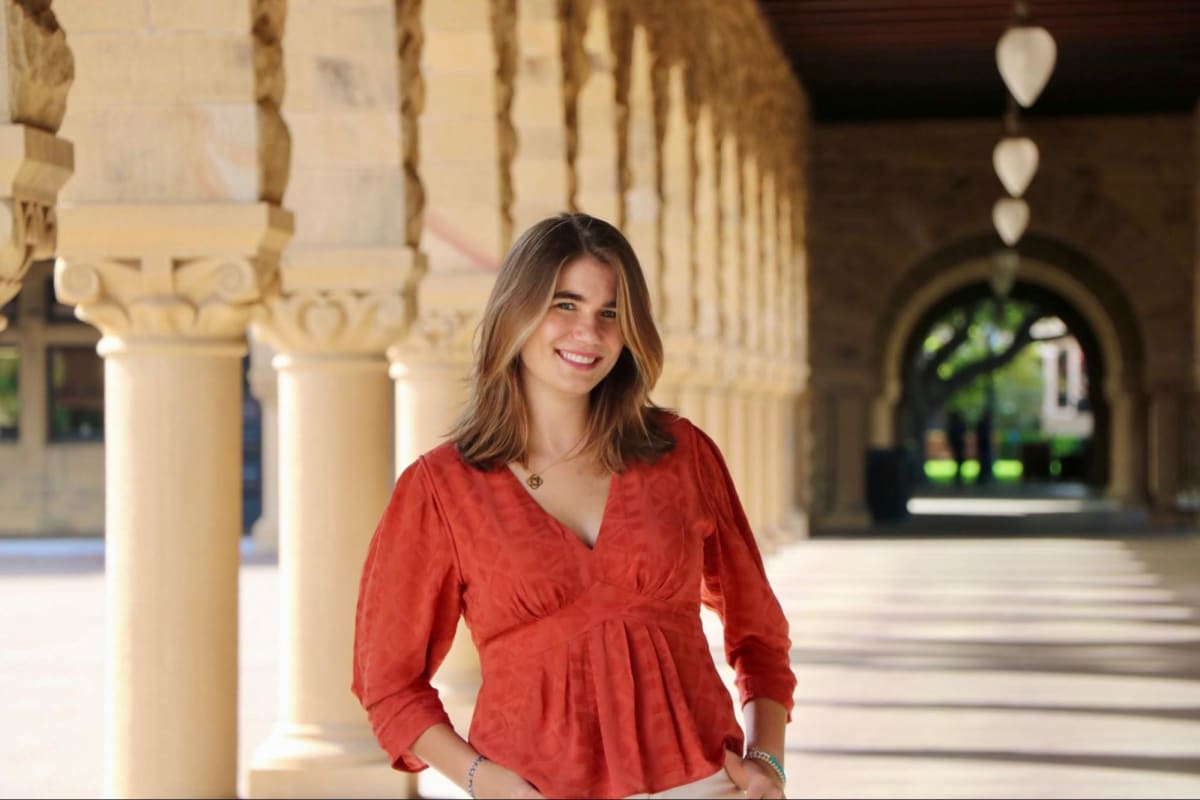
Heloise Hoffmann watches cells die in her Stanford lab, knowing the same diseased cells are inside her own muscles right now.
At 10, Hoffmann was planning to go pro in tennis. Then she started stumbling on the court, dropping her racket without warning, and collapsing mid-match. After three years of flying between specialists across the country, a phone call delivered the diagnosis: Facioscapulohumeral Muscular Dystrophy, a rare disease that causes muscles to progressively weaken and lose the ability to heal.
About one in 8,000 people have FSHD. There's currently no cure. Doctors told her to stop playing sports immediately.
Today, the Stanford senior can only lift her arm to chest height. But she's doing something her 13-year-old self couldn't imagine: she's engineering a cure.
When Hoffmann arrived at Stanford, she realized she had access to world-class genetic engineering tools. She majored in bioengineering and assembled a team of seven undergraduates for the global iGEM competition, the largest genetic engineering contest in the world.
Their solution targets DUX4, the gene responsible for FSHD. In healthy people, this gene stays inactive. In FSHD patients, it mistakenly turns on and produces proteins that destroy muscle tissue.
Hoffmann's team engineered an inactive version of DUX4 that attaches to DNA and blocks the harmful version from working. Think of it as a protective shield that stops the disease before it can damage muscles. The therapy won them a gold medal.
She pitched the project with two teammates to Stanford's entrepreneurship program and won a $50,000 grant to develop it further. Now she spends hours daily in the lab, working with Professor Stanley Qi, who specializes in CRISPR-based medical therapies.
When Hoffmann first approached Qi about researching FSHD, he wondered how an undergraduate could tackle such a complex project typically reserved for PhD students. Then she explained her personal connection and years of immersing herself in patient advocacy and research.
"I immediately find this amazing," said Qi, an associate professor of bioengineering. He calls Hoffmann a unique scientist who combines deep expertise with urgent personal mission, a rare combination that drives breakthrough discoveries.
Why This Inspires
Hoffmann received a Terman Award, given to the top 30 graduating engineering students at Stanford. She's planning to attend medical school while continuing her research.
Her work represents something powerful: someone refusing to accept "no cure" as a final answer. Between classes and lab work, she's building a path forward not just for herself, but for up to one million people worldwide living with FSHD.
She turned her diagnosis from a dream-shattering phone call into a mission that could change countless lives.
Based on reporting by Google News - Disease Cure
This story was written by BrightWire based on verified news reports.
Spread the positivity!
Share this good news with someone who needs it
%3Amax_bytes(150000)%3Astrip_icc()%3Afocal(999x0%3A1001x2)%2Fmichael-j-fox-1-16107b4a149a485e83a78fedd03d5096.jpg)