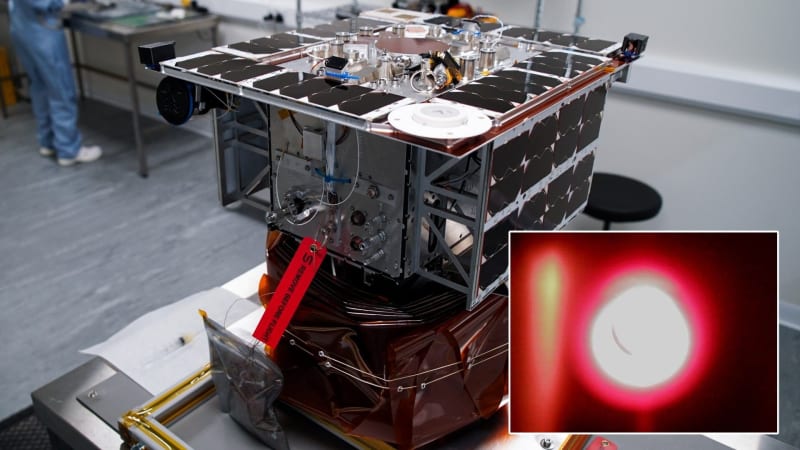
Startup Beats GPS Jamming With New Satellite Navigation
A Virginia company just proved satellites can navigate without GPS, solving a growing problem that's been disrupting spacecraft in conflict zones. The breakthrough could protect thousands of satellites from interference that's becoming more common every day.
Satellites circling Earth just got a backup plan, and it arrived at exactly the right time.
TrustPoint, a Virginia startup, successfully transmitted navigation signals from a small ground station to an orbiting spacecraft without using GPS. The test marks a major step toward protecting satellites from the jamming attacks that increasingly plague military and commercial operations in conflict zones.
The problem has been growing worse. Most satellites in low Earth orbit depend entirely on GPS to know where they are and what time it is. But GPS signals are getting jammed by interference from the ground, leaving spacecraft vulnerable and sometimes unable to function properly.
TrustPoint's solution flips the usual approach. Instead of beaming signals down from space like GPS does, their system sends stronger signals up from Earth. The ground station, about the size of a microwave oven, generates its own precise time and location data, then transmits it directly to satellites overhead.
"It transmits signals up to LEO satellites, tells them where they are and what time it is," said Patrick Shannon, the company's CEO and co-founder. One compact station can track every satellite in view at the same time.
The compact design means these stations can be deployed quickly and affordably around the world. TrustPoint plans to install up to 100 ground nodes to create a global network. The system uses C-band frequencies, which provide stronger signals than the L-band frequencies GPS relies on.
The recent test used a partner's satellite already in orbit, proving the technology works with existing spacecraft from any operator. TrustPoint has three of its own satellites in space and plans more launches this year.
The Ripple Effect
This breakthrough reaches far beyond just protecting satellites from jamming. Thousands of spacecraft provide services people use every day, from weather forecasting to internet connectivity in remote areas. When GPS fails, those services can fail too.
By creating an independent backup system, TrustPoint is building resilience into space infrastructure that modern life increasingly depends on. The U.S. Space Force recognized the importance early, funding the development through its innovation programs.
Other companies are also developing alternatives to GPS, but TrustPoint's ground-based approach offers unique advantages. The signals are stronger, the system is harder to jam, and existing satellites can use it without major modifications.
As more companies and countries launch satellites, having multiple navigation options becomes critical infrastructure, not just a nice-to-have backup. This successful test proves that protection is now possible.
The sky just got a whole lot more reliable for everyone looking up.
More Images


Based on reporting by SpaceNews
This story was written by BrightWire based on verified news reports.
Spread the positivity! 🌟
Share this good news with someone who needs it