Stony Brook Grad Unlocks Green Hydrogen Storage Solution
A new venture is making hydrogen fuel practical by using existing gas pipelines instead of building costly new infrastructure. The breakthrough could accelerate clean energy adoption across transportation, industry, and power generation.
Getting clean hydrogen fuel from the lab to your neighborhood just got a whole lot more realistic.
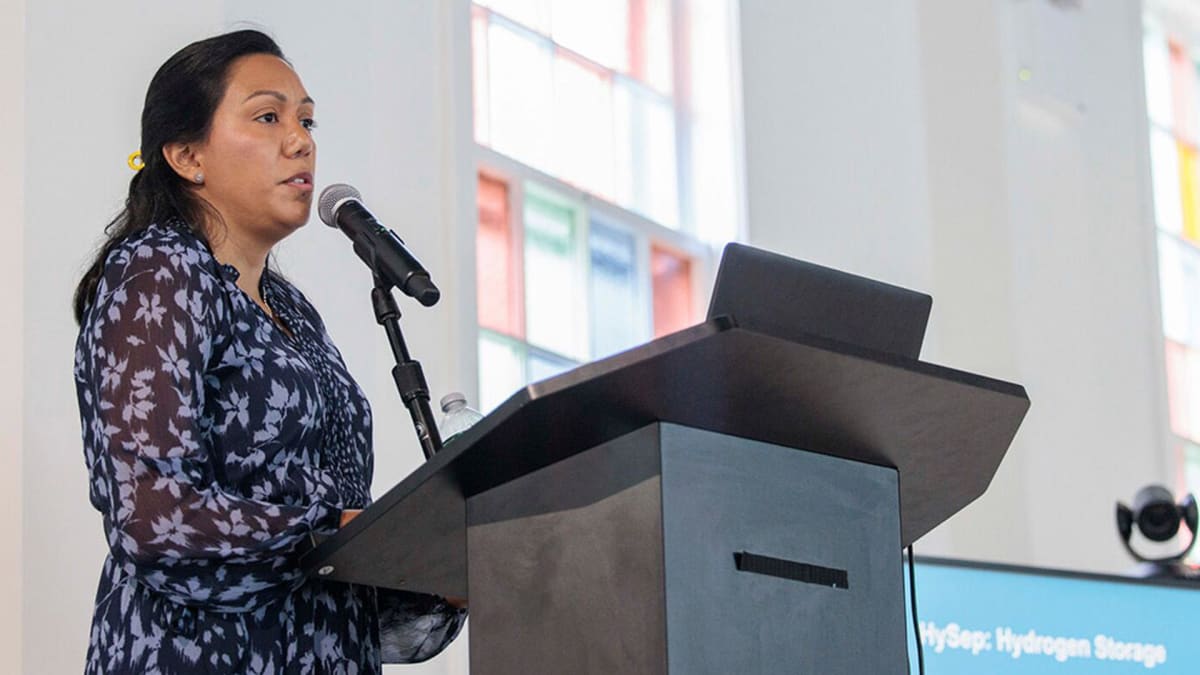
Stephanie Taboada, a 2023 Stony Brook PhD graduate, just showcased her startup HySep at The New York Climate Exchange's first Climate Tech Fellowship program. Her venture is developing hydrogen storage systems that work within gas pipelines we already have, sidestepping one of the biggest barriers to clean energy adoption.
Hydrogen has long been called a game changer for clean energy, but there's been a problem. Storing and moving it safely has been either dangerously risky or prohibitively expensive, keeping it locked in research labs instead of powering real communities.
Taboada saw an opportunity everyone else seemed to miss. Instead of demanding billions in new infrastructure, HySep is designed to integrate with existing gas networks. That means lower costs, faster deployment, and a path from "someday technology" to near-term reality.
Safety drives everything HySep does. "If we want hydrogen to play a serious role in decarbonization, we need storage systems that communities and utilities can trust," Taboada explained during her February 26 presentation. "Safety is not optional. It is foundational."
The approach matters because it changes the entire conversation around hydrogen adoption. Cities and utilities can start transitioning to clean hydrogen without ripping up streets or building entirely new distribution systems.
The Ripple Effect
HySep's potential impact reaches far beyond one technology. If hydrogen storage becomes practical and affordable, it could accelerate decarbonization across three major sectors at once: transportation, heavy industry, and power generation.
Taboada's journey from researcher to startup founder wasn't simple. The six-month Climate Tech Fellowship provided mentorship, venture development training, and funding to help her shift from academic thinking to commercial strategy. She had to learn to translate complex technical achievements into clear value propositions that customers and regulators could understand.
Now an adjunct professor at Stony Brook and assistant professor at Suffolk County Community College, Taboada is one of eight inaugural fellows selected by The New York Climate Exchange. The program specifically targets early-stage climate innovators ready to move discoveries from lab benches to market reality.
Her focus remains firmly on real-world impact. "This is about building technologies that don't stay in the lab," she said. "It's about creating solutions that communities can use and benefit from."
Clean energy breakthroughs work best when they fit into the world we already have, and HySep is proving that practical innovation might be our fastest path to a cleaner future.
Based on reporting by Google News - Tech Breakthrough
This story was written by BrightWire based on verified news reports.
Spread the positivity!
Share this good news with someone who needs it
.jpg%3Fitok%3DHHGtzxmb)
