Student Finds 75-Million-Year-Old Dragonfly in Alberta
A student searching for ancient plants in Canada's Dinosaur Provincial Park discovered a perfectly preserved dragonfly wing from the age of dinosaurs. This 75-million-year-old fossil fills a massive gap in scientific knowledge and reveals how prehistoric skies teemed with life.
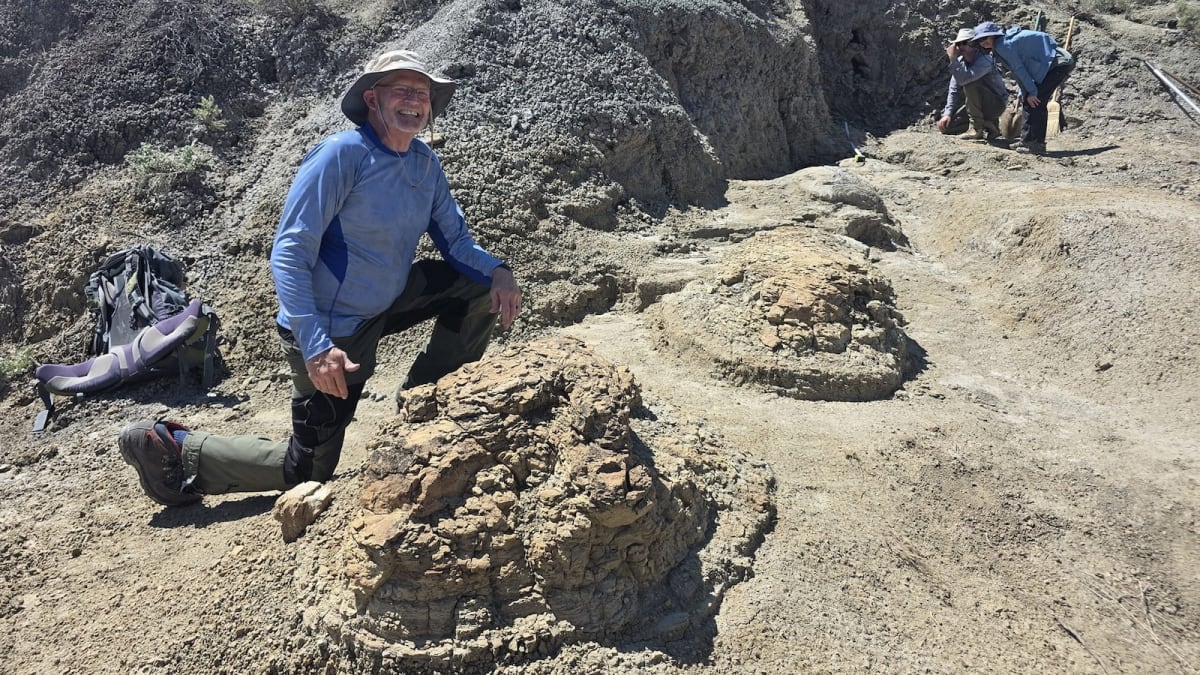
While hunting for fossilized plants in Alberta's famous "land of dinosaurs," a student made a discovery that rewrote the history books. Nestled in the barren ridges of Dinosaur Provincial Park, they found a perfectly preserved dragonfly wing from 75 million years ago, the first of its kind ever discovered in Canada.
The delicate wing measures just 25 millimeters long, but its impact on science is enormous. Named Cordualadensa acorni, this tiny specimen proved that advanced aerial predators soared through prehistoric skies while dinosaurs walked below.
Scientists at McGill University were stunned by what the fossil revealed. It fills a 30-million-year gap in the dragonfly family tree and established an entirely new insect family called Cordualadensidae.
Before this discovery, researchers knew ancient dragonflies existed but had no physical proof connecting Jurassic species to modern ones. This fossil acts as the missing link, showing that dragonflies already had sophisticated gliding abilities similar to today's species millions of years ago.
The finding came from an unlikely place. Dinosaur Provincial Park is a UNESCO World Heritage site famous for its dinosaur bones, not delicate insect wings.
Researchers used high-resolution imaging to study the wing's intricate vein patterns. The structure suggests this dragonfly could glide efficiently across open areas and possibly migrated long distances, much like the modern Globe Skimmer dragonfly that travels thousands of miles.
The Bright Side
Finding such fragile remains is considered a minor miracle in paleontology. The wing survived because it was quickly buried in fine siltstone sediment in what was once a high-energy river, protecting it from decomposition and scavengers for millions of years.
This discovery paints a vivid picture of Late Cretaceous Alberta as a subtropical paradise with lush floodplains, still waters, and diverse plant life. While mighty dinosaurs like Hadrosaurus and Centrosaurus roamed the landscape, dragonflies zipped through humid air above them, hunting smaller insects in an interconnected ecosystem more complex than scientists previously imagined.
The student's patient search for plant fossils led to something far more extraordinary, proving that the next groundbreaking discovery might be waiting just beneath our feet.
More Images




Based on reporting by Google: fossil discovery
This story was written by BrightWire based on verified news reports.
Spread the positivity!
Share this good news with someone who needs it