Students Build $2.8M Asteroid Mission for 2029 Flyby
A team of 20 undergraduates at China's Tsinghua University is building a spacecraft to study asteroid Apophis when it passes closer to Earth than some satellites in 2029. Their $2.8 million mission proves cutting-edge space science doesn't need a billion-dollar budget.
More than 20 undergraduate students in Beijing are building a spacecraft that will fly within 7 kilometers of an asteroid, and they're doing it for less than the cost of a single house in many cities.
The Student-led Threatening Asteroid Reconnaissance of Tsinghua, or START, will launch in early 2028 to study asteroid Apophis during its historic close approach to Earth. On April 13, 2029, this 340-meter space rock will pass within 32,000 kilometers of our planet, closer than satellites in geostationary orbit.
The timing makes this mission possible. Instead of spending years cruising through deep space like traditional asteroid missions, START gets to study what chief scientist Bin Cheng calls a "doorstep" target that comes right to Earth's neighborhood.
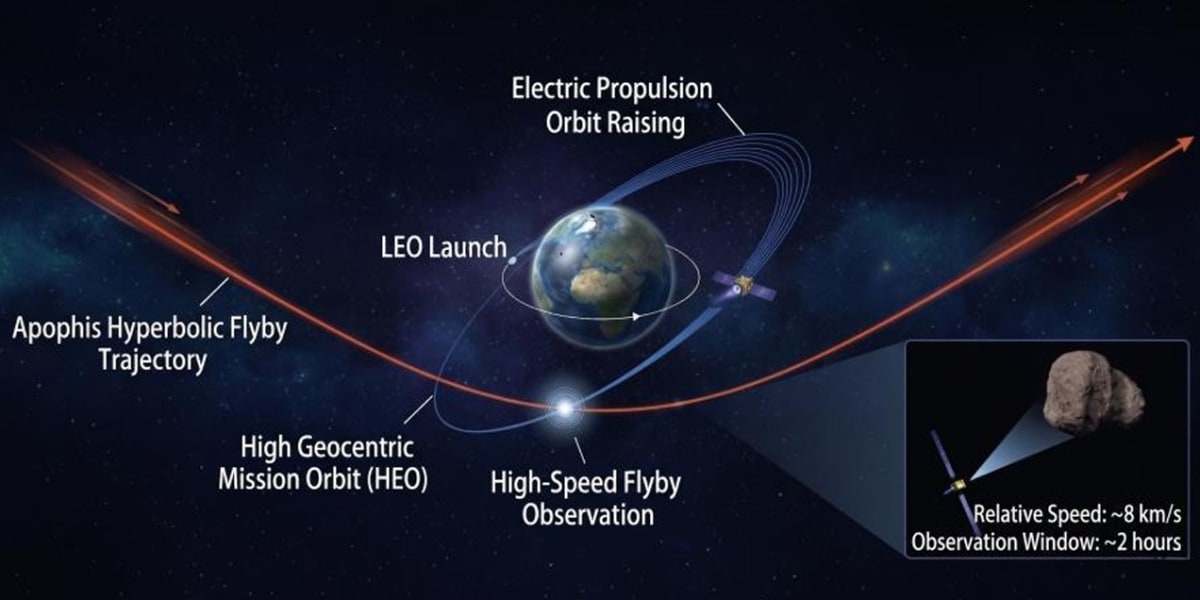
The 200-kilogram spacecraft will hitch a free ride on a Zhuque-3 rocket, then use solar electric propulsion to raise its orbit over 200 days. At closest approach, it will zip past Apophis at 8.74 kilometers per second, using autonomous tracking to keep cameras locked on the asteroid during the brief encounter.
The student team designed cameras capable of 8-centimeter resolution, sharp enough to spot individual boulders on the asteroid's surface. They aim to capture how Earth's gravity tugs and stresses Apophis during the flyby, data that complements three professional space agency missions studying the same asteroid.
Why This Inspires
START's $2.8 million budget came together through university support, donations, and sponsorships covering everything from the launch to propulsion hardware. The students initiated the project in April 2025 and have already completed spacecraft design, moving into subsystem integration this year.
Three flagship missions from NASA, the European Space Agency, and Japan will also study Apophis around the same time. But START fills a unique window, capturing the moment of peak tidal stress when Earth's gravity pulls hardest on the asteroid.
The undergraduate team plans spacecraft delivery by September 2027. If successful, they'll attempt an extended mission visiting additional near-Earth asteroids, pushing the limits of low-cost solar electric propulsion.
This isn't just about one asteroid flyby. It's about students proving that important space science can happen on budgets small enough to crowdfund, opening doors for universities and smaller countries to join missions once reserved for superpowers.
More Images


Based on reporting by SpaceNews
This story was written by BrightWire based on verified news reports.
Spread the positivity!
Share this good news with someone who needs it