Students Build World's First Solar-Powered Ambulance
Twenty-three students in the Netherlands just created a solar ambulance that can drive 715 kilometers on sunshine alone, bringing lifesaving healthcare to remote communities. In August, it heads to Kenya for real-world testing.
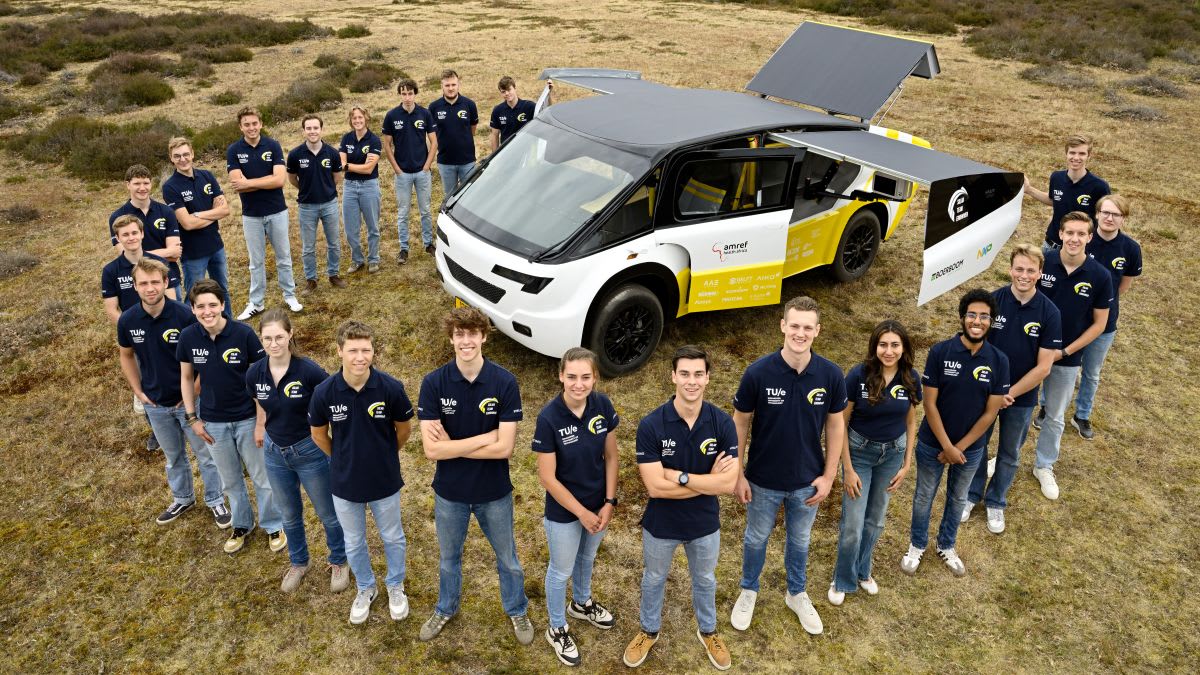
Imagine living so far from a hospital that basic healthcare feels impossible. Twenty-three students at Eindhoven University of Technology just built a solution that runs on pure sunshine.
Stella Juva, the world's first solar-powered ambulance, was unveiled this week after just one year of development by Solar Team Eindhoven. Solar panels on the roof power everything from the motor to the medical equipment inside, and on a sunny day the vehicle can travel 715 kilometers without charging.
But here's the clever part. The ambulance isn't designed to rush patients to distant hospitals. Instead, it brings healthcare directly to people in remote areas, equipped to perform blood tests, screen for diseases like tuberculosis and malaria, administer vaccines, and conduct pregnancy ultrasounds.
Team manager Mathijs van Gerven knows what you're thinking. How does a solar vehicle work in one of Europe's cloudiest countries? The 50 kWh battery stores energy so the ambulance keeps running even when clouds roll in, powering critical medical equipment without interruption.
The students partnered with international health organizations including Amref Health Africa, formerly known as the Flying Doctors. "In remote areas, healthcare workers sometimes travel great distances by bicycle, and reliable energy is not a given," said Femke Maurits of Amref's Dutch branch. Energy keeps vaccines cold and medical equipment running, two essentials that many communities lack.
In August, Stella Juva heads to Kenya for real-world testing. The team will start with a kickoff event at Amref International University, attended by Dutch embassy officials and Kenyan diplomats. Then the ambulance will be tested at two field locations, simulating actual healthcare scenarios like treating tuberculosis patients.
Three team members earned the chance to drive Stella Juva in Kenya after being the first to test her in the Netherlands. Van Gerven jokes they'll all want to drive those first Kenyan kilometers.
The Ripple Effect
After Kenya, the ambulance will tour events across the Netherlands and possibly Europe to inspire companies and healthcare providers to scale up production. The team hopes their prototype sparks collaboration between tech companies and social organizations to bring solar healthcare vehicles to communities worldwide.
Van Gerven's message is simple but powerful: "If 23 students are able to do this in just one year, think about what is possible if technological companies and social organisations collaborate."
A year of student innovation might just change how millions of people access healthcare.
Based on reporting by Dutch News
This story was written by BrightWire based on verified news reports.
Spread the positivity!
Share this good news with someone who needs it