Sweden's Flying Ferry Slashes Mumbai Commutes by 85%
A Swedish company just raised €30 million to scale production of electric ferries that literally fly above water, cutting a two-hour Mumbai commute to 35 minutes while using 80% less energy than diesel boats. The breakthrough is already transforming public transit in Stockholm, Oslo, and dozens of cities worldwide.
Imagine cutting your daily two-hour commute down to 35 minutes while riding a boat that flies just above the water's surface.
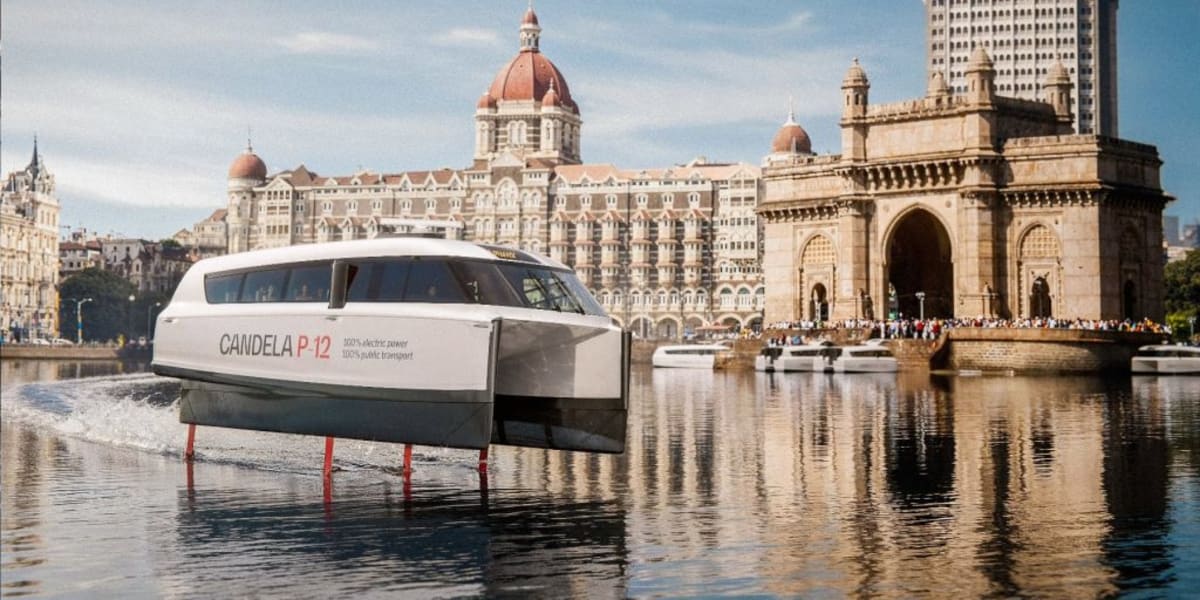
That's exactly what's coming to Mumbai in 2026, thanks to Swedish company Candela and its revolutionary P-12 electric ferry. The company just announced a €30 million funding round, bringing total investment to €129 million and making it one of the best-funded electric vessel manufacturers globally.
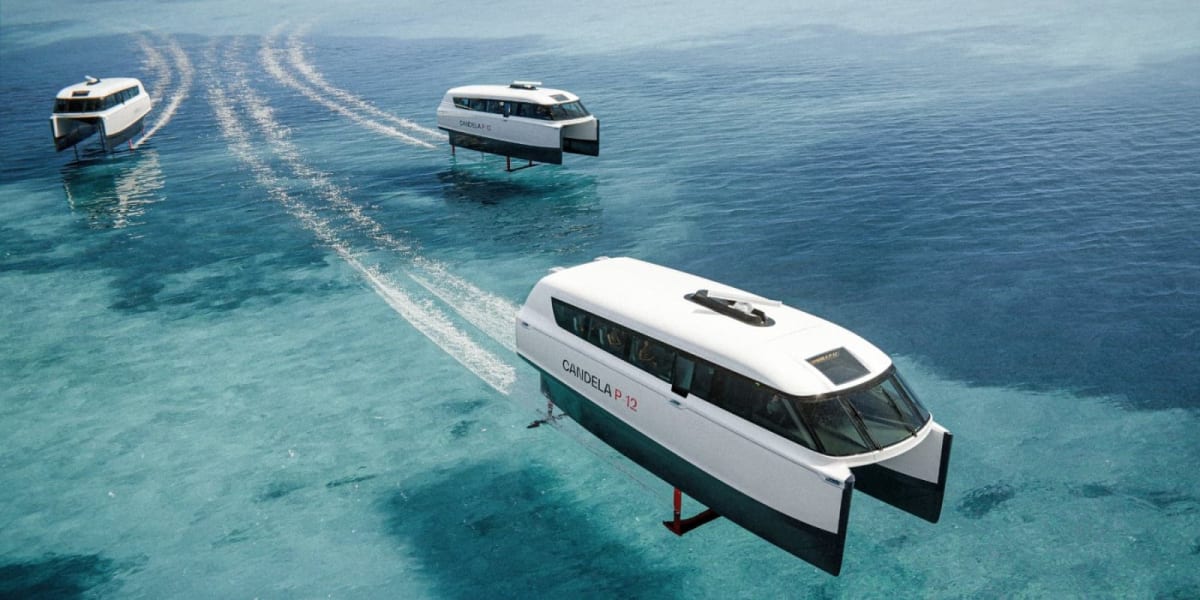
Here's what makes these ferries special: they don't actually travel through water most of the time. Using computer-controlled hydrofoils, the P-12 lifts itself above the surface as it moves, dramatically cutting drag. The result is 80% lower energy consumption compared to diesel ferries, zero wake, and remarkably smooth rides.
The technology isn't just greener. It's actually faster and cheaper to operate than traditional ferries, which is why cities are lining up to buy them.
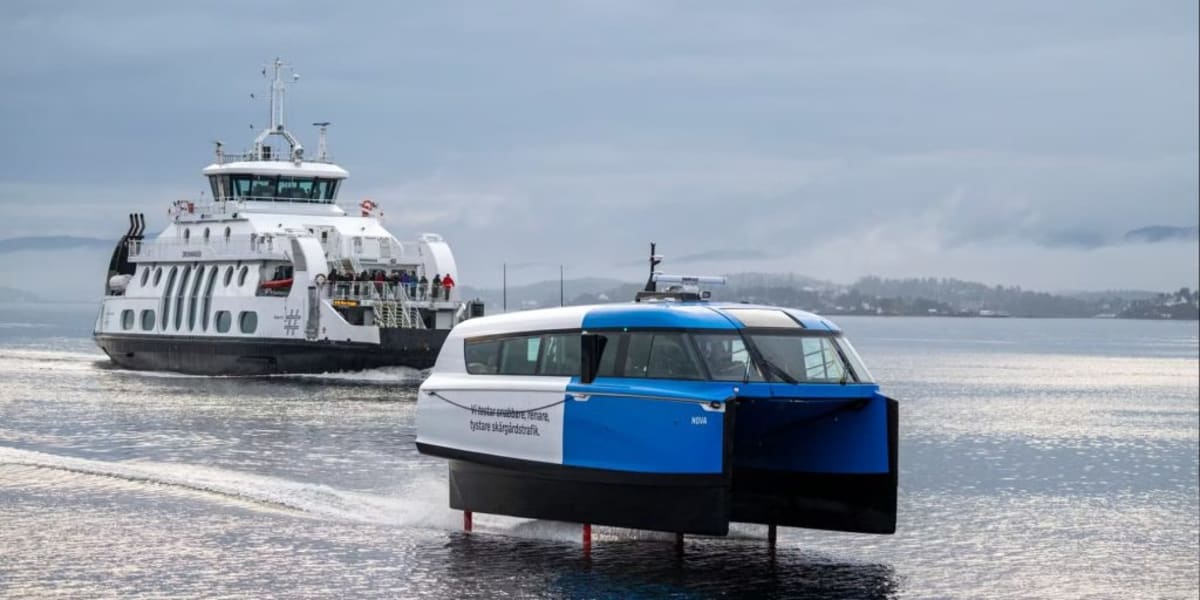
More than 65 vessels are already on order for destinations worldwide. The P-12 is currently carrying passengers in Stockholm, Gothenburg, Oslo, and Trondheim, where it's proven both quicker and less expensive to run than diesel alternatives.
The latest funding round includes €8 million from the International Finance Corporation, part of the World Bank Group. That money is earmarked for a second manufacturing facility in Poland to ramp up production.
Starting in 2026, the ferries will expand to Mumbai, the Maldives, Saudi Arabia's NEOM project, and Thailand. The Mumbai route between Navi Mumbai Airport and the city center promises to be particularly transformative, turning a grueling two-hour journey into a breezy 35-minute ride.
The Ripple Effect
Candela is applying automotive-style mass production to an industry that traditionally builds boats almost like custom projects. By creating a standard platform and using advanced carbon fiber construction, they're driving costs down enough to make electric ferries viable for emerging markets, not just wealthy European cities.
"By moving away from small-series production, we've built a platform that serves multiple markets," says Candela's Hasselskog. "This allows us to deliver technologically advanced carbon-fiber vessels with industry-leading operating costs at a competitive price point."
The impact could extend far beyond individual cities. Many urban centers sit on rivers, bays, and coastlines with underutilized waterways because traditional ferries are slow and inefficient. If electric hydrofoil ferries can compete on speed and cost, they could unlock an entirely new dimension of sustainable urban transit.
The World Bank clearly sees the potential. "This investment reflects IFC's commitment to advancing innovative transportation solutions in emerging markets," said Farid Fezoua, IFC Director for Equity, Funds and Venture Capital.
The path looks familiar: breakthrough technology, early adopters, then scaling and global expansion, just like electric cars and bikes before it.
Cleaner air, faster commutes, and revitalized waterways? That's a wave worth catching.
More Images

Based on reporting by Electrek
This story was written by BrightWire based on verified news reports.
Spread the positivity!
Share this good news with someone who needs it