Teacher Turns Fire Stations & Farms Into Classrooms for 30 Years
In a village where even ₹10 school fees are a burden, one teacher refused to let poverty limit education. For three decades, Ujjwala Wadekar has transformed petrol pumps, salons, and mechanic shops into vibrant learning spaces.
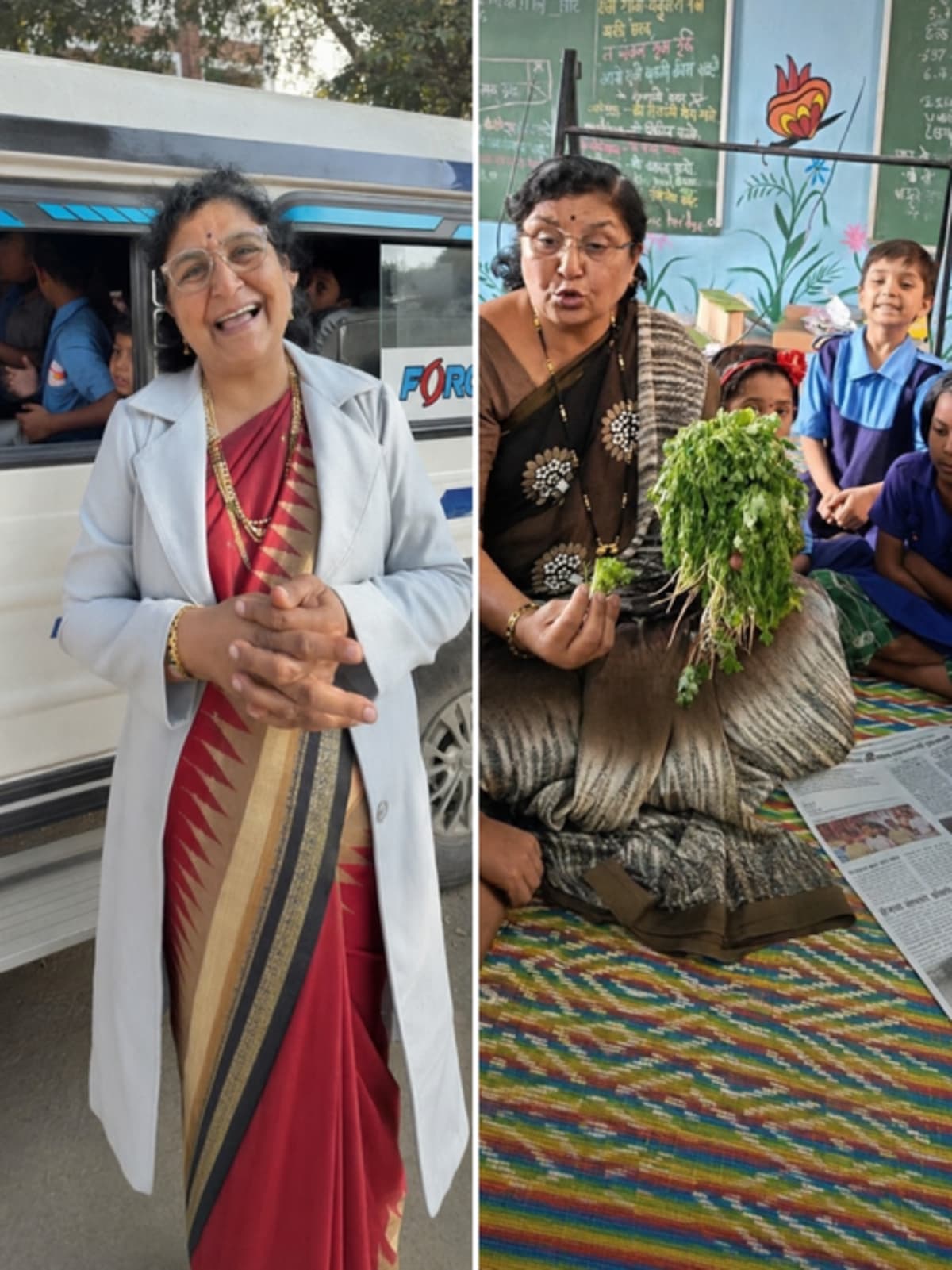
While most teachers stick to textbooks, Ujjwala Wadekar has spent 30 years turning the entire world into her classroom. In rural India, where families struggle to afford basic school fees, she decided learning shouldn't be confined to four walls.
Every week, Wadekar takes her students on field trips that reimagine education entirely. They visit their fathers' workplaces to see real work happening in real time.
At petrol pumps, children learn about measurement and customer service. At mechanic shops, they observe problem-solving while watching puncture repairs. These aren't just fun outings. They're lessons in empathy, math, and understanding how communities function.
Her classroom has expanded to include milk factories, farms, garages, and hair salons. Students don't just memorize chapters about commerce or agriculture. They watch milk being processed, crops being harvested, and small businesses serving their neighbors.
When teaching math, Wadekar sometimes becomes a milk vendor herself, letting students calculate prices and make change. When astronomy comes up, she brings a telescope so they can actually see the moon's craters instead of just reading about them.
Her commitment extends beyond school hours too. She makes surprise home visits to students, building relationships that transcend attendance sheets and grade reports.
Why This Inspires
Wadekar started this approach in the 1990s, when experiential education was virtually unheard of in rural Indian schools. She broke through rigid traditional teaching methods because she believed something powerful: every child is intelligent, they just need someone to believe in them.
Her philosophy challenges the idea that learning happens only with expensive resources or fancy facilities. She proved that curiosity, creativity, and care matter more than infrastructure.
In communities where poverty could easily become an excuse for limited education, Wadekar showed that the richest classroom resources are already surrounding students. The world itself is the lesson.
Her three decades of dedication prove that transformative teaching doesn't require technology or funding. It requires a teacher willing to see potential everywhere and students who deserve to understand their world, not just read about it.
Based on reporting by The Better India
This story was written by BrightWire based on verified news reports.
Spread the positivity!
Share this good news with someone who needs it