Teen Inventors Turn Beach Waste Into Healing Bandages
Young scientists across three countries are transforming environmental problems into breakthrough solutions. From biodegradable bandages to seaweed flip-flops, these Earth Prize winners prove the next generation isn't waiting around to fix the planet.
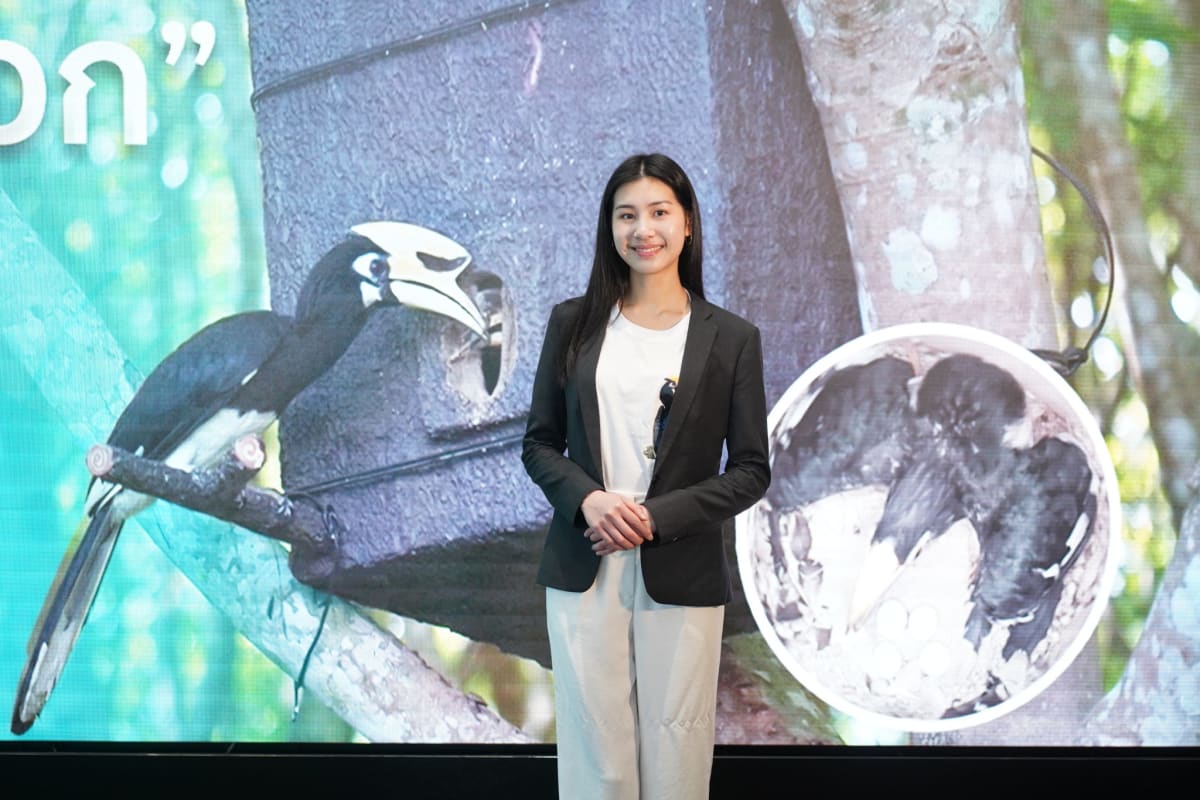
Seventeen-year-old Yanin "Proud" Tangkaravakoon fell in love with hornbills on a school field trip to Thailand's Khao Yai National Park. When she later learned that 51 of the world's 62 hornbill species were disappearing, she spent years working with researchers to find a solution that would actually work.
Her answer came in an unexpected form: artificial nests made from upcycled plastic bottles. Hornbills are critical seed dispersers, meaning they determine where entire forests grow and regenerate. Lose the birds, and the forest changes forever.
Proud's Homes for Hornbills project has installed 20 nests across southern Thailand. In 2025 alone, 14 hornbill chicks successfully fledged, and 14 nests are now occupied. She also created a school conservation program and income alternatives for local communities, reducing the financial pressure that leads to poaching.
Across the ocean in Puerto Rico, 17-year-old Helena do Rego watched mountains of sargassum seaweed pile up on beaches for years. In 2025, more than 40 million metric tons washed ashore across the region, making shorelines unusable and overwhelming Puerto Rico's already-strained landfills.
Her solution, SargaTex PR, transforms the invasive seaweed into biofabric for flip-flops, beach footwear, and spa products. Early prototypes made with cranberry juice and coffee grounds biodegrade within weeks. The beach problem becomes the material that replaces something worse: plastic waste.
Meanwhile in Brazil, volleyball players Bernardo Renner and Ísís Valentin got tired of basic bandages that covered cuts but didn't help them heal. Their biodegradable dressing HADA uses aloe vera and chamomile to actively promote healing with antibacterial and anti-inflammatory properties. It breaks down in soil within 48 hours.
The timing matters. An estimated 2.2 billion plastic bandages were discarded in 2023 alone, leaving microplastic waste behind while doing little to support actual recovery.
The Ripple Effect
These three projects represent just part of the Earth Prize 2026 winners, a competition now in its fifth year. Since 2019, it has reached more than 21,000 students across 169 countries and distributed over $500,000 in prize funding.
The projects share a common thread: young people refusing to accept that environmental problems are just problems. They're seeing them as raw materials for solutions. Public voting for the global winner closes May 29 on the Earth Prize website.
What started as school projects and field trip memories has turned into documented research, working prototypes, and partnerships with major innovation hubs and conservation organizations. These aren't just ideas anymore.
The next generation is already building the solutions we need.
More Images

Based on reporting by Optimist Daily
This story was written by BrightWire based on verified news reports.
Spread the positivity!
Share this good news with someone who needs it