Telescope Accidentally Captures Dying Stars Recycling Life
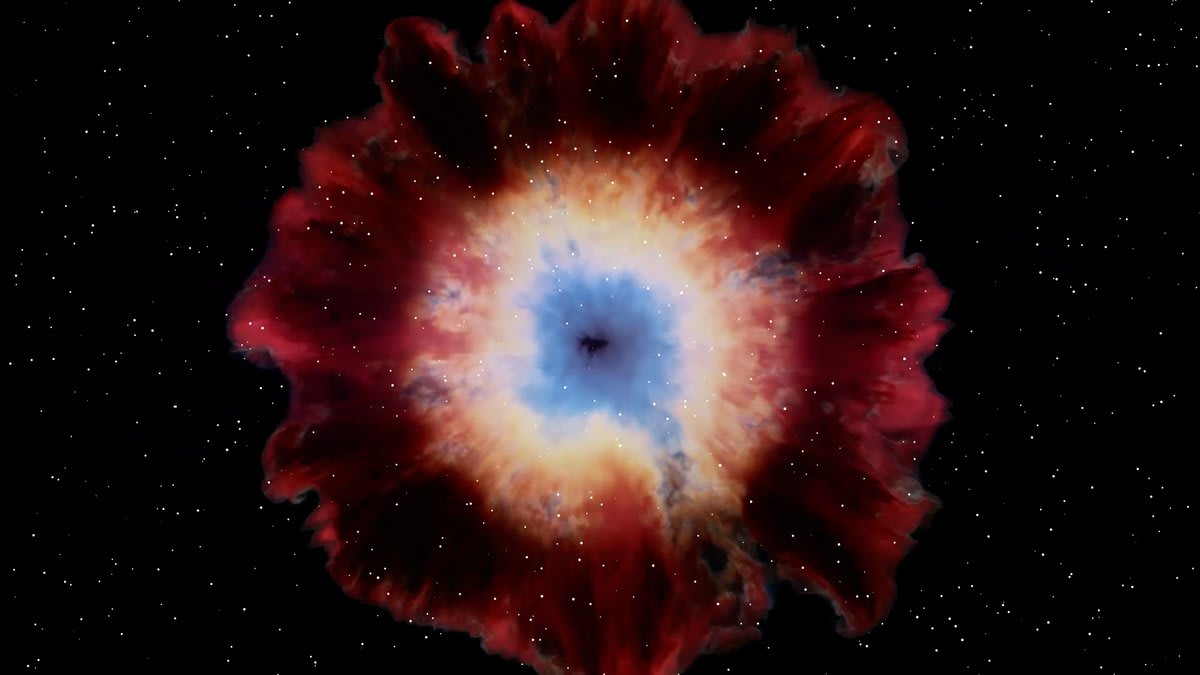
Astronomers testing a new telescope in Chile stumbled upon never-before-seen images showing exactly how dying stars scatter the building blocks of life across space. The accidental discovery reveals bright shock waves where star debris mixes with space dust, a cosmic process that eventually creates planets and living things.
Two astronomers pointing their new telescope at the sky captured something no one had ever seen before: the exact moment dying stars release the elements that become planets, oceans, and even us.
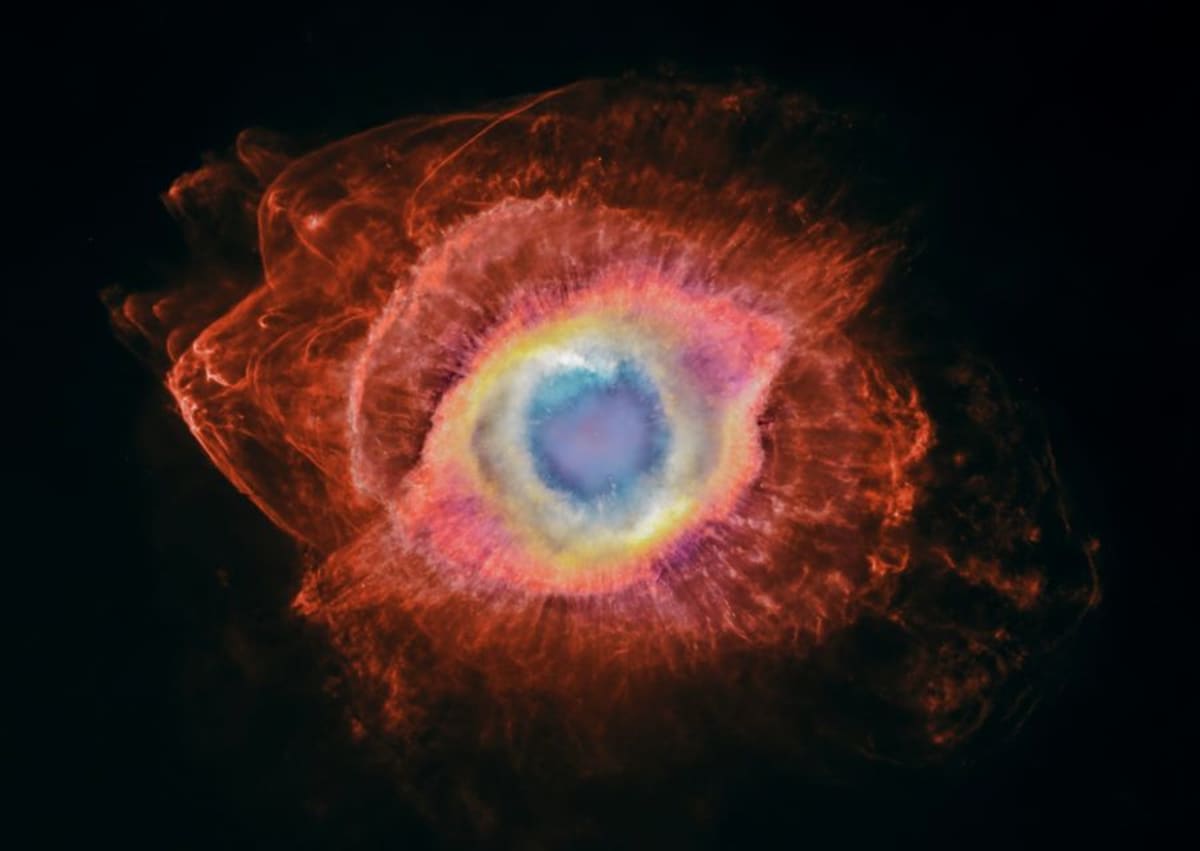
Pieter van Dokkum from Yale and Roberto Abraham from the University of Toronto were simply testing their MOTHRA telescope in Chile one November night in 2025. They aimed it at the Helix Nebula, a cloud of debris from a dead star 650 light-years away, expecting routine images.
What appeared on their screens stopped them cold. More than 20 bright arcs of light rippled through the nebula's edges, each one marking where chunks of star material crashed into space dust at incredible speeds.
"It happens a few times in your career, that you take an image and realize no one's ever seen this before," van Dokkum says. "It's the best feeling."
These bow shocks, as astronomers call them, show stellar debris breaking apart and mixing with interstellar gas. The process takes about 10,000 years, and it's how carbon, oxygen, nitrogen, and other elements escape dying stars to eventually form new stars, planets, and life.
Scientists have known this grand recycling happens. But seeing it unfold in such stunning detail changes everything.
The images reveal that star material doesn't drift smoothly through space as researchers once thought. Instead, it hurtles out like shrapnel, creating visible shock waves when it collides with surrounding gas and dust.
Michael Shull, an astrophysicist at the University of Colorado Boulder who wasn't involved in the study, says the images "really knock my socks off." They clearly show a key step in what he calls the "ecological cycle" of stars and galaxies.
MOTHRA made this discovery possible through its unique design. While most telescopes use mirrors to gather light, MOTHRA uses telephoto lenses like those on cameras. This lets it capture faint glowing gas across a much wider view, revealing the nebula's outer edges where the bow shocks hide.
The real surprise? MOTHRA isn't even finished. The telescope will eventually have 1,140 lenses, but only a small fraction were installed during these test observations.
Why This Inspires
This accidental breakthrough reminds us that discovery still waits in places we've looked a thousand times before. The Helix Nebula is one of the most studied objects in space. NASA's James Webb Space Telescope has photographed it in detail. Yet a partially built instrument with a fresh approach revealed something entirely new.
Van Dokkum and Abraham are now wondering what this process looks like for other stars, including our own sun. Billions of years from now, our sun will create a similar nebula, releasing our solar system's elements back into the galaxy for the next generation of worlds.
"This instrument is just going to reveal comparably cool things in pretty much everything we point it at," Abraham says. The discovery came from their very first target, making it a harbinger of breakthroughs to come.
The cosmic cycle that created everything around us, including our own bodies, is now visible in stunning detail.
More Images
Based on reporting by Scientific American
This story was written by BrightWire based on verified news reports.
Spread the positivity!
Share this good news with someone who needs it