Tequila-Making Bats Get Sweet Deal in Mexico's Agave Boom
Mexican long-tongued bats use 3-inch tongues to pollinate the agave plants that make tequila, creating an unexpected partnership between conservation and spirits. Some mezcal producers now reserve 30% of their crops just for these tiny pollinators.
A bat with a tongue nearly as long as a pencil is helping create your favorite tequila shot, and some Mexican farmers are returning the favor.
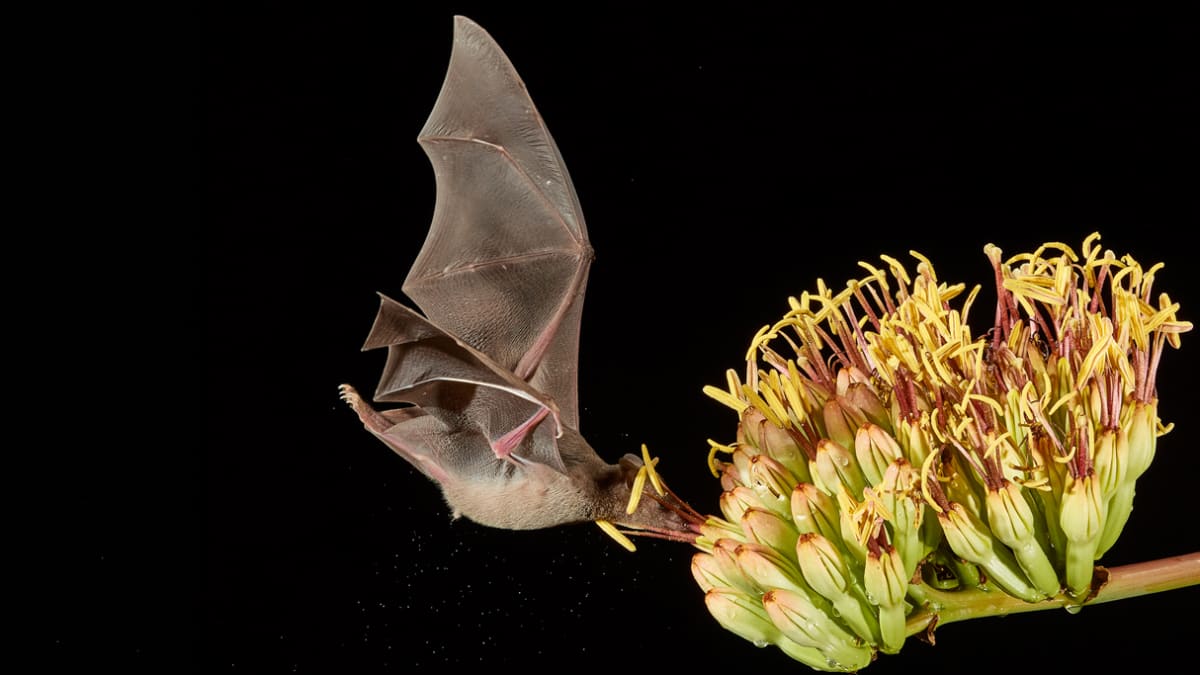
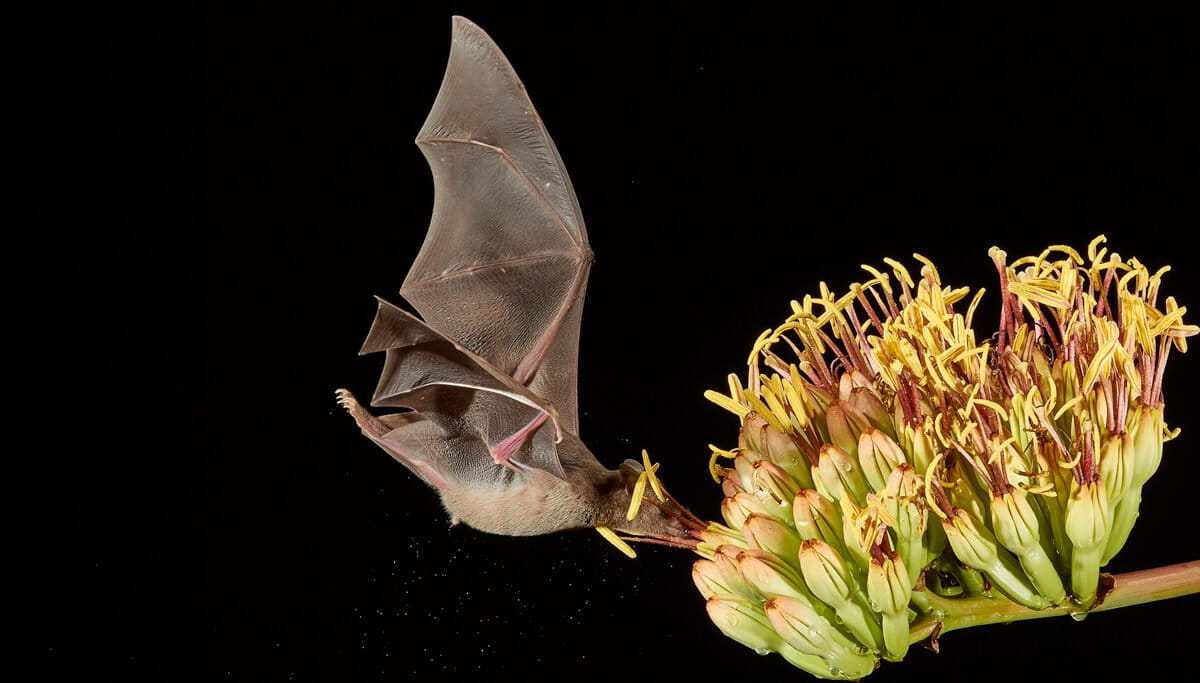
Mexican long-tongued bats zip through the Sonoran Desert like tiny sugar-fueled rockets, their 3-inch tongues diving into agave flowers to slurp nectar. Penn State biology professor Peter Hudson captured one of these magical moments in 2019 near the Arizona-Mexico border.
"These bats just go, like little kids on a sugar rush," Hudson told Mongabay. "They're taking in so much of this rich sugar stuff that they're flying about doing happy laps, as it were, in the sky."
The bats' tongues extend almost 8 centimeters from their bodies and are covered in tiny hair-like bumps that help them drink flower nectar. As they feed, pollen sticks to their faces and spreads to other agave plants, making the bats essential partners in creating tequila and mezcal, Mexico's beloved spirits.
Here's where things get interesting. Mezcal production has exploded more than 700% in the past decade as global demand soared. More agave farms mean more food sources for three bat species that pollinate these plants, but wild agave populations are shrinking as farms expand into native forests.
The Bright Side: Some mezcal producers found a solution that works for everyone. In certain agave-growing regions, farmers use agroecological systems that reserve 30% of agave plants specifically for bats, harvesting only 70% for mezcal production.
This approach helps protect the Mexican long-tongued bat, currently listed as near threatened, while still meeting market demand. The bats get guaranteed food sources, farmers get natural pollination services, and tequila lovers worldwide get their spirits sustainably produced.
Hudson needed lightning-fast reflexes to photograph these nocturnal pollinators. Using a movement trigger and flash, he had to catch the bat mid-flight as it entered the agave bloom. "It all happens so fast," he explained. "You have to get the bat as it's coming into the plant and see if you can capture it as it hits the plant."
The partnership between bats and agave runs deep in Mexico's Sonoran Desert, a biodiversity hotspot home to trogons, black-tailed jackrabbits, and countless other native species. While some regions saw 36% forest loss between 2000 and 2012 as farms expanded onto hillsides, the shift toward bat-friendly farming offers hope.
Every sip of sustainably produced tequila now comes with a side of conservation success.
More Images

Based on reporting by Mongabay
This story was written by BrightWire based on verified news reports.
Spread the positivity!
Share this good news with someone who needs it