Thailand Discovers Its Largest Dinosaur Ever: 27-Ton Giant
Scientists in Thailand just named a colossal new dinosaur species that weighed as much as nine elephants and may be the last giant to have walked Southeast Asia. The discovery is putting Thailand on the global paleontology map and inspiring a new generation of researchers.
A Thai PhD student just fulfilled his childhood dream by naming a dinosaur, and it happens to be the largest ever found in Southeast Asia.
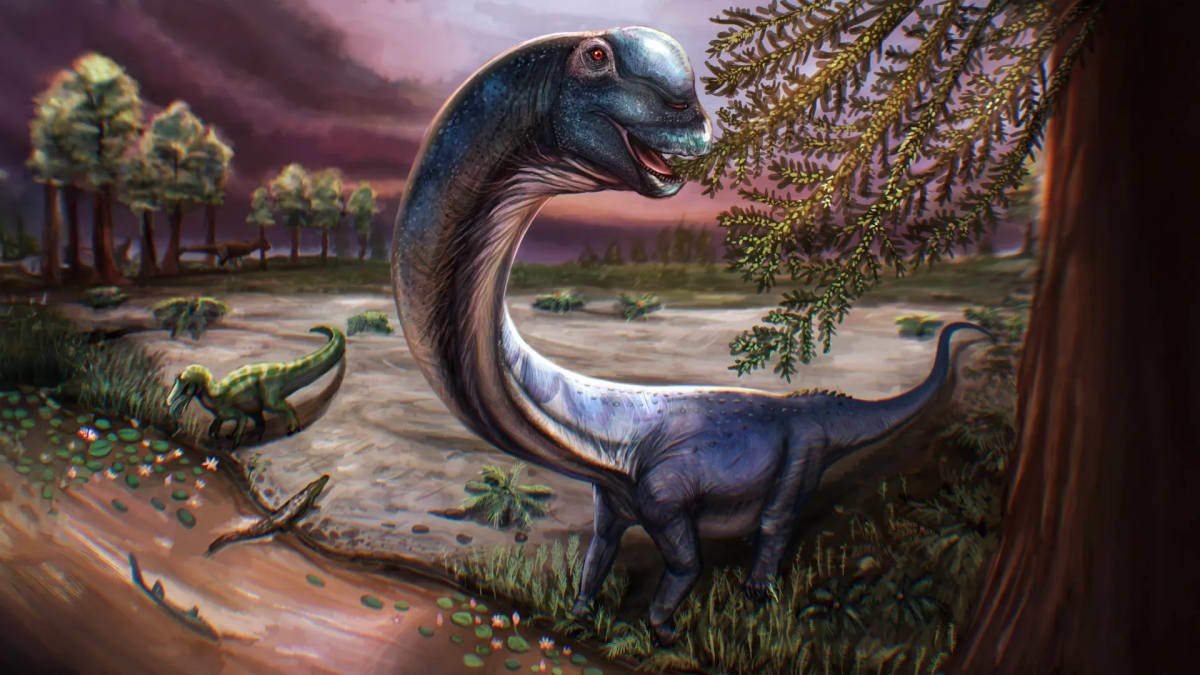
Researchers from University College London and three Thai universities have identified Nagatitan chaiyaphumensis, a massive long-necked dinosaur that stretched 89 feet long and weighed around 27 tonnes. The fossils were discovered near a pond in northeastern Thailand's Chaiyaphum province about a decade ago, but scientists only recently confirmed they belonged to an entirely new species.
The name blends Thai and Greek mythology, combining "Naga" (a legendary serpent from Southeast Asian folklore) with "Titan" (the giants of Greek mythology). One front leg bone alone measured nearly six feet long, as tall as an average human.
This gentle giant lived between 100 and 120 million years ago during the Early Cretaceous period, when the region was much drier than today. Scientists believe these sauropods may have used their incredibly long necks and tails to release heat and stay cool in the semi-arid climate.
The discovery site paints a picture of an ancient river ecosystem teeming with life. The massive plant-eater shared its habitat with smaller herbivores, giant predators like carcharodontosaurians and spinosaurids, and flying pterosaurs that hunted fish along the waterways.
Lead researcher Thitiwoot Sethapanichsakul, a Thai PhD student at UCL, calls Nagatitan "the last titan" of Thailand because it was found in the region's youngest dinosaur-bearing rocks. After this period, rising seas transformed Southeast Asia into shallow ocean, making it unlikely that larger, younger sauropods will ever be discovered there.
Why This Inspires
Sethapanichsakul's journey shows how childhood dreams can reshape entire fields of study. "I've always been a dinosaur kid," he said. "This study doesn't just establish a new species but also fulfills a childhood promise of naming a dinosaur."
His work is part of a growing movement to put Southeast Asian paleontology on the international stage. Thailand has now officially named 14 dinosaur species, and researchers say they have a large collection of sauropod fossils still waiting to be studied and described. Each one could reveal new species that help scientists understand how these giants evolved and spread across ancient Asia.
The collaboration between UCL and Thai institutions is opening doors for more discoveries without the environmental cost of constant international travel. Thanks to 3D scanning and printing technology, researchers can study specimens remotely while building global partnerships.
A life-size reconstruction of Nagatitan now greets visitors at the Thainosaur Museum in Bangkok, inspiring the next generation of dinosaur kids to pursue their own prehistoric dreams.
Based on reporting by Science Daily
This story was written by BrightWire based on verified news reports.
Spread the positivity!
Share this good news with someone who needs it