Thailand's 'Last Titan' Dinosaur Largest Ever Found in SE Asia
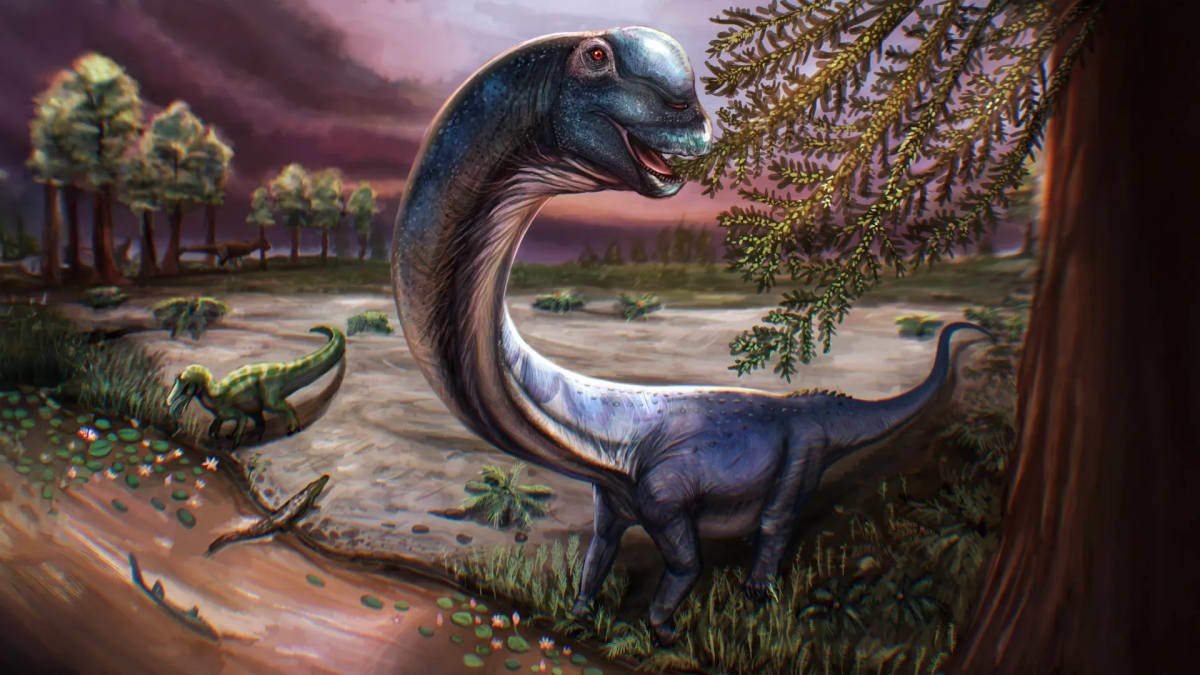
Scientists in Thailand just identified a 27-ton, 89-foot dinosaur that roamed the region 100 million years ago. The colossal plant eater, now named Nagatitan, is the biggest dinosaur ever discovered in Southeast Asia and fulfills one researcher's childhood dream.
A Thai PhD student just made his childhood dream come true by naming a giant dinosaur he helped discover near a pond in northeastern Thailand.
The newly identified species, called Nagatitan chaiyaphumensis, weighed about 27 tons and stretched 89 feet long. That makes it as heavy as nine adult Asian elephants and bigger than the famous Dippy the Diplodocus by at least 10 tons.
Researchers from University College London and three Thai universities spent years examining fossils first uncovered a decade ago in Chaiyaphum province. By studying vertebrae, ribs, pelvis bones, and leg bones, they pieced together the massive plant eater that roamed ancient Thailand between 100 and 120 million years ago.
The name combines "Naga," a legendary serpent from Thai mythology, with "Titan" from Greek mythology. It's the 14th dinosaur species officially named in Thailand.
Lead researcher Thitiwoot Sethapanichsakul, who goes by Perth, calls Nagatitan "the last titan" of Thailand for an important reason. The fossils came from Thailand's youngest dinosaur-bearing rocks, and younger rocks don't contain dinosaur remains because the region became a shallow sea before dinosaurs went extinct.
That means this gentle giant was likely among the last large sauropods to walk Southeast Asia. Scientists believe these long-necked creatures used their necks and tails to release heat in the dry to semi-dry climate they favored.
The ancient river environment Nagatitan called home was anything but peaceful. The massive herbivore shared its habitat with smaller plant eaters, giant predators like carcharodontosaurians, and flying reptiles that hunted fish overhead.
Why This Inspires
Perth's journey from "dinosaur kid" to naming a new species shows how childhood dreams can shape scientific discovery. His commitment to getting Southeast Asian dinosaurs recognized internationally opens doors for future researchers in the region.
The collaboration between UCL and Thai institutions used 3D scanning and printing to study specimens without constant travel, reducing the research team's carbon footprint. Five academics, research fellows, and more than 10 PhD students now work together studying dinosaur evolution and other prehistoric vertebrates.
A life-size reconstruction of Nagatitan now greets visitors at the Thainosaur Museum in Bangkok. The team says Thailand holds many more sauropod fossils waiting to be formally described, potentially including several new species.
Perth put it simply: "This study doesn't just establish a new species but also fulfills a childhood promise of naming a dinosaur."
Based on reporting by Google News - Scientists Discover
This story was written by BrightWire based on verified news reports.
Spread the positivity!
Share this good news with someone who needs it