Tiny 700-Gram Dinosaur Rewrites Evolution Playbook
Scientists discovered a roadrunner-sized dinosaur in Argentina that's forcing them to rethink how some dinosaurs became miniature. The 700-gram creature proves evolution doesn't always follow a straight line.
A fossil no bigger than a pet hamster just overturned decades of assumptions about how dinosaurs evolved.
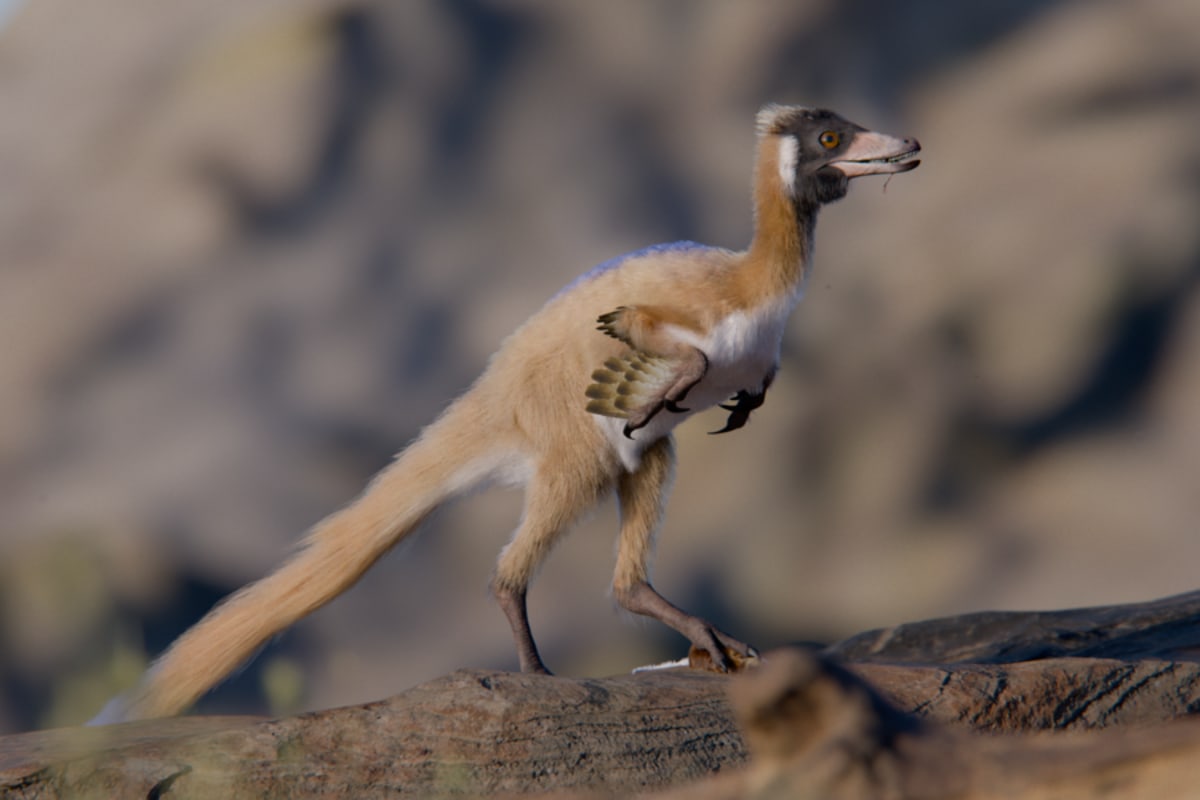
Meet Alnashetri cerropoliciensis, a 700-gram dinosaur discovered in Argentina that lived 90 million years ago. This tiny creature, barely heavier than three smartphones, is rewriting the story of how some dinosaurs became miniaturized.
Scientists long believed that alvarezsaurids, a group of small dinosaurs, shrank over time specifically to become better ant-eaters. The theory made perfect sense: smaller bodies meant easier access to insect prey, and their stubby arms with massive thumb claws were ideal for digging into termite mounds.
But Alnashetri breaks all the rules. Despite being one of the smallest alvarezsaurids ever found, it wasn't an ant-eater at all.
"It was a pursuit predator actively hunting insects and small mammals," said Peter Makovicky, a paleontologist at the University of Minnesota. He compares the speedster to a roadrunner from the American West, with long limbs built for chasing down prey.
The real surprise came from examining its anatomy. Unlike later alvarezsaurids with their tiny, stubby arms, Alnashetri had comparatively long forelimbs with slender fingers. Its teeth weren't miniaturized for crushing ants either, but sized for catching small animals.
Here's why this matters: Alnashetri is an early member of its family tree, yet it was already tiny. This means alvarezsaurids didn't gradually shrink as they specialized for eating ants. Instead, different species independently evolved small sizes for completely different reasons.
Why This Inspires
This discovery reminds us that nature rarely follows a simple, predictable path. Evolution experiments constantly, trying different solutions to different problems.
Makovicky and his team didn't stop with just this fossil. They went digging through museum collections worldwide, searching for misidentified specimens. They found early alvarezsaurids hiding in plain sight in North America and Europe, proving these dinosaurs were far more widespread than anyone imagined.
The team's detective work revealed that alvarezsaurids must have originated way back in the Jurassic period, not the Late Cretaceous as previously thought. Fossils that had sat in museums for decades, labeled as mysterious fragments, turned out to be missing pieces of this evolutionary puzzle.
What started as one remarkable fossil has transformed our understanding of an entire dinosaur family. Alnashetri shows that evolution is messier, more creative, and more surprising than our neat theories suggest.
Sometimes the smallest discoveries lead to the biggest revelations.
More Images



Based on reporting by Ars Technica Science
This story was written by BrightWire based on verified news reports.
Spread the positivity!
Share this good news with someone who needs it