Tiny Drone Navigates Like a Bee Using 3.4 KB of Memory
Scientists taught a small drone to navigate like a honeybee, using a neural network 150,000 times smaller than typical robot navigation systems. The breakthrough could help tiny robots explore disaster zones, deliver medicine, and perform tasks that larger drones can't.
A tiny drone just proved that when it comes to navigation, bigger isn't always better.
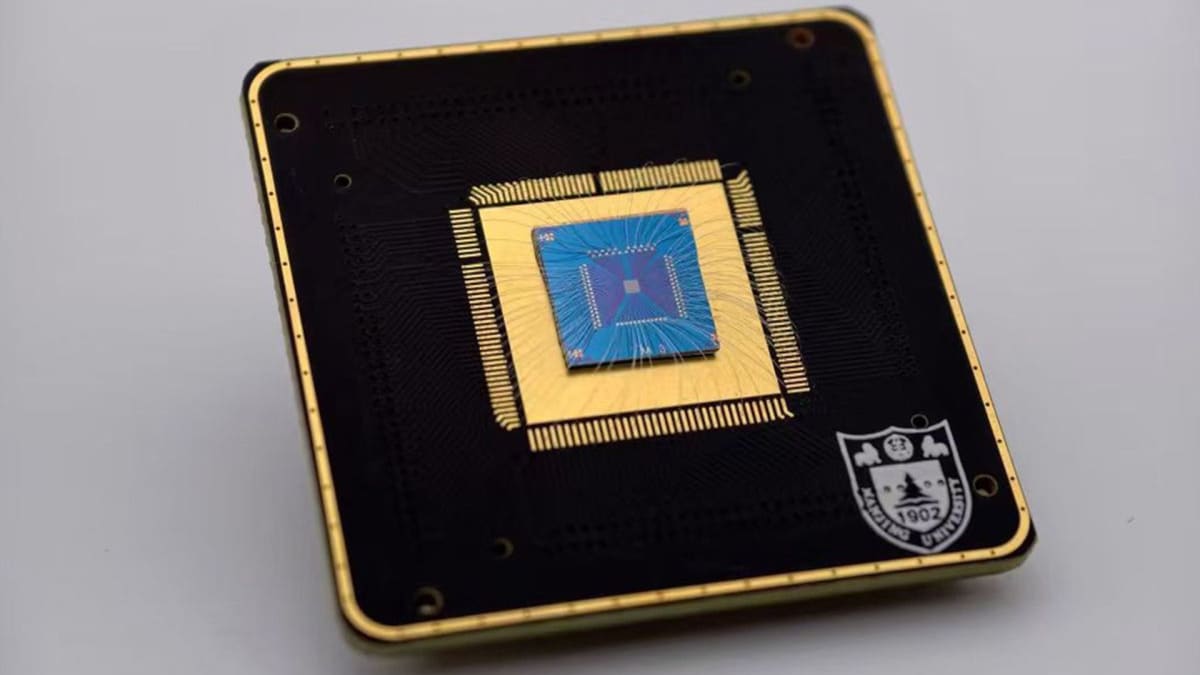
Researchers have created "Bee-Nav," a navigation system inspired by how honeybees learn their way home. The result is a small drone that successfully found its way back from flights up to 600 meters away, using just 3.4 kilobytes of memory. That's smaller than a low-resolution photo on your phone.
Current robot navigation requires heavy computers and detailed maps. The most advanced tiny flying robot on the market needs 500 kilobytes of memory just to navigate a small room. This limits where small drones can go and what they can do.
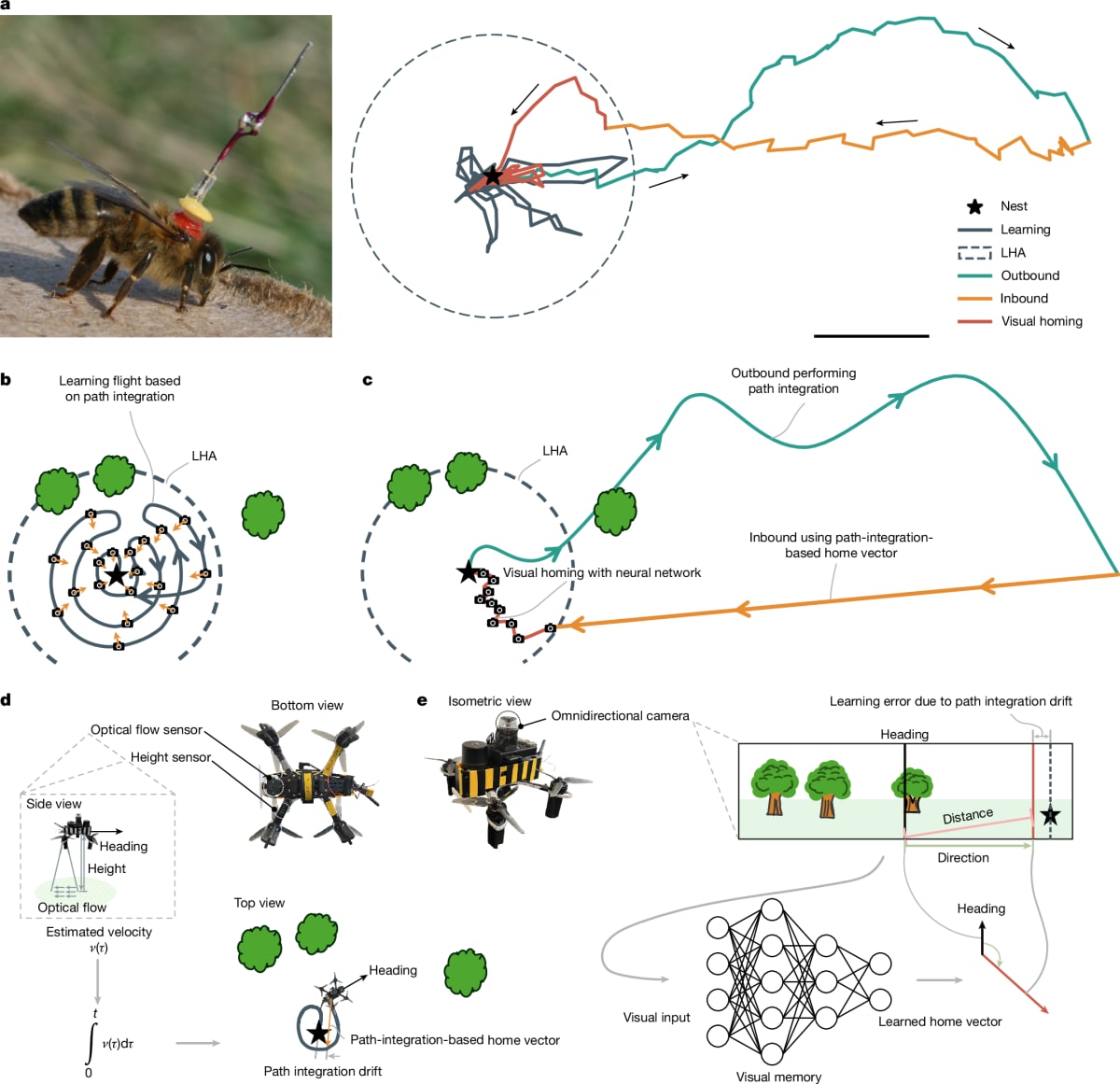
Honeybees, despite having brains smaller than a grain of rice, navigate confidently for kilometers. They use two simple tricks: keeping track of their direction and distance traveled, then recognizing visual landmarks near home.
The research team copied this strategy. They first had their drone perform a "learning flight" near its home base, similar to what young bees do before their first foraging trip. During this flight, a tiny neural network learned to connect what the drone's camera saw with directions home.
After training on less than 10% of the total flight area, the drone was ready. It successfully returned home from 100% of flights between 30 and 110 meters, and from 70% of longer flights up to 600 meters, even in windy conditions.
The system works in two stages. During outbound flights, the drone tracks its position like a bee counting steps. On the way back, it uses those mental breadcrumbs until it gets close to home, then switches to visual recognition for pinpoint accuracy.
The Ripple Effect
This breakthrough opens doors for robots that have been too small to navigate on their own. Lightweight drones could soon inspect dangerous building collapses, deliver medical supplies to remote areas, or monitor crops without needing human pilots.
The technology also helps scientists understand bee brains better. By proving that simple visual learning can enable complex navigation, researchers gain new insights into how insects think and remember.
Unlike bulky navigation systems that map every detail of an environment, Bee-Nav proves that smart shortcuts beat brute force. The drone doesn't need to remember everything, just enough to get home safely.
The research team tested their system both indoors and outdoors in real-world conditions, not just computer simulations. The drone handled wind, changing light, and varied terrain, showing this isn't just a lab trick but a practical solution.
Small robots are about to get big navigation skills, all thanks to lessons from our smallest aviators.
More Images
Based on reporting by Nature News
This story was written by BrightWire based on verified news reports.
Spread the positivity!
Share this good news with someone who needs it