Tiny Metal Robots Could Replace Painful Biopsies by 2026
Scientists developed shape-shifting microrobots you can swallow in a capsule that collect tissue samples and deliver medications directly inside your gut, then safely dissolve. The breakthrough could eliminate many uncomfortable endoscopy procedures within years.
Imagine swallowing a capsule filled with tiny metal robots that travel through your digestive system, take biopsies, deliver medication exactly where needed, and then safely dissolve without a trace.
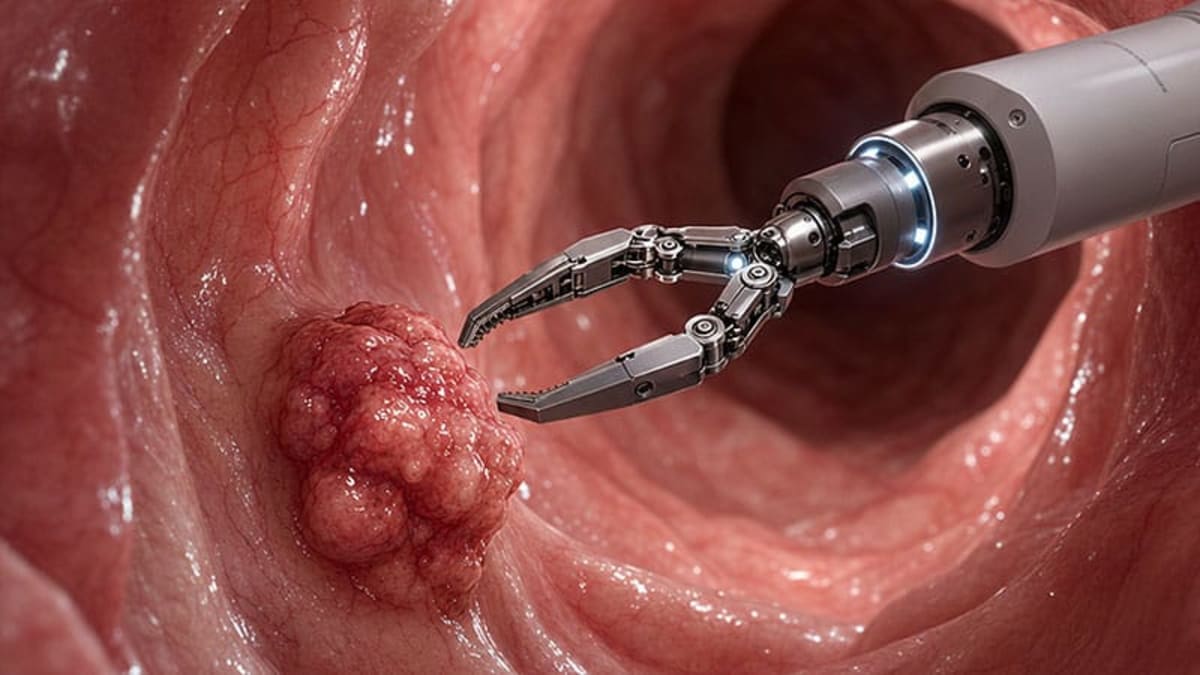
That future moved closer to reality at Digestive Disease Week 2026 in Chicago, where Johns Hopkins researchers unveiled fully metallic biodegradable microrobots. These microscopic devices can transform into tiny tweezers to collect tissue samples or become microinjectors to deliver drugs beneath the intestinal lining.
Dr. Ling Li from Johns Hopkins University explained what makes these devices special. "Existing biodegradable microrobots lack the strength and rigidity that allow our fully metallic microrobots to penetrate and cut tissue, leaving no trace once their work is complete," she said.
The technology addresses a major medical challenge: getting medications where they need to go. Oral pills often struggle to deliver drugs effectively because biological barriers in the gut limit absorption. Traditional solutions like injections work but require clinic visits and cause discomfort that leads many patients to skip doses.
These microrobots solve both problems at once. They're programmed to change shape when reaching their destination, accessing hard-to-reach areas that conventional endoscopy misses. After completing their mission in as little as one day, they safely break down and disappear.
The Ripple Effect
The impact could extend far beyond eliminating uncomfortable procedures. Researchers believe these devices could revolutionize how patients receive biologic medications like anti-TNF agents for inflammatory bowel disease and GLP-1 drugs for diabetes management.
Instead of repeated injections or infusions requiring clinic visits, patients might simply swallow a capsule at home. The microrobots would deliver medications directly beneath the intestinal lining, improving absorption while freeing patients from the cycle of appointments and needle sticks.
The technology is remarkably adaptable too. Scientists can control how quickly the metal dissolves by adjusting layer thickness, programming degradation times from minutes to months depending on what each patient needs.
Other research teams are exploring similar frontiers with different approaches. Some are developing biohybrid microrobots combining living cells with synthetic materials, while others are creating 3D-printed magnetic versions for colon drug delivery. These parallel advances suggest medical microrobotics is maturing into a viable field rather than remaining science fiction.
"We believe that these all-metal, biodegradable devices represent a major breakthrough in the effort to unlock the full potential of medical microrobots," Li concluded. "We don't have to choose between durability and safety."
While still in preclinical development, the technology is advancing toward treatments that are more precise and far less invasive than current options. Researchers expect these innovations will improve not just treatment effectiveness but also quality of life for millions managing chronic digestive conditions.
The era of swallowable robots isn't decades away anymore—it's approaching fast, bringing hope for gentler, smarter medicine that works with your body instead of invading it.
More Images


Based on reporting by Google News - New Treatment
This story was written by BrightWire based on verified news reports.
Spread the positivity!
Share this good news with someone who needs it