Tiny Telescope Could Map the Moon's Chemistry in 2 Years
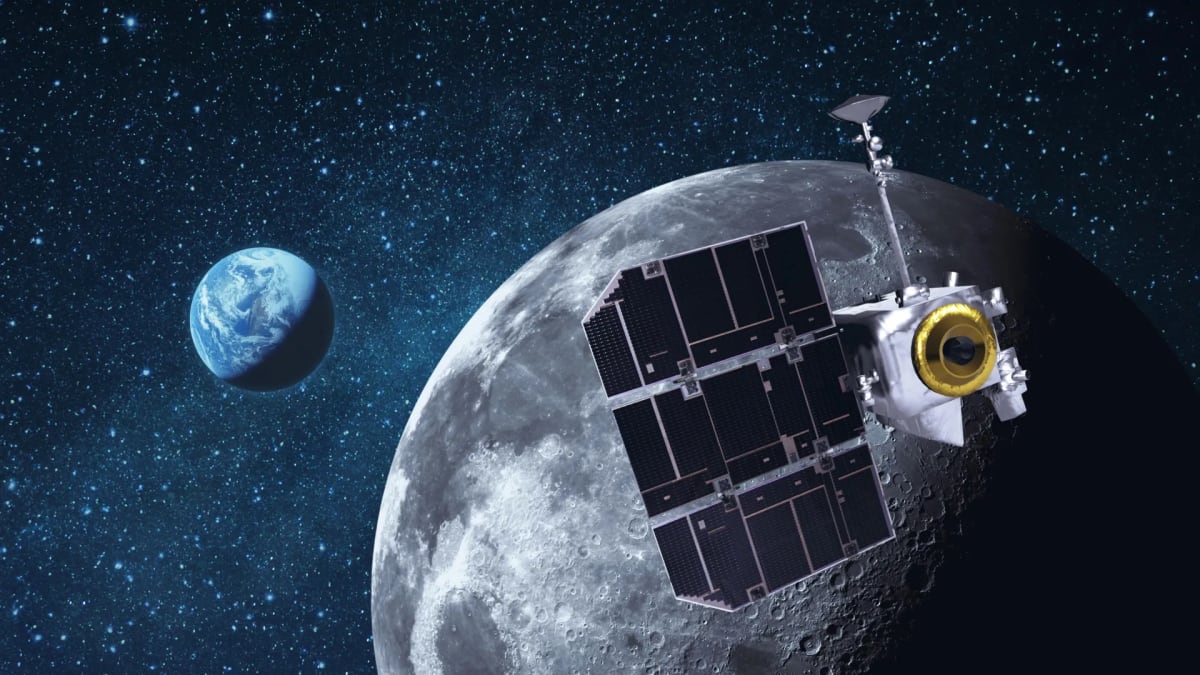
Scientists in Tokyo have shown that a compact X-ray telescope weighing less than 10 kilograms could create the first complete chemical map of the Moon's entire surface. This breakthrough could finally reveal how our nearest neighbor formed and evolved over billions of years.
For the first time ever, scientists may soon have a complete picture of what the Moon is actually made of.
Researchers at Tokyo Metropolitan University have proven through detailed simulations that a tiny X-ray telescope could map the chemical makeup of the entire lunar surface. The team, led by Airi Toida and Professor Yuichiro Ezoe, discovered that one small detector orbiting the Moon could identify five key elements across every region in just two years.
The Moon's geological story remains incomplete because scientists have never had a full chemical map of its surface. We can't collect rock samples from everywhere, so researchers rely on remote sensing to detect X-rays emitted when sunlight hits different elements on the lunar surface.
Previous missions like Apollo and Chandrayaan produced useful partial maps, but completing the picture has proven incredibly difficult. Traditional X-ray telescopes are too heavy for long lunar missions, and the Moon's polar regions receive weak solar radiation that makes element detection nearly impossible.
The Tokyo team's solution is elegantly simple. Their compact telescope was originally designed to study Earth's magnetosphere and weighs less than 10 kilograms, making it light enough for extended lunar orbit missions.
The detector has already been tested in radiation conditions harsher than anything it would face near the Moon. Its durability means it could survive years of continuous observation while capturing X-ray signals during solar flares, when the Sun provides the strongest illumination.
The simulations revealed something even more exciting. Assuming 300 solar flares per year, a single telescope could map oxygen, iron, magnesium, aluminum, and silicon across the entire Moon using a 70 by 70 kilometer grid.
A satellite carrying 25 of these telescopes arranged in a five by five array could complete the mission in just one year. With two years of operation, it could also map sodium and improve resolution to 30 by 30 kilometers.
Why This Inspires
This breakthrough shows how thinking small can solve enormous problems. By redesigning technology to be lighter and more efficient rather than bigger and more powerful, the Tokyo team found a way to answer questions that have puzzled scientists for generations.
The complete chemical map would give researchers an unprecedented tool for understanding how the Moon formed, how it changed over time, and what its complex history reveals about our own planet's origins. Every region mapped brings us closer to understanding the celestial body that has guided human navigation and captured our imagination since the beginning of recorded history.
Sometimes the biggest discoveries come in the smallest packages.
Based on reporting by Science Daily
This story was written by BrightWire based on verified news reports.
Spread the positivity!
Share this good news with someone who needs it