Tokyo Scientists Create Safer DNA Delivery for Gene Therapy
Researchers in Tokyo have developed a breakthrough molecule that delivers DNA into cells without causing harmful inflammation, a major obstacle in current gene therapies. Early tests in mice show the new method works up to 14 times better than existing approaches.
Scientists just solved one of medicine's trickiest problems: how to get life-saving genetic treatments into our cells without making us sick in the process.
A team at Tokyo Metropolitan University has created a new delivery vehicle for DNA that sidesteps a major flaw in current gene therapies. Their innovation could make treatments safer and more effective for millions of patients worldwide.
Gene therapy works by delivering DNA or RNA into cells to treat diseases or create vaccines. The challenge isn't the genetic material itself. It's getting past the cell membrane, which acts like a locked door keeping foreign molecules out.
For years, scientists have used positively charged polymers to carry DNA into cells. DNA has a negative charge, so it naturally sticks to these positive molecules, creating a package cells can absorb. But there's a serious catch: those positive charges trigger painful inflammation at injection sites and can clump together with other molecules in muscle tissue.
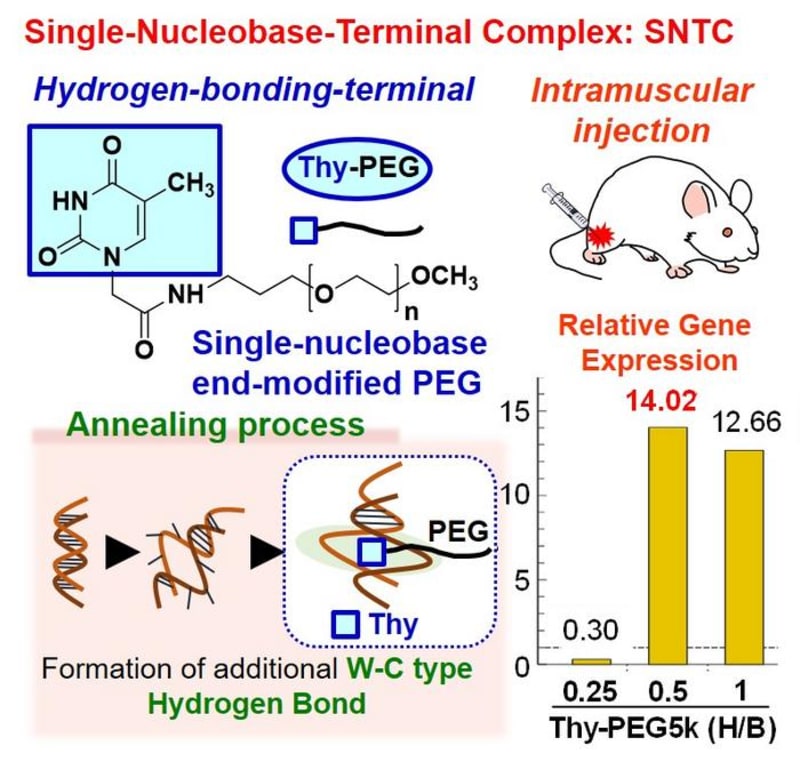
Professor Shoichiro Asayama and his team found an elegant solution. They attached a thymine base (one of DNA's four building blocks) to a neutral molecule called polyethylene glycol, or PEG. The body tolerates PEG well because it doesn't cause reactions.
The trick was getting the thymine to grab onto DNA without any natural anchor point. The researchers used a process called annealing, gently heating DNA strands until they partially unwind. In that exposed state, the thymine base can latch on through weak hydrogen bonds, creating what they call a "single nucleobase-terminal complex."
The team tested different ratios of their thymine-PEG molecules to DNA until they found the sweet spot. In mice, their formula delivered DNA into cells up to 14 times more effectively than bare DNA strands alone.
The Bright Side
This neutral, charge-free approach eliminates the inflammation problem that has plagued gene therapies for decades. Patients could receive treatments with fewer side effects and better results.
The breakthrough opens doors for improved vaccines and therapies that were previously limited by delivery problems. Because the molecule is neutral, it won't attract other charged particles or damage surrounding tissue, making it safer for repeated treatments.
Gene therapy holds promise for conditions ranging from cancer to rare genetic disorders, but delivery challenges have slowed progress. This Tokyo team just cleared a major hurdle standing between patients and potentially life-changing treatments.
More Images
Based on reporting by Google News - New Treatment
This story was written by BrightWire based on verified news reports.
Spread the positivity!
Share this good news with someone who needs it