Two "Bad" Gene Mutations Can Cancel Each Other Out
Scientists just proved that two harmful genetic mutations can actually restore normal function when combined, confirming a 60-year-old hypothesis. This breakthrough could transform how doctors diagnose and treat thousands of rare genetic diseases.
Imagine being told your child has two genetic "errors" that should make them sicker, only to discover those errors fixed each other instead.
That's exactly what researchers at George Mason University and the Pacific Northwest Research Institute just proved can happen. Their groundbreaking study, published in the Proceedings of the National Academy of Sciences, confirms what Nobel laureate Francis Crick suspected decades ago: sometimes in genetics, two wrongs really do make a right.
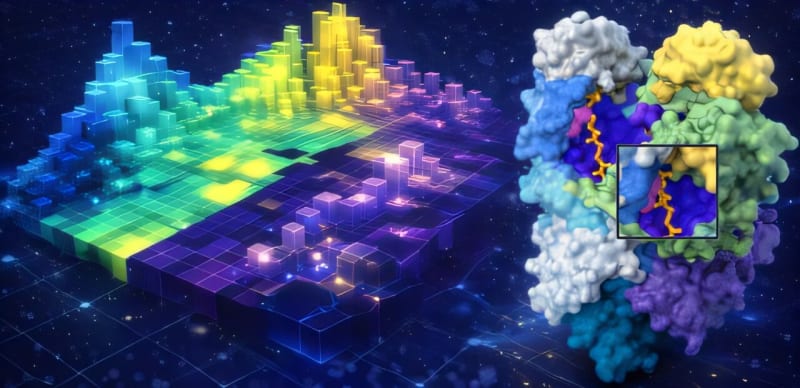
The discovery started when geneticist Aimée Dudley reached out to George Mason's Chief AI Officer Amarda Shehu about a puzzling observation. Dudley's team was studying thousands of mutations in a crucial enzyme called ASL, which when defective causes a devastating condition called urea cycle disorder.
What they found seemed impossible. Pairs of mutations that individually destroyed all enzyme activity suddenly showed 100% normal function when combined together. "Sometimes in biology, zero plus zero equals 100%," Shehu said.
The team named this phenomenon "variant sequestration." Think of it like two puzzle pieces that are each broken, but their breaks line up perfectly so they still fit together.
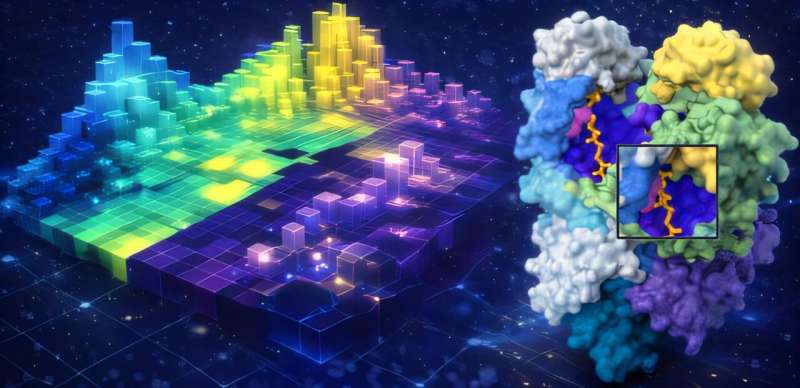
Here's where it gets even better. Computer science PhD student Anowarul Kabir built an AI model using the ASL data that could predict which mutation combinations would cancel each other out. The algorithm hit 99.6% accuracy for ASL and 91% accuracy when applied to a completely different gene.
The researchers estimate this effect could occur in about 4% of all human genes. That's potentially thousands of genes where current diagnostic approaches miss the full picture.
Why This Inspires
Every year, one in three Americans receives a genetic disorder diagnosis. For 70% of those cases involving children, symptoms appear in infancy. Tragically, 35% of these children don't live past age five.
Until now, doctors have analyzed genetic mutations one at a time. It's like trying to understand a conversation by reading every third word. This research shows that combinations matter just as much as individual changes.
The implications are profound. Families who've spent years searching for answers about rare diseases could finally get accurate diagnoses. Doctors could tailor treatments based on specific mutation combinations rather than single variants. Clinical trials could select participants more precisely.
"Clinical genomics has been stuck in a rut for decades," Shehu explained. The solution isn't just looking harder at individual mutations but understanding how they interact.
The AI model can now transfer knowledge from one gene to another, meaning researchers don't need to test every possible combination in every gene. With experimental data from just a few genes, artificial intelligence can scale predictions across the entire human genome.
For families navigating the uncertainty of rare genetic conditions, this research offers something precious: hope backed by science, delivered faster than ever before.
More Images
Based on reporting by Phys.org
This story was written by BrightWire based on verified news reports.
Spread the positivity!
Share this good news with someone who needs it