Two Satellites Create Artificial Eclipses to Study Sun
European spacecraft flying in perfect formation are capturing never-before-seen views of the sun's inner corona by creating solar eclipses on demand. In just five hours, they caught three rare plasma eruptions that scientists rarely get to observe.
Scientists just unlocked a missing piece of the solar puzzle using two spacecraft that dance together in orbit to block out the sun.
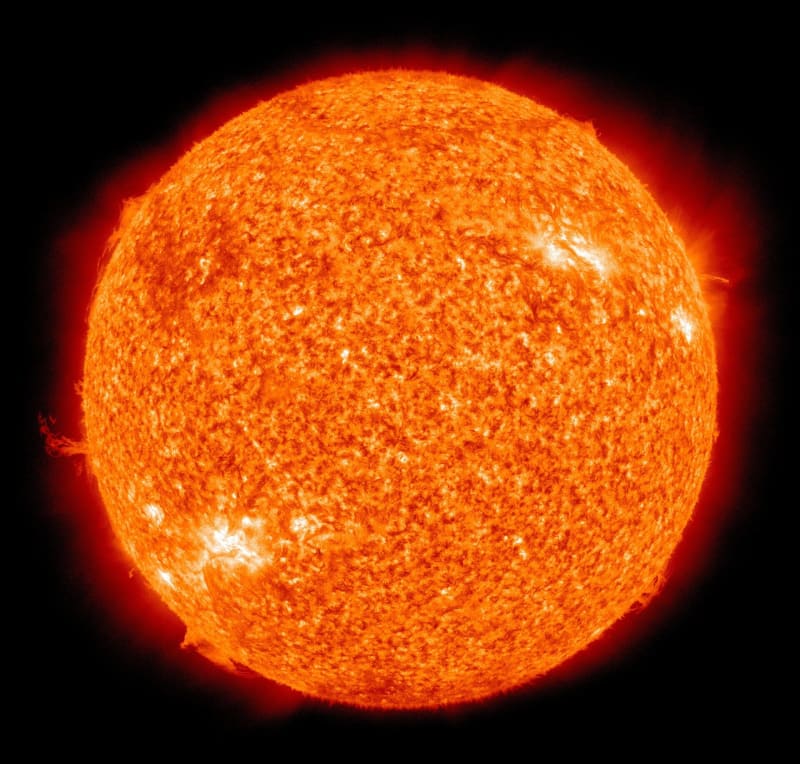
The European Space Agency's Proba-3 mission features two satellites that fly in precisely controlled formation, creating artificial solar eclipses whenever researchers want to study the sun's corona. This inner atmosphere glows 200 times hotter than the sun's surface itself, reaching temperatures around one million degrees.
During a September 2025 observation window, the spacecraft captured something extraordinary. Three massive prominence eruptions burst from the sun in just five hours, sending streams of relatively cool plasma (still a scorching 10,000 degrees) shooting through the superhot corona.
"Seeing so many prominence eruptions in such a short timeframe is rare, so I'm very happy we managed to capture them so clearly," said Andrei Zhukov from the Royal Observatory of Belgium, who leads the mission's coronagraph instrument.
The spacecraft took one image every five minutes, creating a stunning time-lapse that shows the eruptions breaking apart and scattering plasma in different directions. The ASPIICS coronagraph captured the yellow glow of the corona using filters that detect helium atoms, showing the sun's atmosphere similarly to how human eyes would see it during a total eclipse.
This technology solves a longstanding problem for solar scientists. Total eclipses on Earth are rare and brief, making consistent observation of the inner corona nearly impossible. Proba-3's onboard positioning technology allows the satellite duo to create eclipses whenever needed, filling the gap in solar observations that has frustrated researchers for decades.
Why This Inspires
Understanding the sun's corona isn't just about satisfying scientific curiosity. The corona launches the solar wind and space weather that can disrupt satellites, power grids, and communications systems on Earth. By studying prominence eruptions and coronal activity, scientists can better predict these events and protect our technology.
The mission proves that creative engineering can overcome what seemed like insurmountable obstacles. When nature doesn't cooperate on our schedule, we can build our own solutions, opening doors to discoveries that were previously out of reach.
Two spacecraft, flying in perfect harmony 150 million kilometers from Earth, are giving us front-row seats to the sun's most dramatic performances.
More Images
Based on reporting by Phys.org
This story was written by BrightWire based on verified news reports.
Spread the positivity!
Share this good news with someone who needs it