Two Stunning Discoveries Rewrite Israel's Ancient Past
Archaeologists in northern Israel just uncovered two rare Roman statues and a 300,000-year-old cave sealed since prehistoric times. Both finds are giving researchers unprecedented glimpses into ancient human life.
Imagine digging at a construction site and suddenly seeing marble emerge from the earth where pottery should be.
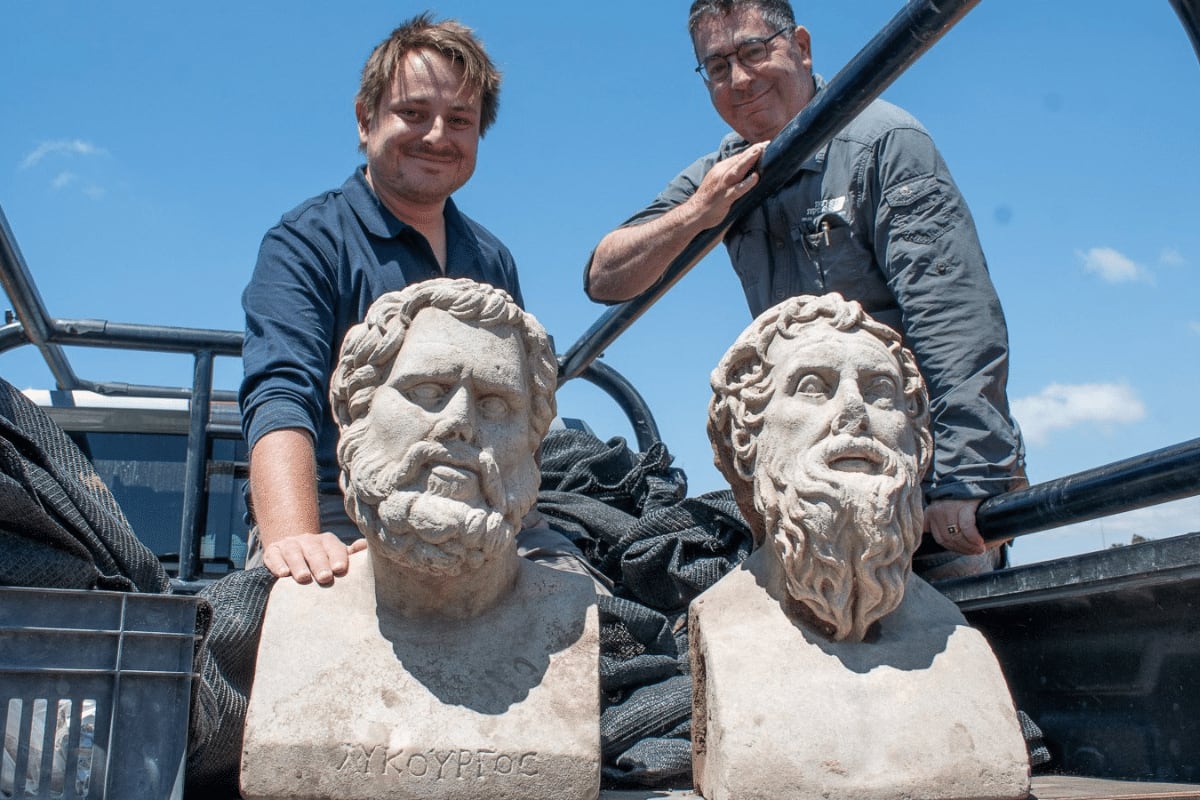
That's exactly what happened to archaeologist Michael Sorotskin earlier this month in northern Israel. Two pristine Roman marble statues appeared from a 1,700-year-old winepress, neatly placed face down as if someone carefully hid them for safekeeping centuries ago.
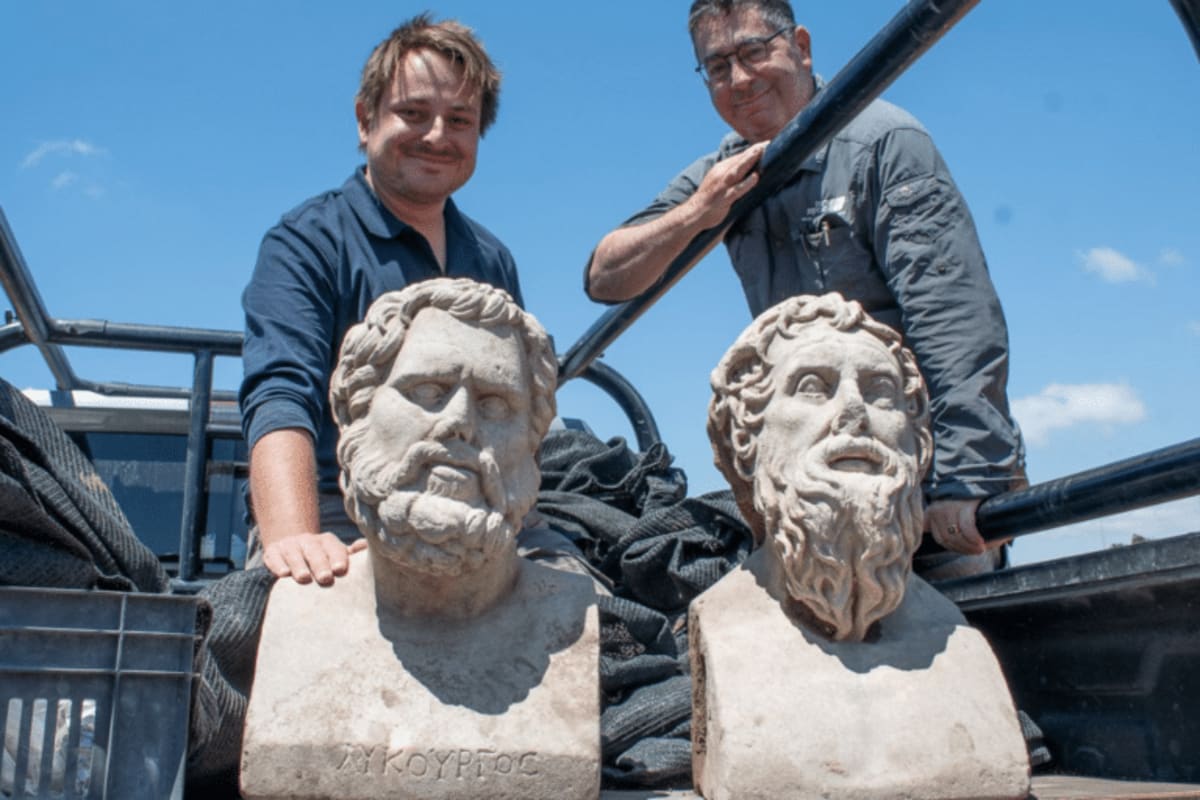
The sculptures depict the heads and upper torsos of Greek and Roman historical figures in stunning detail. One statue bears the name Lycurgus, likely referring to either the legendary lawgiver of Sparta or a famous Athenian statesman and orator from the 4th century BCE.
"There was a feeling that we were about to discover something that really shouldn't be there," Sorotskin said. "I'm still struggling to find the right words."
During the Roman period, wealthy residents displayed these statues in their homes and bathhouses to connect themselves to the ancient world's cultural legacy. Researchers believe these particular sculptures may have decorated a luxurious villa belonging to an elite Caesarea resident.
Just a few miles north, another team made an equally remarkable discovery. They found a prehistoric cave near Fureidis that remained completely sealed for 300,000 years, preserving a perfect snapshot of early human life.
The cave belonged to the Acheulo-Yabrudian people, a toolmaking culture that represents a crucial stepping stone in human development. They lived during the transition period when humans were abandoning simple rounded hand axes for more specialized, precise tools.
This group organized their living spaces by task, used fire routinely and in a controlled way, and even developed an efficient blade production process that wouldn't be reinvented for another 200,000 years. Then, mysteriously, that knowledge vanished.
Why This Inspires
These discoveries remind us that human innovation has always moved in waves. The Acheulo-Yabrudians created advanced blade-making techniques that disappeared, only to be rediscovered millennia later. The Roman statues were carefully preserved by someone who valued beauty and history enough to protect it for an unknown future.
Both finds show that across vast spans of time, humans have always experimented, created, and tried to preserve what matters most.
Professor Ron Shimelmitz of the University of Haifa called the cave "a unique site of global importance" and "a time capsule" from just before Neanderthals and modern humans became dominant. The statues will be displayed at Tel Aviv's MUZA museum this summer before undergoing detailed conservation and study.
These windows into the past prove that every generation builds on what came before, even when separated by hundreds of thousands of years.
More Images
Based on reporting by Google: archaeological discovery
This story was written by BrightWire based on verified news reports.
Spread the positivity!
Share this good news with someone who needs it