Two Tiger Mothers Share Cubs in Wildlife First
Wildlife filmmakers just documented something no one has ever seen: two tiger mothers co-parenting each other's cubs. The groundbreaking discovery from BBC Earth's "Tiger Island" shows these typically solitary big cats working together as a team. #
Scientists thought they knew tigers. Then two mothers started sharing babysitting duties.
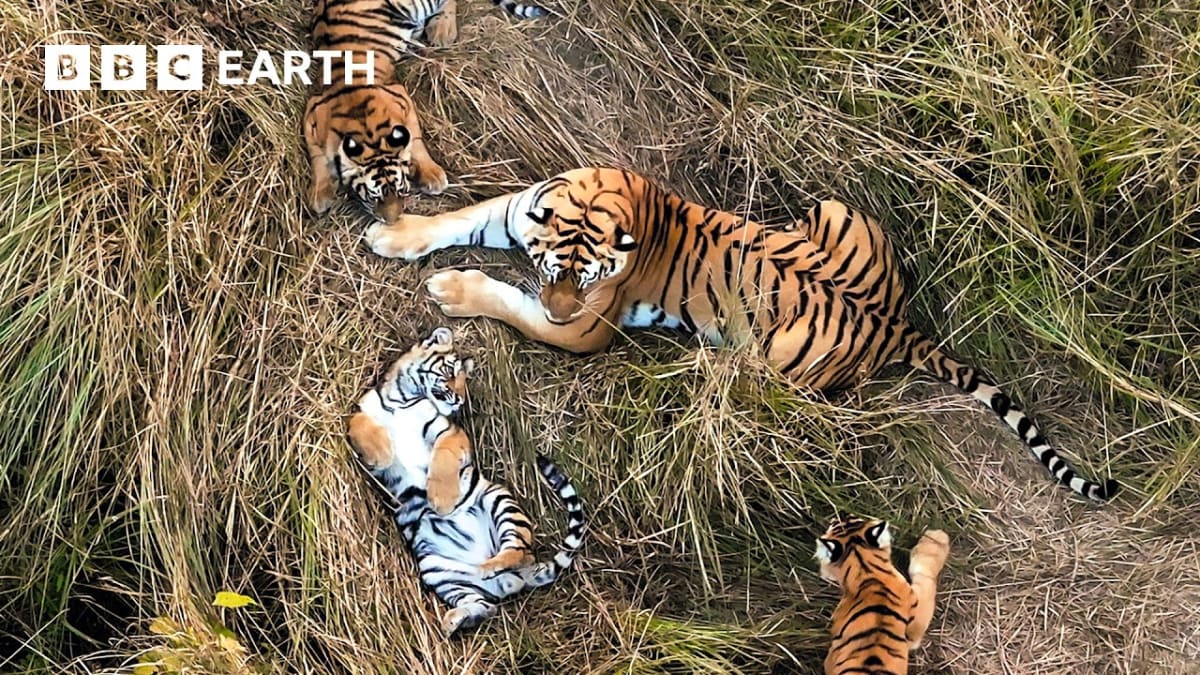
For the first time in recorded history, BBC Earth filmmakers captured two tiger mothers caring for each other's cubs together. The extraordinary behavior unfolded on camera for the documentary series "Tiger Island," revealing a side of these iconic predators that wildlife experts never knew existed.
Tigers are famously solitary animals. Adult tigers typically avoid each other except during mating season, and mothers raise their cubs alone in the wild.
That's what made this discovery so remarkable. The two mothers freely moved between family groups, nursing and protecting cubs that weren't their own. They trusted each other completely with their most precious resource: their offspring.
The filmmakers spent months documenting this unprecedented cooperation. Every interaction challenged decades of established understanding about tiger behavior.
Why This Inspires
This discovery reminds us how much we still don't know about the natural world. Even with one of Earth's most studied and iconic animals, nature can still surprise us.
The cooperation between these mothers also reveals something hopeful. If tigers can break their solitary patterns to help each other survive, it suggests these magnificent animals have more behavioral flexibility than we realized. That adaptability could prove crucial as wild tigers navigate shrinking habitats and changing ecosystems.
For conservation efforts, this matters tremendously. Understanding the full range of tiger behavior helps scientists develop better strategies to protect remaining wild populations. Every new discovery opens doors to more effective conservation.
The filmmakers described watching this behavior as a career-defining moment. After decades of wildlife documentation, they witnessed something completely new.
These two mothers are teaching us that even when we think we understand a species, there's always more to learn. Their unexpected partnership shows nature's capacity for adaptation and cooperation in the face of challenges.
The full documentary reveals how researchers confirmed this wasn't just a one-time anomaly but genuine cooperative behavior between the two families.
#
Based on reporting by BBC Earth
This story was written by BrightWire based on verified news reports.
Spread the positivity!
Share this good news with someone who needs it