UCLA Finds How Brain Stem Cells Build Human Intelligence
Scientists discovered that the brain's master builder cells use sugar and touch signals to create our complex thinking abilities. The breakthrough reveals why human brains became so remarkably advanced.
Before you were born, special stem cells called radial glia made billions of decisions that built your brain into the amazing thinking machine it is today.
UCLA researchers just cracked the code on how these cellular architects choose what to build. The answer surprised them: these cells rely on both the sugar they eat and physical touch signals from another brain region to decide which neurons to create.
Radial glia are the unsung heroes of human evolution. These stem cells construct most of the cerebral cortex, the wrinkly outer layer responsible for everything from solving math problems to remembering your first kiss. They're also why human brains grew so much larger and more complex than other animals.
"Radial glia are the coolest cells that have ever existed," said Aparna Bhaduri, a UCLA professor of biological chemistry. "They're really key to making us human."
Her team published two groundbreaking studies that reveal exactly how these cells work. The first discovery centers on metabolism, specifically how the cells process glucose. When researchers built a detailed metabolic map of developing human brain tissue, they found something unexpected.
The radial glia don't just use sugar for energy. They actually use a specific glucose pathway called the pentose phosphate pathway to control which types of brain cells they produce. When scientists reduced available glucose or blocked this pathway, the stem cells switched their production line entirely, creating different neuron types than normal.
"What was surprising is that metabolism isn't just a passive thing that happens in the background," Bhaduri explained. "It can really control how stem cells make decisions."
This finding could help scientists understand how a mother's nutrition during pregnancy affects her baby's developing brain. It also opens doors to investigating metabolic disorders and environmental factors that influence brain development.
The second discovery involves an unexpected early visitor. The thalamus, a structure deep inside the brain, sends long wire-like projections toward the developing cortex months before they're supposed to connect. Scientists wondered why these fibers arrived so ridiculously early.
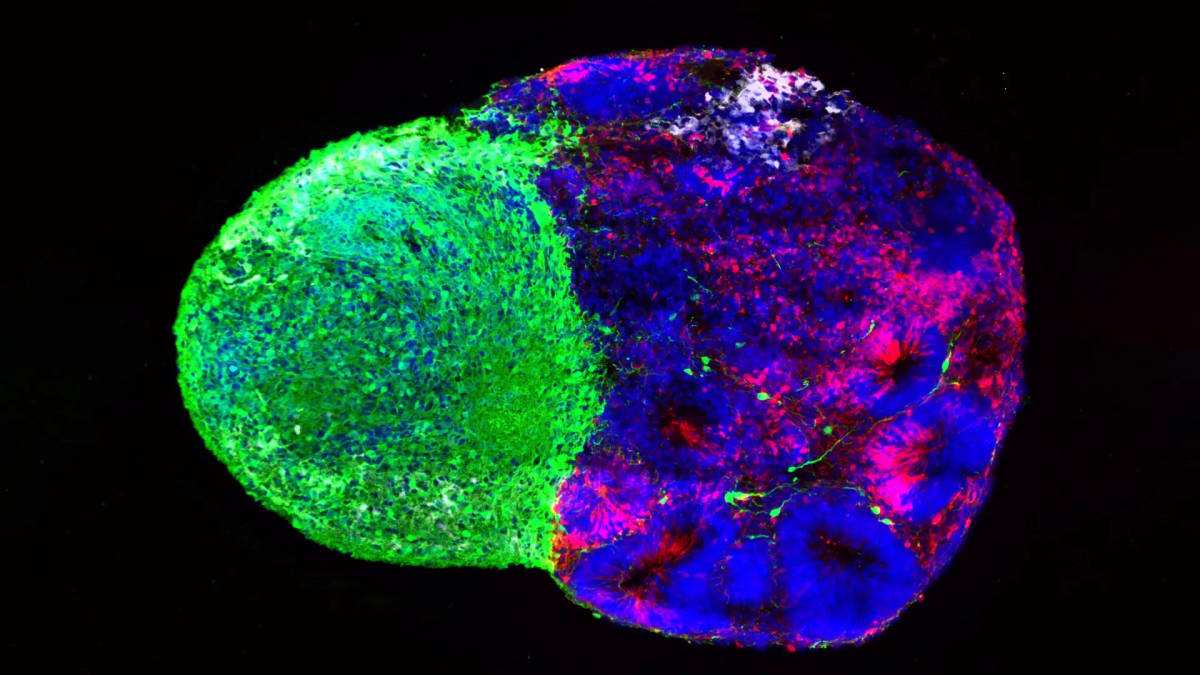
UCLA researchers found the answer using brain organoids grown from stem cells. Those early-arriving thalamic projections physically touch the radial glia while they're still building. That touch changes everything. It prompts the stem cells to produce more excitatory neurons, especially the upper-layer neurons that make human brains uniquely powerful.
"What we specifically found is that this influence comes through an actual physical connection between the projections and the radial glia," Bhaduri said. "A point of contact that just hasn't been identified before."
The team even connected this process to NRXN1, a gene linked to autism. Understanding how these developmental signals work could eventually help scientists figure out what goes wrong in neurodevelopmental disorders.
Why This Inspires
These discoveries pull back the curtain on one of nature's most stunning achievements. Every thought you have, every memory you cherish, every moment of creativity started with these microscopic stem cells making trillions of perfectly timed decisions. The research shows that even our most complex features emerge from surprisingly simple signals: food and touch. It's a reminder that understanding life's biggest mysteries often starts with asking the smallest questions.
The findings give hope to families affected by brain disorders and open new paths for understanding conditions from autism to brain cancer.
Based on reporting by Science Daily
This story was written by BrightWire based on verified news reports.
Spread the positivity!
Share this good news with someone who needs it