UCT Gets License to Make Medical Devices for Africa
South Africa's University of Cape Town can now legally manufacture and distribute medical devices designed specifically for African patients. After a decade of research producing 23 patents and 100,000 devices globally, UCT's innovations can finally reach local hospitals.
For over a decade, researchers at the University of Cape Town designed life-saving medical devices perfectly suited for African healthcare, only to watch them sit unused because they couldn't legally be manufactured locally.
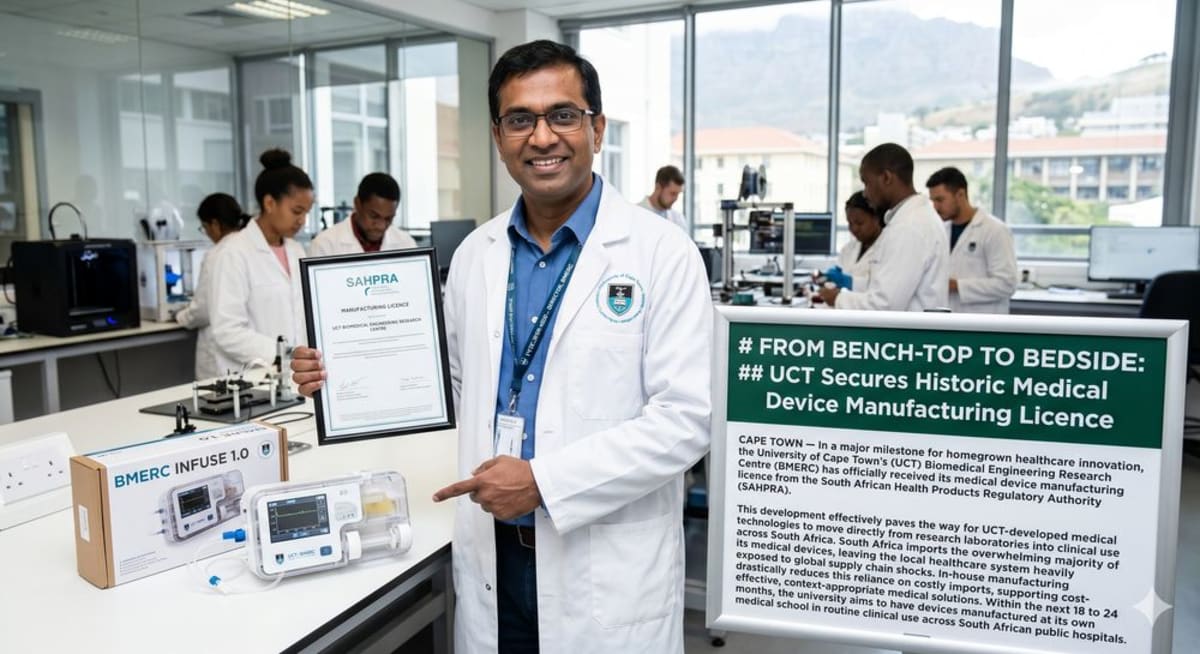
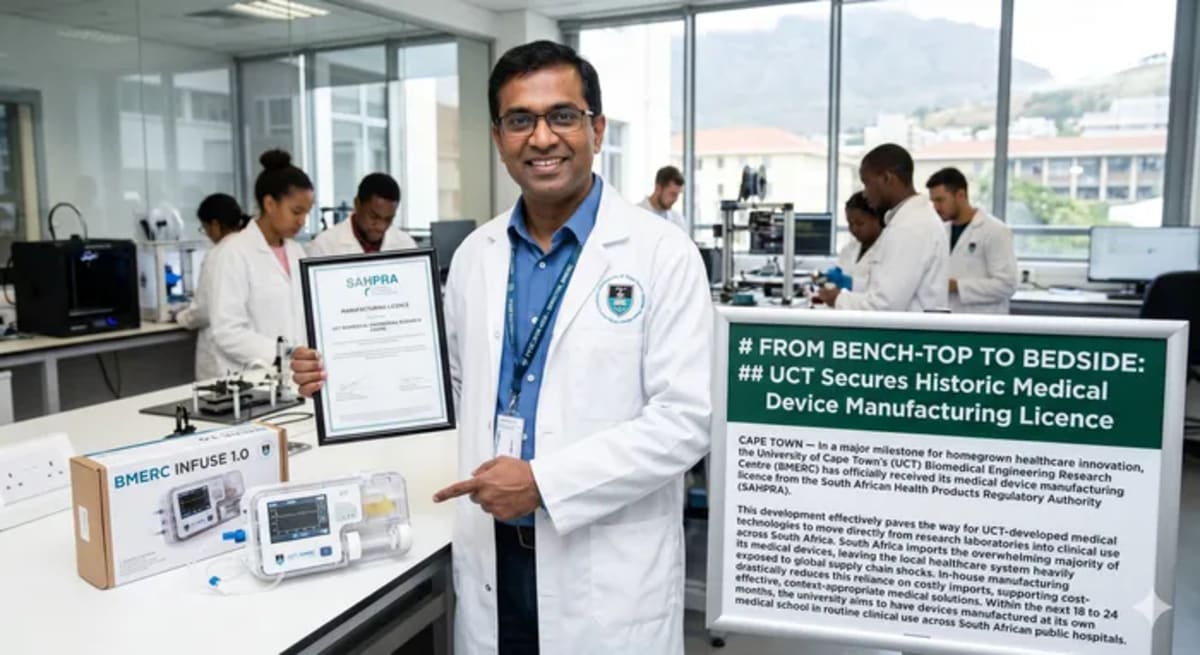
That barrier just disappeared. UCT's Biomedical Engineering Research Centre received its medical device manufacturing license from South Africa's health regulatory authority, clearing the way for homegrown innovations to reach patients who need them most.
The new license lets UCT manufacture, distribute, and sell medical devices directly from their research center. No more sending designs overseas or watching promising prototypes gather dust in laboratories.
Professor Sudesh Sivarasu, who directs the research center, put it simply: "The devices we design here, for African patients in an African context, can now be produced and brought to market with full regulatory recognition behind them."
UCT's track record is already impressive. The team has built 23 patent families, launched five spinout companies, and distributed over 100,000 devices worldwide. But none of those innovations could be used in South African public hospitals without proper manufacturing certification.
The license changes everything. UCT can now produce devices specifically engineered for African healthcare challenges, backed by quality systems certified against international standards. Local manufacturing also slashes costs by cutting out expensive imports.
The Ripple Effect
This breakthrough reaches far beyond one university's research labs. Medical students and biomedical engineering trainees now learn in a real-world, regulatory-compliant environment that prepares them for careers building Africa's healthcare infrastructure.
The benefits extend to patients across the country. Within the next 18 to 24 months, UCT aims to have devices manufactured at its medical school in routine use across South African public hospitals.
Getting to this point required years of partnership. SAHPRA worked closely with UCT to ensure compliance. The national Department of Science, Technology and Innovation provided support, along with the National Research Foundation and clinical partners across the Western Cape.
What started as a compliance project became an institutional capability aligned with multiple United Nations development goals, from health and well-being to reducing inequalities and building industry and innovation.
The timing couldn't be better. South Africa's public healthcare system serves millions who can't access expensive imported medical devices. Context-appropriate innovations designed for local conditions and budgets can transform care quality.
UCT's flagship devices are now moving from late-stage prototypes to clinical validation under the university's own quality system, bringing dignified, high-quality care to patients who've waited long enough.
More Images
Based on reporting by Regional: south africa breakthrough (ZA)
This story was written by BrightWire based on verified news reports.
Spread the positivity!
Share this good news with someone who needs it