UK Drone Boat Airdropped Into Rough Seas in World First
The Royal Air Force just dropped an autonomous boat from a plane into choppy ocean waters, opening new possibilities for rapid global emergency response. This groundbreaking test shows how technology could help deploy life-saving equipment anywhere in the world within hours.
Military innovation just took a leap that could transform how help arrives during disasters and emergencies at sea.
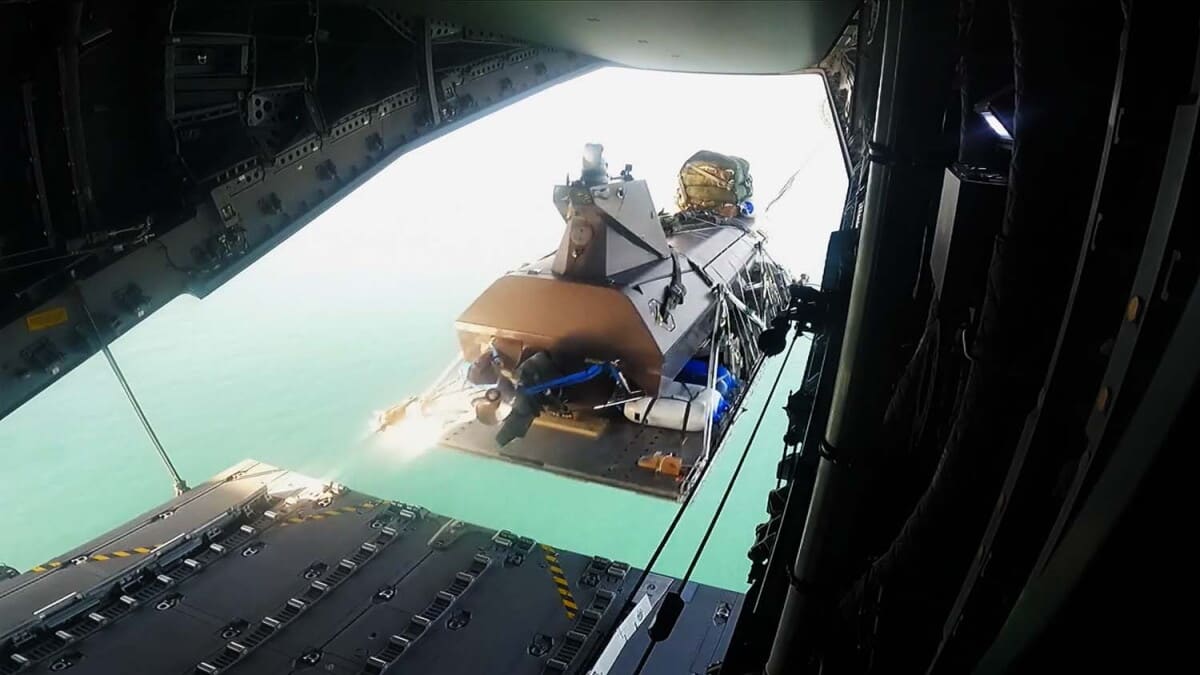
On July 8, 2026, the Royal Air Force made history by successfully airdropping a self-driving boat from a cargo plane into the rough waters of the North Sea. The 28-foot vessel splashed down from 1,300 feet into waves reaching eight feet high and immediately started operating on its own.
The autonomous K3 SCOUT boat was pulled from the back of an Airbus A400M transport aircraft using a special parachute system. An electro-mechanical release freed the boat from its platform the instant it hit the water, allowing it to start its mission without any human intervention.
Over six days, the Royal Air Force completed four successful airdrops of these smart boats. Each one performed exactly as designed, proving the concept works even in challenging ocean conditions.
The boats themselves pack impressive capabilities into their compact design. They can cruise for 650 nautical miles at 29 mph, or sprint up to 63 mph when needed. Most remarkably, they operate completely independently for up to 30 days at a time.
The Royal Navy's Project Beehive ordered 20 of these vessels as part of a broader shift toward combining traditional ships with networks of autonomous helpers. Captain Adam Ballard explained that small autonomous boats face one major challenge: getting where they're needed quickly.
The Ripple Effect
This breakthrough flips an old concept on its head. For over a century, ships have launched aircraft. Now aircraft can deploy maritime vessels anywhere on Earth within hours.
The technology opens doors far beyond military use. Imagine airdropping autonomous rescue boats to reach stranded people during hurricanes or tsunamis. Picture rapid deployment of environmental monitoring vessels to track oil spills or study sudden ocean changes. These boats could deliver medical supplies to remote coastal communities cut off by storms.
The modular design means each boat can be configured for different missions. Swap out equipment, and the same vessel transforms from a rescue platform to a research station to an emergency supply runner.
What makes this advancement especially promising is its practicality. The team didn't just dream up the idea; they proved it works in real ocean conditions with waves that would challenge human-crewed small boats.
The success shows how combining existing technologies in new ways creates capabilities we never had before. Nobody invented new boats or new planes; they just figured out how to make them work together brilliantly.
Tomorrow's emergencies will happen in remote places where help can't arrive fast enough by traditional means, but dropping capable autonomous vessels from the sky changes that equation completely.
More Images


Based on reporting by New Atlas
This story was written by BrightWire based on verified news reports.
Spread the positivity!
Share this good news with someone who needs it