ULA Vulcan Rocket Succeeds Despite Mid-Flight Booster Issue
A United Launch Alliance rocket completed its mission flawlessly Thursday morning, even after one of its boosters developed a visible problem just 20 seconds after liftoff. The successful launch proves the spacecraft's resilience and marks another win for America's space capabilities.
A rocket that refused to quit just proved why backup systems matter in spaceflight.
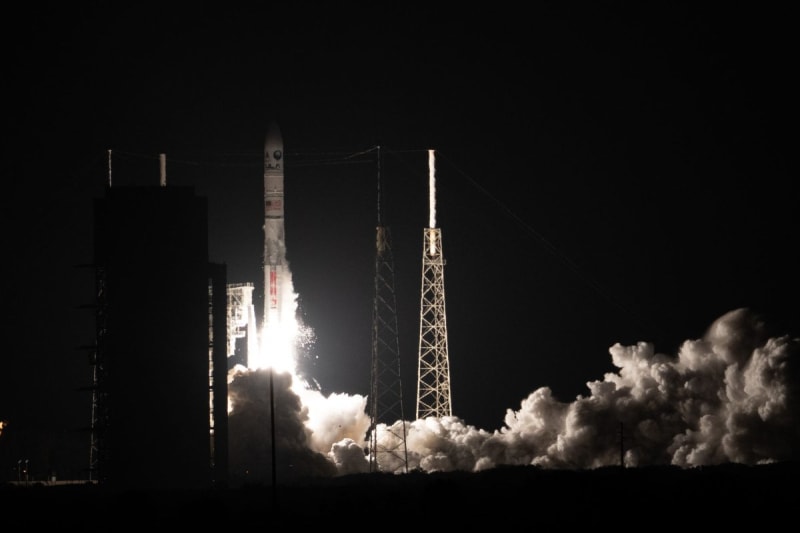
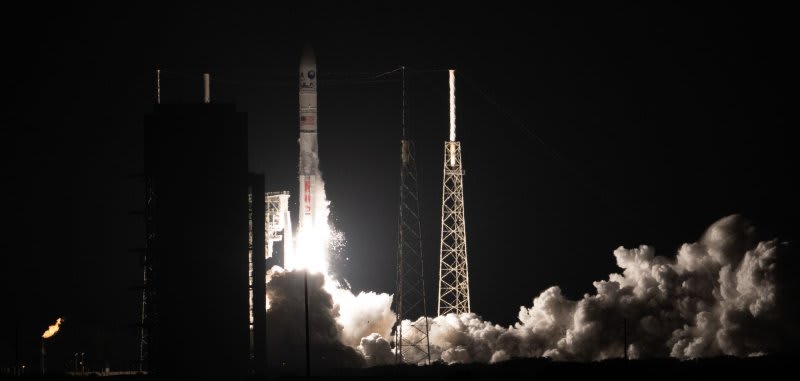
United Launch Alliance's Vulcan Centaur rocket launched from Cape Canaveral Space Force Station in Florida at 4:22 a.m. Thursday, carrying critical national security satellites into orbit. About 20 seconds after liftoff, observers noticed something unusual: an apparent burn-through near the nozzle of one of the rocket's four solid rocket boosters.
The rocket didn't miss a beat. Despite the visible issue, the Vulcan Centaur completed its mission successfully, delivering two satellites safely to their destination.
"We had an observation early during the flight on one of the four solid rocket motors," ULA posted on social media. "The team is currently reviewing the data."
The payload matters deeply for national security. The two satellites join the United States' Geosynchronous Space Situational Awareness Program, which has been building a network of spacecraft since 2014 to monitor activity in Earth's orbit.
Think of these satellites as neighborhood watch for space. They track objects and potential hazards in the geostationary Earth arena, the orbital sweet spot where communications and weather satellites operate.
"They provide 'neighborhood watch' services in the geostationary Earth arena, improving flight safety for all spacefaring nations operating in orbit," Space Force explained in a statement. Six spacecraft now form this protective network, with Thursday's launch adding two more eyes in the sky.
The Bright Side
This successful recovery showcases exactly why rockets have redundant systems. The Vulcan Centaur carried four solid rocket boosters, meaning even when one experienced problems, three others kept the mission on track.
Engineers design spacecraft expecting the unexpected, and Thursday's launch proved that philosophy works. The rocket's ability to compensate for a malfunctioning component mid-flight demonstrates the sophistication of modern space technology.
For ULA, this marks the fourth successful mission for the Vulcan Centaur rocket system. Each launch builds confidence in America's ability to reach space reliably, whether for scientific discovery, commercial ventures, or national security needs.
The satellites will now begin their work protecting spacecraft from all nations, making orbital operations safer for everyone who depends on space-based technology. That includes the GPS in your phone, weather forecasts, and global communications.
Space just got a little safer for everyone looking up.
More Images
Based on reporting by Google: SpaceX launch success
This story was written by BrightWire based on verified news reports.
Spread the positivity!
Share this good news with someone who needs it