UW-Madison Wins 5 AI Fusion Energy Grants from DOE
The University of Wisconsin-Madison just landed five major federal grants to use artificial intelligence to solve some of America's biggest energy challenges, from fusion power to mining critical minerals. The school tied for second place nationwide, proving Midwestern universities can lead the future of clean energy innovation.
Five groundbreaking projects at the University of Wisconsin-Madison will receive up to $750,000 each to accelerate fusion energy and critical mineral recovery using artificial intelligence. The Department of Energy announced the awards at its first Genesis Mission Summit, selecting UW-Madison more than any other public university in the country.
The Genesis Mission represents the largest response to a funding opportunity in DOE history. Out of 278 total awards, UW-Madison tied with Stanford University for second place, trailing only MIT's six awards.
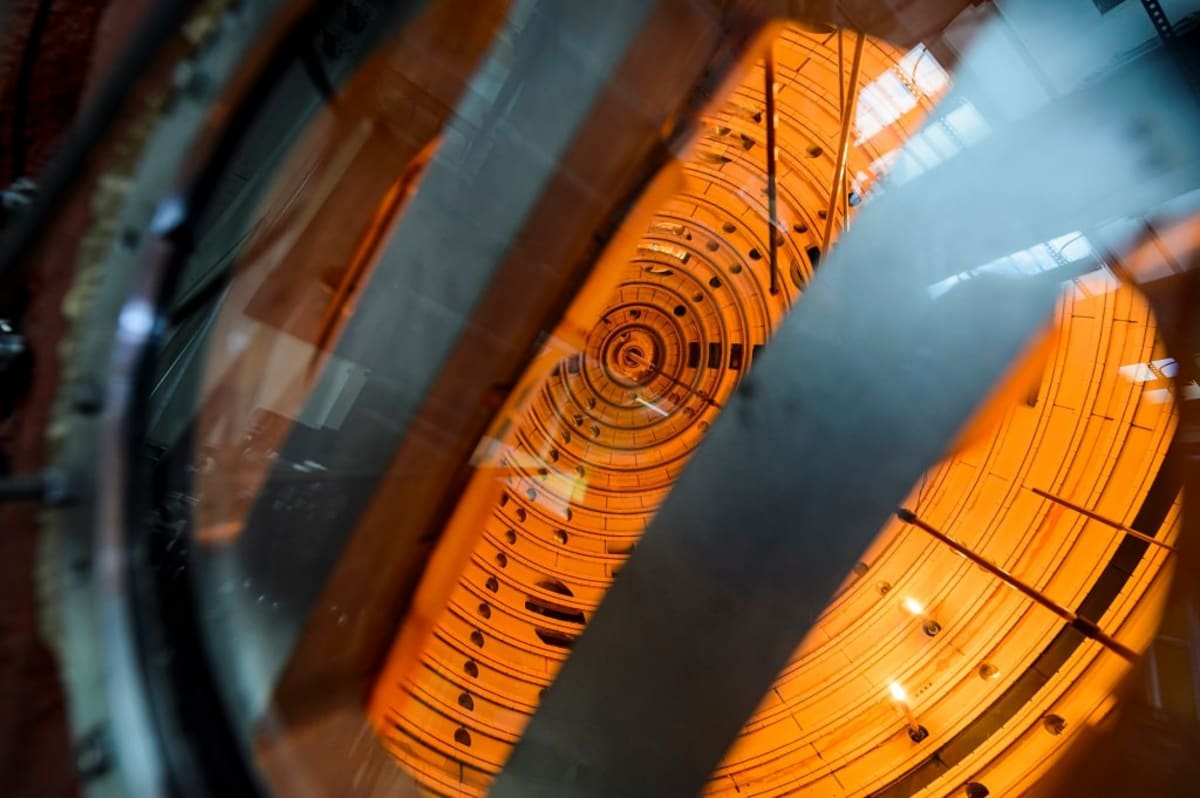
The projects tackle real problems holding back America's clean energy future. One team will develop AI systems that process fusion experiment data in real time at California's DIII-D National Fusion Facility, helping scientists better control the super-hot plasma needed for fusion power.
Another project led by geoscience professor Athena Nghiem will create an AI system to speed up copper and critical mineral extraction from U.S. deposits that are currently too difficult or expensive to access. "The system will analyze scientific literature, run complex simulations and continuously refine its models, compressing months of work into days," Nghiem explains.
Physics professor Mariel Pettee will build AI foundation models that can learn from and connect data across multiple areas of physics, potentially revealing new scientific connections researchers have overlooked. Pettee joined UW-Madison just last year as part of the university's RISE-AI initiative.
The awards fund nine-month pilot projects that combine AI, supercomputing, quantum systems and advanced scientific instruments. Teams will design and test research workflows that integrate artificial intelligence with hands-on scientific investigation.
Why This Inspires
This funding proves that solving climate change and energy independence isn't just about technology. It's about bringing together universities, national labs, and private companies who normally wouldn't collaborate.
Vice Chancellor for Research Dorota Brzezinska says the recognition matters because "today's most complex scientific and technological challenges cannot be solved by any one institution alone." The projects span three colleges at UW-Madison, from engineering to physics to the new College of Computing & Artificial Intelligence.
The Genesis Mission also trains the next generation of scientists and engineers who will work alongside AI throughout their careers. Students working on these projects will graduate with skills that didn't exist a few years ago.
UW-Madison is translating research into real-world impact while preparing young scientists to lead an AI-powered future, proving the Midwest remains at the heart of American innovation.
Based on reporting by Google: scientific discovery
This story was written by BrightWire based on verified news reports.
Spread the positivity!
Share this good news with someone who needs it