Vienna Turns 350 Parking Spots Into Gardens and Parks
Vienna is transforming hundreds of parking spaces into green parks, bike lanes, and community gardens—and residents are choosing cars 37% less than they did in the 1990s. The city is proving that giving people better options makes them happier to give up parking.
Vienna just proved that sometimes the best way to solve a parking problem is to get rid of parking spaces.
The Austrian capital has launched more than 350 projects converting asphalt parking spots into parks, bike lanes, and community gardens. One central square that once held rows of parked cars now welcomes visitors with trees and seating. A major street traded 140 parking spaces for nearly a mile of bike lanes and greenery.
The results speak for themselves. Vienna residents now use cars 37% less than they did in the 1990s, and more than two-thirds support continuing the transformation.
The city didn't just take away parking and hope for the best. Vienna built affordable park-and-ride garages connected directly to its fast, well-connected public transit system. It ended free parking everywhere, creating a payment system that generates $209 million yearly—money that goes straight into building more cycling infrastructure.
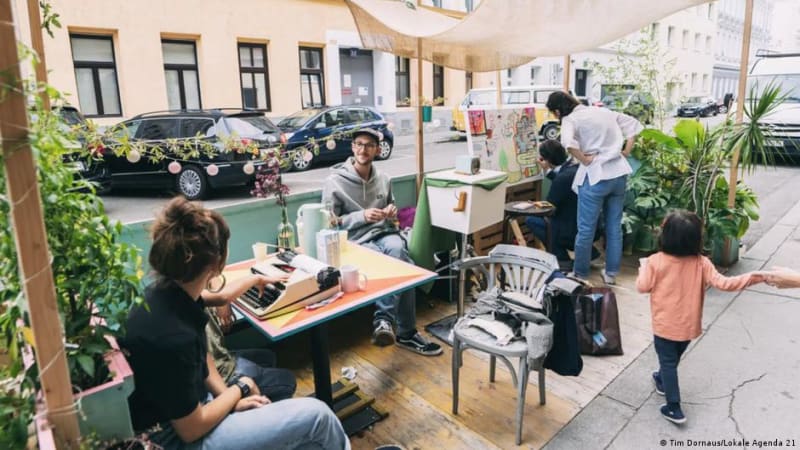
Perhaps most cleverly, Vienna lets residents petition to convert individual parking spots in their neighborhoods. These "neighborhood oasis" projects have created community gardens, outdoor dining areas, and play spaces for children.
Urban planner Ina Homeier says success depends on giving people real choices. "You cannot reduce anything without offering a good alternative," she told reporters. The city asks residents directly: do you want your neighborhood filled with cars, or something different?
The timing matters too. Cities worldwide dedicate massive amounts of land to parking—at least 25% in most US cities—covering urban areas in heat-absorbing asphalt that makes summers hotter and increases flooding risks.
The Ripple Effect
Vienna's experiment is inspiring cities across the globe. Dallas converted a sprawling parking lot into a nearly four-acre public park. New York and San Francisco are making pandemic-era changes permanent, turning parking spots into outdoor restaurant seating. San Jose and Austin are eliminating rules that force new buildings to include minimum parking.
Researchers see the bigger picture. "Streets are essentially one of the most valuable assets cities have," says Dana Yanocha from the Institute for Transportation and Development Policy. Cities with tight budgets are realizing they're sitting on goldmines currently used for storing empty cars.
Even in car-loving America, where 92% of households own at least one vehicle, attitudes are shifting as people see what's possible when cities prioritize people over parking.
Vienna shows that transforming urban spaces isn't about attacking drivers—it's about giving everyone better options and watching them choose greener, healthier, happier neighborhoods.
More Images
Based on reporting by DW News
This story was written by BrightWire based on verified news reports.
Spread the positivity!
Share this good news with someone who needs it