
Walkable Cities Add 1,100 Daily Steps Without Trying
Your neighborhood matters more than willpower when it comes to walking. New research shows that simply moving to a walkable city adds 1,100 daily steps without changing your mindset.
Want to walk more? The answer might not be better willpower but a better zip code.
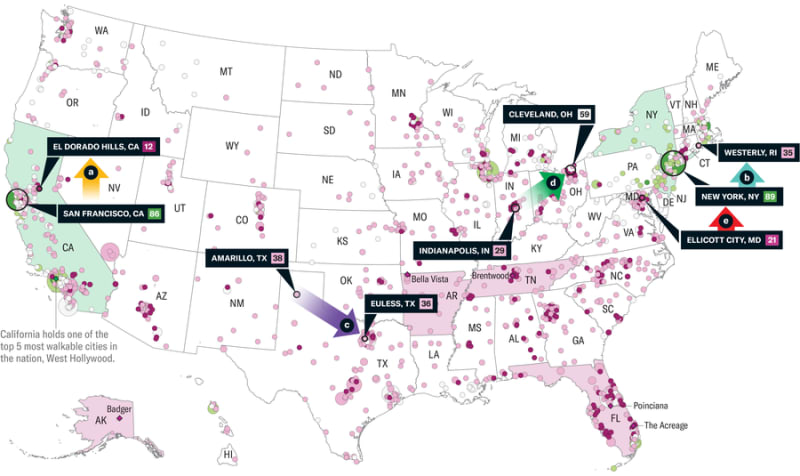
Researchers at the University of Washington analyzed smartphone data from two million people, including 5,000 who moved between U.S. cities. The finding was clear: people who relocated to more walkable cities automatically took 1,100 more steps each day, equal to 11 extra minutes of walking.
The study solved a longtime puzzle. Scientists wondered whether walkable cities make people more active, or if active people simply choose walkable neighborhoods. By tracking people before and after they moved, researcher Tim Althoff and his team found the answer: it's the environment, not the person.
Even better, those extra steps weren't leisurely strolls. The additional walking happened at a brisk pace, the kind of physical activity that genuinely improves health and reduces overall risk of death.
People who moved between cities with similar walkability didn't change their activity levels at all. This confirmed that neighborhood design, not personal motivation, drives how much we move.
The researchers went further, imagining what would happen if every American city became as walkable as Chicago. With Chicago's walkability score of 78, the average American would gain 443 daily steps and 24 minutes of weekly moderate exercise. That's enough for 36 million more Americans to meet recommended aerobic activity guidelines.
If every city matched New York's walkability? An additional 47 million Americans would hit those health targets.
The Ripple Effect
This research changes how we think about public health. For decades, health campaigns have focused on motivating individuals to exercise more. This study suggests we've been looking in the wrong direction.
The solution isn't just personal discipline or fitness apps. It's sidewalks, crosswalks, mixed-use neighborhoods, and transit options. When cities build environments where walking is easy and natural, residents automatically become more active without thinking about it.
The findings offer hope for urban planners and policymakers working to improve public health. Small changes to city design, like adding protected bike lanes or connecting neighborhoods with pedestrian paths, could help millions of people get healthier without requiring constant motivation or expensive gym memberships.
Better yet, walkable neighborhoods create communities where people naturally encounter each other, strengthening social connections while boosting physical health. It's progress you can measure in steps, but feel in daily life.
More Images

Based on reporting by Scientific American
This story was written by BrightWire based on verified news reports.
Spread the positivity!
Share this good news with someone who needs it